

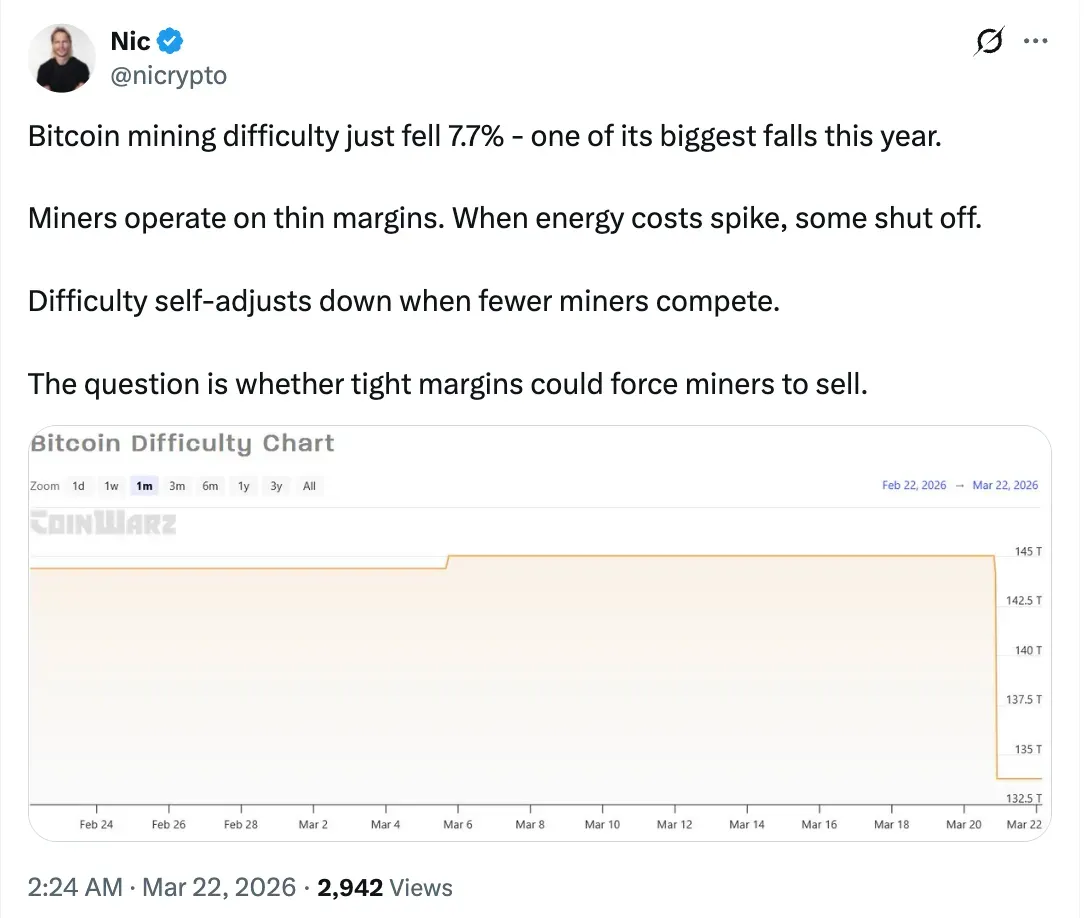
- Bitcoin mining difficulty fell 7.76% to 133.79 trillion on Sunday, as miners shut down operations amid rising electricity costs and falling profits.
- Higher energy prices and reduced block rewards have pushed many miners into losses.
- If Bitcoin remained near or below miners’ cost of production, more operators may sell Bitcoin to cover expenses.
Bitcoin (BTC) mining difficulty fell by 7.7% on Sunday, marking one of the sharpest declines this year as rising energy costs forced weaker miners offline.
According to the Bitcoin Difficulty Chart data by CoinWarz, the drop to $133.79 trillion was due to fewer people using the network as electricity prices went up.
Energy Cost Rises
Energy costs have risen in recent weeks, with crude oil near $100 per barrel amidst Middle East tensions. Nationally, electricity prices have also increased by 7% due to the rise of AI data centers and pressure on electric grids, Fox News reported last month.
Electricity prices rose from 12.82 cents per kilowatt-hour to 13.72 cents, which can make it more expensive for mining companies to operate. When fewer miners participate, Bitcoin's protocol automatically lowers the difficulty, which helps maintain the timing of block production. According to one-miners report, energy now makes up 60% to 80% of mining costs, so spikes in power prices directly crush margins.
Nick Puckrin, the CEO of Coin Bureau, warned that "tighter margins could force miners to sell.” Miner profits stayed low as profitability depended on the gap between Bitcoin’s market price and the cost of producing each coin.
According to Macro Micro, the Bitcoin mining cost was around $84,116, while Bitcoin was trading at $68,640, reflecting a difference of around $15,400. As of writing, Bitcoin was trading down by 2.7% over 24 hours. On Stocktwits, the retail sentiment around BTC moved from ‘bullish’ to ‘neutral’ territory, as chatter levels around it remained ‘low’ over the past day.
Bitcoin Holds Near Difficulty-Implied Cost Levels
Glassnode’s difficulty regression model showed that Bitcoin was trading near its difficulty-implied baseline, a proxy for the network’s average cost of production.
In previous cycles, during the 2017 and 2021 bull markets, Bitcoin traded above the difficulty-implied baseline level, mining remained profitable, and network participation increased.
By contrast, when prices moved closer to or below this baseline, many miners exited the network because mining profits dropped. Moreover, now that profit is more dependent on energy cost, transaction fees, and BTC price staying above the cost line, margins remain tight for some miners.
Read also: Iran Opens Strait Of Hormuz To All But ‘Enemy’ Ships – While Crude Oil Rally Pushes Bets
For updates and corrections, email newsroom[at]stocktwits[dot]com.