

- Trump posted that Iran could face "very hard" strikes and that more targets are being seriously considered because of Tehran's "bad behavior."
- In that backdrop, oil prices rose quickly during times of conflict, with Brent crude rising above $94 per barrel.
- The Oil & Gas E&P sector rose by about 0.7%, while the S&P 500 fell by about 1.3% in the most recent session.
- The World Uncertainty Index has reached its highest level ever, higher than during 9/11, the Iraq War, the 2008 financial crisis, and the COVID-19 pandemic.
Donald Trump said in a post on his social media account on Saturday that Iran has "apologized and surrendered" to its neighbors in the Middle East after what he called "relentless military pressure" from the US and Israel.
Trump said in the statement on Truth Social that Iran promised it "will not shoot at them anymore.” He also said that joint U.S. and Israeli military actions forced Tehran to back down. Trump also discussed the possibility of taking more aggressive military action against Iran, saying that more targets were under "serious consideration" because of what he called Iran's "bad behavior."
He also said that places and groups that weren't targets before could now be attacked. He warned that Iran "will be hit very hard" if the fighting keeps going.
International Oil Prices Rally
Amid the geopolitical backdrop, international oil prices surged 35.6% in a single week, while large quantities of gold stranded in Dubai were being sold at a discount. Additionally, the US Dollar Index (DX-Y.NYB) increased to around $98.
Analysts monitoring the conflict said the energy market remained highly sensitive to developments in the region. Business influencer Mario Nawfal said Iran’s missile and drone attacks had dropped sharply since the start of the war, adding that U.S. and Israeli strikes targeting launchers, command systems, and drone facilities had disrupted parts of Iran’s military capabilities.
Energy Markets Tick Higher
The rising conflict has shaken up markets worldwide, particularly in energy.
Brent crude oil prices rose above $94 per barrel, the highest level since November 2022, as fears that the conflict could affect global oil supply. Prices for crude oil worldwide have risen about 36% in the last week as tensions between countries have grown. Crude prices had their biggest weekly gain in almost four years after the U.S.–Iran conflict stopped shipping through the Strait of Hormuz, which is a key route for about 20 million barrels of oil and petroleum products every day.
The Strait of Hormuz is one of the most important chokepoints in the world for energy, and any problems with traffic through it can quickly affect the price and supply of oil worldwide.
According to market data, shares of major oil and gas exploration and production companies went up during the last trading session. The Oil & Gas E&P sector gained about 0.7% on the day, while the S&P 500 as a whole fell about 1.3%.
The sector, which includes companies that explore and produce oil and natural gas, now has a total market value of about $719 billion across 78 companies.
Global Uncertainty Index Rises
In the International Monetary Fund's Finance & Development magazine, economists Era Dabla-Norris and Rodrigo Valdes said that governments are facing high debt and rising borrowing costs, "can no longer defer hard fiscal choices."
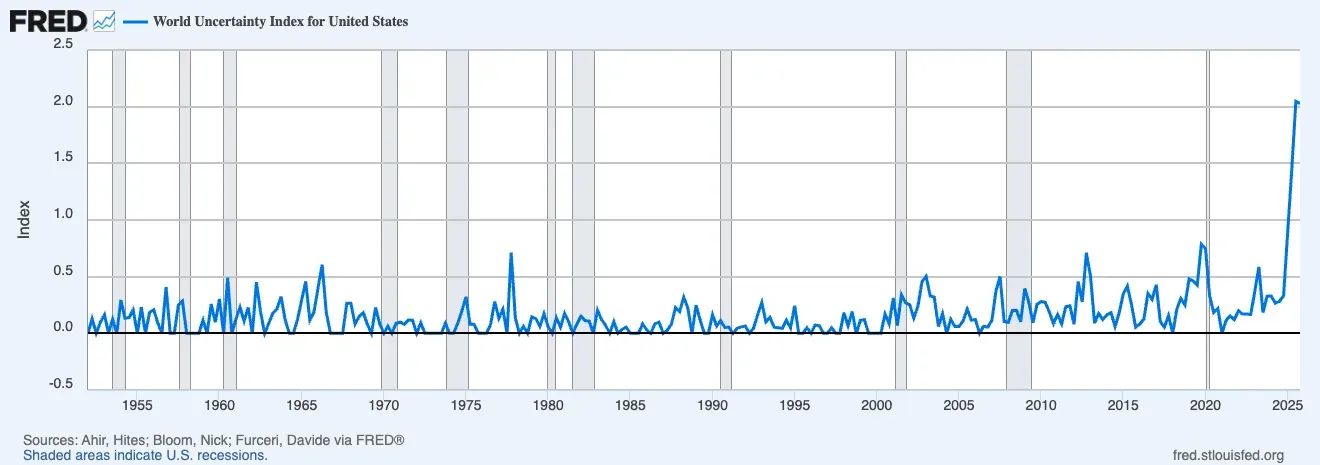
The World Uncertainty Index (WUI) has surpassed levels recorded during major global crises, such as the 9/11 attacks in 2001, the Iraq War in 2003, the 2008 financial crisis, and the COVID-19 pandemic in 2020.
Read also: White House Cyber Strategy Backs Cryptocurrency, Blockchain As Tech Priority
For updates and corrections, email newsroom[at]stocktwits[dot]com.