


Advertisement|Remove ads.
Fed’s Kevin Warsh Faces Oil-Driven Inflation Test — Jeremy Siegel Sees 5%-10% Upside For Markets If Strait Of Hormuz Reopens
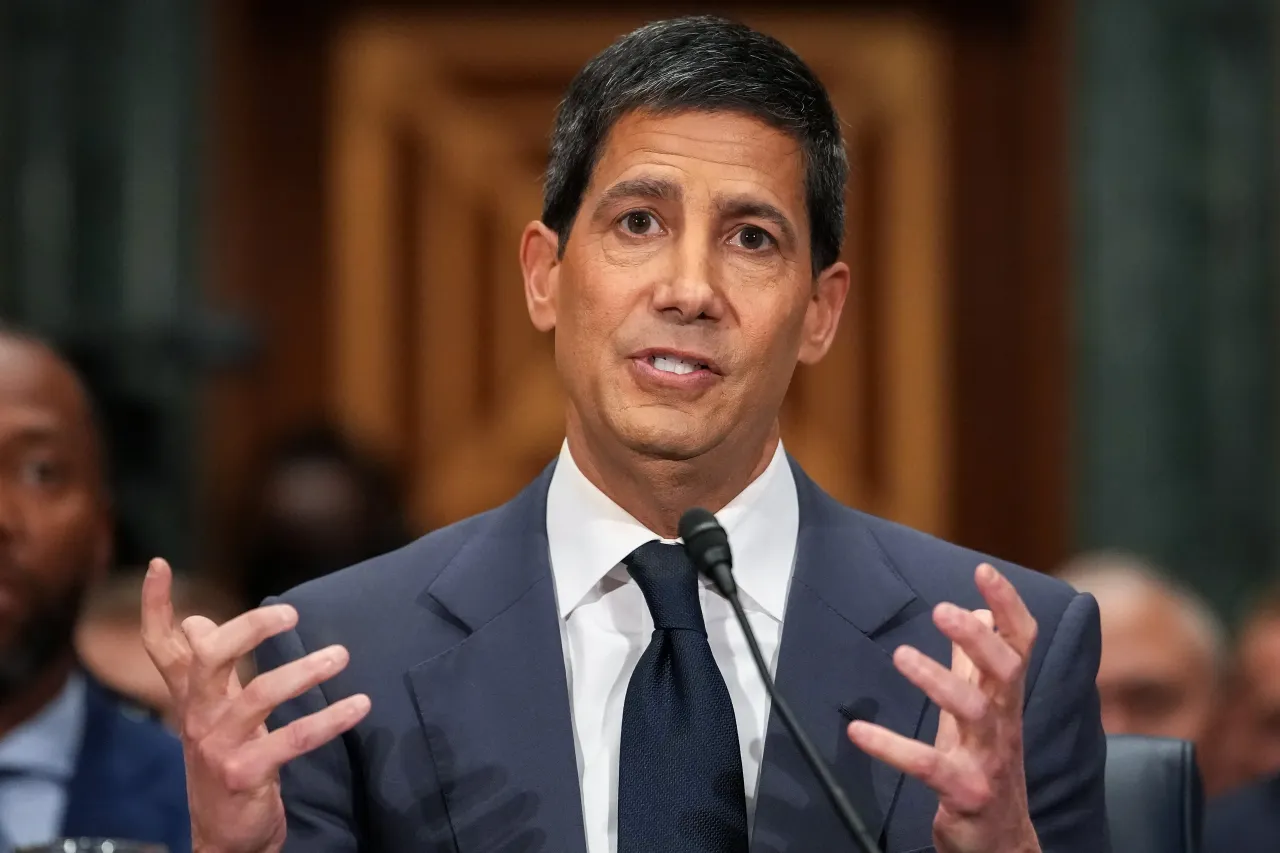


- Siegel said the Fed faces mixed signals, with money supply growth remaining inconsistent with its 2% inflation target while higher Treasury yields reflect both stronger growth and renewed inflation concerns.
- Economists at ING said Wednesday's policy decision is far from a foregone conclusion, describing the meeting as a "knife-edge" call, assigning roughly 60:40 odds in favor of no change.
- ING said a quarter-point rate hike would help reinforce Warsh's inflation-fighting credibility, even if the market ultimately expects any additional tightening to be reversed within a year.
Advertisement|Remove ads.
Federal Reserve Chair Kevin Warsh's upcoming press conference on Wednesday will be in focus this week, according to Jeremy Siegel, professor emeritus of finance at the University of Pennsylvania’s Wharton School of Business, who said the central bank's assessment of rising oil prices could shape investor expectations for the rest of the year.
Siegel expects the Fed to leave interest rates unchanged, but added that investors will closely watch what Warsh thinks about the impact of higher oil prices on inflation.
“The key issue will be whether he views higher oil prices as a temporary supply shock that monetary policy should largely look through or whether persistent strength in inflation expectations requires a firmer response. That distinction will likely shape expectations for the remainder of the year,” Siegel added.
Advertisement|Remove ads.
What Warsh Needs To Reconcile, According To Siegel
Siegel said the Fed also faces conflicting signals elsewhere in the economy. While the money supply continues to expand at a pace that he believes is inconsistent with the central bank's 2% inflation target, the rise in Treasury yields appears to reflect a combination of stronger economic growth and renewed inflation concerns.
The economist said he expects the Fed to stay put in terms of the policy rates, but added that there could be at least one dissent in favor of hiking.
“In addition, the money supply continues to expand at a rate too high to be consistent with the Fed's 2% goal. These facts will have to be reconciled by Warsh and the markets,” he added.
Advertisement|Remove ads.
A Knife-Edge Fed Decision
While Siegel expects the Fed to leave rates unchanged, economists at ING said Wednesday's policy decision is far from a foregone conclusion. The firm described the meeting as a "knife-edge" call, assigning roughly 60:40 odds in favor of no change as policymakers weigh easing inflation against persistent price pressures.
ING said a quarter-point rate hike would help reinforce Warsh's inflation-fighting credibility, even if the market ultimately expects any additional tightening to be reversed within a year.
Still, the firm's base case remains that the Fed stays on hold, citing moderating inflation expectations and Treasury market pricing.
Advertisement|Remove ads.
According to the CME FedWatch tool, the odds of the Fed leaving rates unchanged on Wednesday stood at 64.2% at the time of writing.
Siegel Says Oil Relief Could Lift Markets
Beyond the Fed meeting, Siegel said geopolitical developments in the Middle East remain one of the biggest near-term catalysts for equities. He said stocks could rally 5% to 10% if the Strait of Hormuz reopens, easing concerns over oil supply disruptions and inflation.
Siegel said that while oil accounts for a smaller share of the U.S. economy than it did during the energy shocks of the 1970s, higher crude prices still feed through transportation, manufacturing and consumer spending.
Advertisement|Remove ads.
Crude oil prices edged lower on Tuesday. U.S. West Texas Intermediate (WTI) crude futures expiring in September were down 1.72%, hovering around $81.19 a barrel. Brent crude futures expiring in September fell 2.03% to hover around $84.13 a barrel.
The United States Oil Fund ETF (USO) fell about 1% at the time of writing, while the ProShares Ultra Bloomberg Crude Oil ETF (UCO) declined nearly 2%.
At the time of writing, the SPDR S&P 500 ETF (SPY), which tracks the S&P 500 index, was down 0.13%; the Invesco QQQ Trust ETF (QQQ) declined 1.07%; and the SPDR Dow Jones Industrial Average ETF Trust (DIA) gained 0.61%. Retail sentiment on Stocktwits regarding the S&P 500 ETF was in the ‘extremely bearish’ territory.
Advertisement|Remove ads.
The iShares 20+ Year Treasury Bond ETF (TLT) was up 0.25% at the time of writing, while the iShares 7-10 Year Treasury Bond ETF (IEF) was flat.
Also See: Meta’s Latest AI Bet Comes A Day Before Q2 Earnings: BlackRock Joins $14B Data Center Venture
For updates and corrections, email newsroom[at]stocktwits[dot]com.
Advertisement|Remove ads.
Comments posted here will also appear on symbol pages.

Latest News
/filters:format(webp)https://news.stocktwits-cdn.com/large_Getty_Images_2295226888_dcdb8e346d.jpg)
/filters:format(webp)https://news.stocktwits-cdn.com/IMG_9209_1_d9c1acde92.jpeg) Yuvraj Malik·34m ago
Yuvraj Malik·34m ago/filters:format(webp)https://news.stocktwits-cdn.com/large_Getty_Images_1343317005_jpg_11b71083c5.webp)
/filters:format(webp)https://news.stocktwits-cdn.com/shivani_photo_jpg_dd6e01afa4.webp) Shivani Kumaresan·40m ago
Shivani Kumaresan·40m ago/filters:format(webp)https://news.stocktwits-cdn.com/large_Getty_Images_2290038559_c6f6528203.jpg)
/filters:format(webp)https://news.stocktwits-cdn.com/Revised_Profile_JPG_0e0afdf5e2.webp) Preeti Ayyathurai·1h ago
Preeti Ayyathurai·1h ago/filters:format(webp)https://news.stocktwits-cdn.com/large_BE_Bloom_faee9b1d61.webp)
/filters:format(webp)https://news.stocktwits-cdn.com/IMG_8805_JPG_6768aaedc3.webp) Deepti Sri·1h ago
Deepti Sri·1h ago/filters:format(webp)https://news.stocktwits-cdn.com/large_Getty_Images_2287935617_5bb7464608.jpg) Yuvraj Malik·2h ago
Yuvraj Malik·2h ago/filters:format(webp)https://news.stocktwits-cdn.com/large_Getty_Images_2232416773_jpg_92c274dfbd.webp) Shivani Kumaresan·2h ago
Shivani Kumaresan·2h ago