


Advertisement|Remove ads.
SEC Issues New Crypto Guidance Nearly One Year After Ripple Case – What’s Actually Changed?



- The Securities and Exchange Commission issued a new guidance on Tuesday clarifying how securities laws apply to crypto assets and related transactions.
- This comes nearly a year after the SEC lawsuit against Ripple Labs ended.
- The lawsuit revolved around whether the XRP token itself was a security, and Ripple argued that it should be treated separately from its sale contracts.
Advertisement|Remove ads.
Nearly a year after the Securities and Exchange Commission’s (SEC) high-profile legal battle with Ripple (XRP), the regulator issued new guidance to clarify how federal securities laws apply to crypto assets.
The regulatory body clarified on Tuesday the framework for determining when a crypto asset may or may not be considered an investment contract and included guidance on staking, airdrops, and token wrapping. The Commodity Futures Trading Commission (CFTC) said it would apply its oversight consistently with this interpretation.
At the 2026 Blockchain Summit held at Washington DEC on Tuesday, the SEC Chairman Paul Atkins said that “after the SEC's persistent failure to provide clarity” for “more than a decade,” the commission had to rewrite the investment contract. Under this contract, “most crypto assets are not themselves securities.”
Advertisement|Remove ads.
From Ripple Lawsuit To Revised Interpretation
In December 2020, the SEC sued Ripple Labs and its executives, alleging the company had raised over $1.3 billion through an unregistered securities offering tied to XRP, Ripple’s crypto token. The case became central to the agency's approach to applying securities laws to digital assets. Three years later, Ripple won the lawsuit.
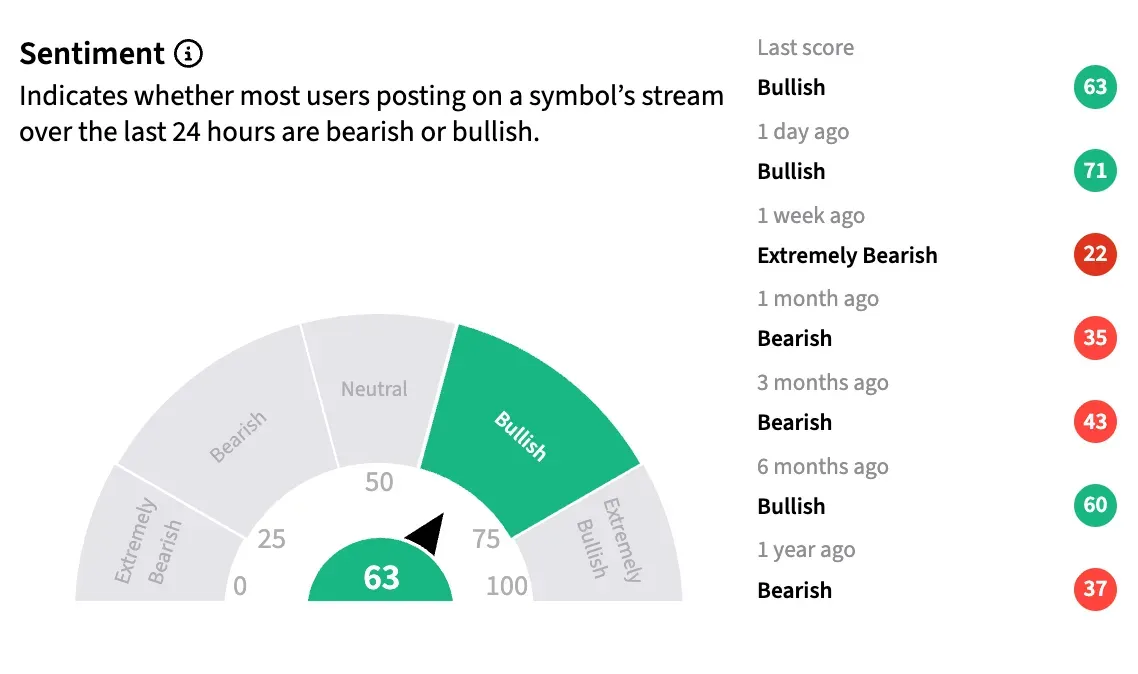
Ripple’s XRP was trading at $1.51, up by 0.1% over 24 hours. On Stocktwits, the retail sentiment around XRP remained in the ‘bullish’ territory, as chatter levels around it remained ‘high’ over the past day.
Howey Test Remains Intact
The main issue in the case concerned whether XRP was a security in and of itself. The company contended that the token should be separated from the investment contracts associated with its sale. A crypto asset can exist independently of a securities classification depending on context, according to the SEC's most recent interpretation, which seems to move closer to that distinction.
Advertisement|Remove ads.
However, the reliance on the Howey Test has not been erased. The Howey Test, in place since 1946, is a standardised framework for determining whether a transaction qualifies as an investment contract. The SEC’s new guidance reflects a shift from enforcement-driven ambiguity toward clearer regulatory definitions.
Industry experts contend that, because cryptocurrency is decentralized, dynamic, and utility-driven, the Howey Test struggles to apply to it, as it assumes centralized actors and static assets. SEC Commissioner Hester Peirce said that it “[felt] like a regulatory version of an escape room.
Read also: Ethereum Enters Leverage-Fueled Equilibrium After ‘Silver Bullet’ Boost From BlackRock, Data Shows
Advertisement|Remove ads.
For updates and corrections, email newsroom[at]stocktwits[dot]com.
Comments posted here will also appear on symbol pages.

Latest News
/filters:format(webp)https://news.stocktwits-cdn.com/Getty_Images_2208539282_jpg_3307dbd3ff.webp)
/filters:format(webp)https://news.stocktwits-cdn.com/Heera_1_1c30cb0170.PNG) Heera Hari·6m ago
Heera Hari·6m ago/filters:format(webp)https://st-everywhere-cms-prod.s3.us-east-1.amazonaws.com/large_broadcom_hq_resized_8d2f55c61f.jpg)
/filters:format(webp)https://news.stocktwits-cdn.com/Harshita_3cfe02022c.jpg) Harshita Tyagi·31m ago
Harshita Tyagi·31m ago/filters:format(webp)https://news.stocktwits-cdn.com/large_spacex_jpg_0ee570830f.webp)
/filters:format(webp)https://news.stocktwits-cdn.com/vivekkrishnanphotography_58_jpg_0e45f66a62.webp) Arnab Paul·35m ago
Arnab Paul·35m ago/filters:format(webp)https://news.stocktwits-cdn.com/large_circle_stablecoins_original_jpg_b238d12be8.webp)
/filters:format(webp)https://news.stocktwits-cdn.com/Anushka_Basu_make_me_smile_in_the_picture_b92832aa_af59_4141_aacc_4180d2241ba8_1_2_png_1086e0ed8c.webp) Anushka Basu·40m ago
Anushka Basu·40m ago/filters:format(webp)https://news.stocktwits-cdn.com/gettyimages_2206659974_594x594_40ea0c533e.jpg) Harshita Tyagi·1h ago
Harshita Tyagi·1h ago/filters:format(webp)https://news.stocktwits-cdn.com/large_Getty_Images_2237640344_jpg_bc97a7240c.webp) Anushka Basu·2h ago
Anushka Basu·2h ago