


Advertisement|Remove ads.
US Midterm Elections: Yardeni Warns A Blue Wave Could Deliver ‘A Cold Shower For Stocks’ — UBS Sees Near-Term Volatility
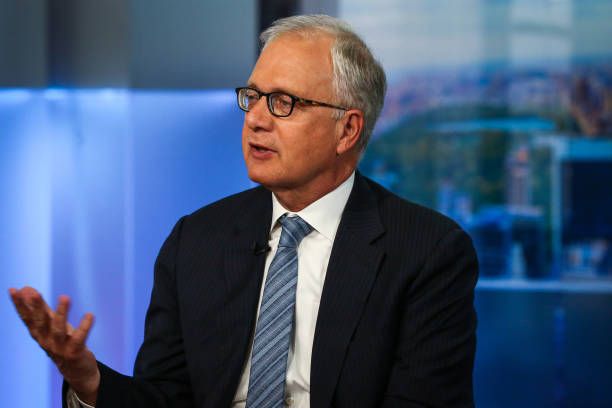


- Ed Yardeni warned a Democratic sweep could fuel fiscal gridlock, push Treasury yields higher and pressure stocks.
- UBS sees a 50% probability of a Democratic sweep but expects earnings, growth and interest rates to drive markets.
- The S&P 500 has gained an average 14.1% in the six months after midterms since 1970, versus 5.7% in comparable non-midterm periods, BlackRock said.
Advertisement|Remove ads.
Veteran market strategist Ed Yardeni warned Monday that a Democratic sweep in Tuesday's U.S. midterm elections could deliver a “cold shower for stocks,” arguing that investors have yet to fully price in that possibility.
Yardeni said political gridlock could become damaging paralysis, complicating government spending and debt-ceiling negotiations. Prolonged fiscal standoffs could push Treasury yields higher and weigh on equity valuations, he added.
He also argued that a Democratic-controlled Congress might do little to constrain President Donald Trump's use of executive authority, citing tariffs and military action against Iran.
Advertisement|Remove ads.
However, Yardeni said he would view a significant market selloff as a buying opportunity, given the strength of the U.S. economy and corporate earnings.
UBS Sees Fiscal Volatility, But Limited Policy Changes
UBS Global Wealth Management assigned a 50% probability to a Democratic sweep, a 40% chance of Democrats winning the House while Republicans retain the Senate, and a 10% probability of Republicans retaining both chambers.
In its Monday report, UBS said changes in congressional control could complicate fiscal negotiations, with debt-ceiling discussions in 2027 potentially creating volatility.
Advertisement|Remove ads.
However, the bank said that narrow congressional majorities and presidential veto power should limit sweeping legislation, while Trump would retain considerable authority over tariffs, foreign policy, and regulation.
UBS also expects Treasury yields to settle slightly lower over the next 12 months as easing inflation should outweigh persistent fiscal concerns.
The bank said it “would not treat the midterms as a binary directional event” for markets, emphasizing that earnings, economic growth, AI investment and interest rates remain more important drivers.
Advertisement|Remove ads.
The election also comes amid a pullback in AI stocks. However, UBS does not expect a change in congressional control to derail data-center expansion, as many relevant decisions are made at state and local levels.
What Strategists And Options Markets Signal
According to a Reuters report, Citigroup U.S. equity strategist Scott Chronert said stocks would likely react positively if Republicans retained control of the Senate, but negatively if Democrats secured a larger-than-expected Senate majority.
“Investors are going into the midterms very cautious,” Indosuez Wealth Management Chief Investment Officer Alexandre Drabowicz told Bloomberg, adding that market fundamentals remain strong and the S&P 500 has historically resumed climbing after elections.
Advertisement|Remove ads.
What History Says About Post-Election Returns
BlackRock's Oct.1 research highlighted growing scrutiny of AI infrastructure, citing local ballot measures seeking data-center moratoriums in Ohio, increased construction auditing in Texas, and Virginia's proposed framework supporting data centers' own power supplies.
Historical analysis found that the S&P 500 gained an average 14.1% in the six months following midterms since 1970, compared with 5.7% during comparable non-midterm periods.
Returns averaged 10.4% when a party lost unified control of Washington, versus 16.1% when control was gained, or Congress remained divided. BlackRock suggested investors focus on long-term discipline and broader market exposure instead of making investment decisions based on political assumptions.
See Also: CrowdStrike To Reportedly Buy AI Security Startups For $495M, Launches ‘Kill Switch’ For Rogue Agents
Advertisement|Remove ads.
For updates and corrections, email newsroom[at]stocktwits[dot]com.
Comments posted here will also appear on symbol pages.

Latest News
 Anushka Basu·12m ago

 Heera Hari·16m ago

 Arnab Paul·19m ago
 Prabhjote Gill·28m ago

 Harshita Tyagi·37m ago

 Anan Ashraf·50m ago