


Advertisement|Remove ads.
Yardeni Research Sees $45 Gap In 2028 S&P 500 Earnings Forecasts — Says Analysts Miss AI ‘Speed Bumps’
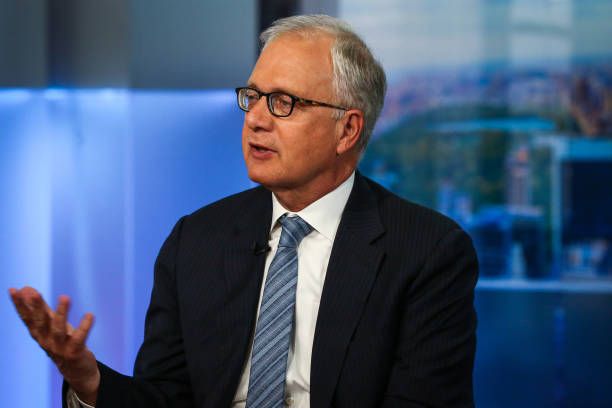


- Consensus S&P 500 operating earnings per share estimates for 2028 stand at $495, versus Yardeni Research's $450 forecast.
- The firm believes analysts' earnings estimates are yet to reflect financial, political, and physical constraints on AI investment.
- The firm expects financing to become more expensive as investors demand clearer returns on hyperscalers' commitments.
Advertisement|Remove ads.
Yardeni Research sees excessive optimism in S&P 500 earnings forecasts, with estimates yet to reflect the financial, political, and physical constraints it expects to slow the artificial intelligence (AI) investment boom.
In its Nov. 9 note, the firm highlighted a $45 difference in 2028 operating earnings per share (EPS) forecasts, with consensus estimates at $495 against its own projection of $450. For 2027, consensus stands at $426 versus the firm's $425 forecast.

The firm said analysts do not appear to anticipate a complete halt to AI infrastructure development, as consensus earnings forecasts continue rising.“We suspect there is some irrational exuberance in earnings estimates, as they don’t even reflect the speed bumps,” the note said.
Advertisement|Remove ads.
Yardeni Research noted that semiconductors account for approximately 20% of S&P 500 forward earnings and does not expect EPS to reach $500 until 2030.
Why AI Investment Could Slow
Yardeni Research identified three intensifying constraints on the AI investment boom: financial, political, and physical. The firm expects financing to become more expensive as investors demand clearer returns on hyperscalers' commitments.
Political opposition could require data center developers to fund grid upgrades, protect local resources and deliver greater community benefits. Power shortages, electricity-grid connection delays and equipment bottlenecks could also delay projects and extend the wait for positive free cash flow.
Advertisement|Remove ads.
However, the firm expects the boom to continue as demand for computing power rises. It cited Anthropic's disclosure that customers generating at least $100,000 in annual revenue increased from more than 950 to over 11,900 within a year.
The strategists also expect increasingly autonomous AI agents to perform complex tasks and unleash another wave of computing demand while delivering productivity gains.
Meanwhile, Yardeni Research said stock investors appear to be discounting the constraints, with the S&P 500's forward price-to-earnings ratio falling to 17.6, below its Liberation Day level of 18.1.
Advertisement|Remove ads.
What The Recent Market Selloff Shows
The S&P 500 fell 2.7% in the week ended November 6, with Information Technology declining 6.9%. Yardeni Research linked Thursday's sharp selloff to concerns that political opposition to data centers following the U.S. midterms could disrupt AI infrastructure spending.
However, the firm expects these restrictions to slow, rather than halt, the AI investment boom. In a separate QuickTakes note, Ed Yardeni highlighted a 14.5% weekly decline in semiconductor equipment stocks, even as analysts forecast earnings growth of 35.4% in 2026 and 51.5% in 2027.
Yardeni noted that investors have already reduced valuations for AI infrastructure suppliers, while earnings estimates have not yet fallen. “A modest cut in estimates is probably priced in. A deep one is not,” he said.
Advertisement|Remove ads.
How Markets Are Placed Today
U.S. stock futures rose Monday as investors assessed whether technology stocks could recover from last week's sharp selloff, ahead of key CPI inflation data and earnings from artificial intelligence (AI)-linked companies.
Dow Jones futures rose about 400 points, or 0.76%, while S&P 500 futures advanced 0.36% and Nasdaq-100 futures climbed about 0.5%.
On Stocktwits, retail investors’ sentiment around the SPDR S&P 500 ETF (SPY) was ‘neutral’, while sentiment toward the Invesco QQQ Trust (QQQ) was ‘bearish’ and the SPDR Dow Jones Industrial Average ETF Trust (DIA) was ‘bullish’.
Advertisement|Remove ads.
For updates and corrections, email newsroom[at]stocktwits[dot]com.
Comments posted here will also appear on symbol pages.

Latest News

 Harshita Tyagi·13m ago

 Prabhjote Gill·20m ago

 Arnab Paul·26m ago
 Prabhjote Gill·34m ago

 Yuvraj Malik·2h ago

 Shivani Kumaresan·2h ago