


Advertisement|Remove ads.
Goldman Pulls Back On Quantum Computing Research, But Bitcoin Developers Floats ‘eCash’ Fork To Redistribute Satoshi Coins
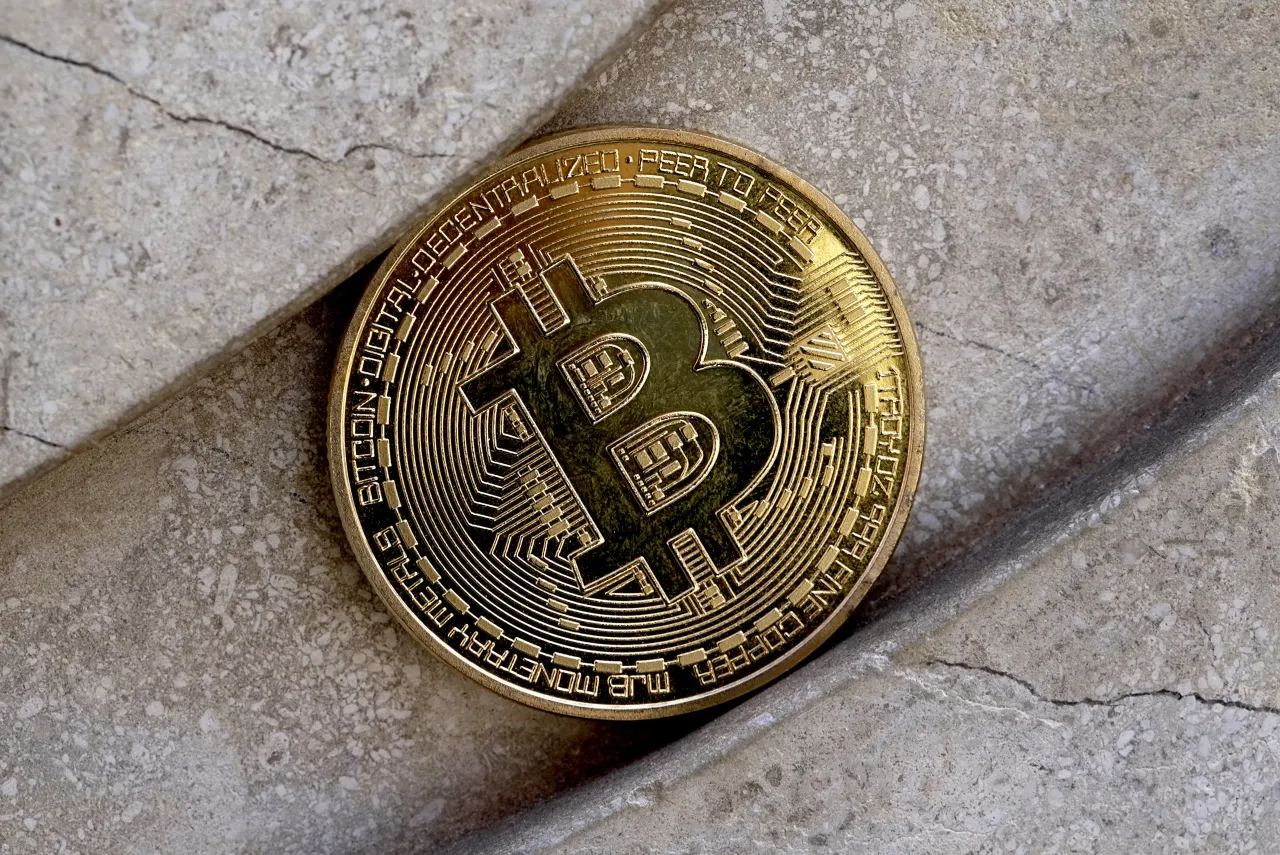


- Goldman Sachs has reportedly scaled back quantum computing efforts for finance, citing limited near-term practicality.
- Bitcoin developer Paul Sztorc plans a hard fork called “eCash,” offering 1:1 token distribution to BTC holders, to be launched in August.
- Satoshi Nakamoto holds more than $80 billion in Bitcoin, and its future remains under debate across crypto circles.
Advertisement|Remove ads.
Goldman Sachs (GS) reportedly dialed back its quantum computing goals in finance, but Bitcoin (BTC) developers are looking to disperse the coins in Satoshi Nakamoto’s wallet through a 'eCash’ fork.
The bank had reportedly invested in specialist staff and collaborated with Amazon (AMZN) to explore use cases such as portfolio optimization, before an internal study found the technology had limited near-term practical applications, according to a Bloomberg report.
According to the study’s results, fixing real-world financial problems would require millions of years of processing time, using hardware well beyond what is currently accessible. Goldman eventually shut down much of its quantum team as part of broader cost cuts, as today’s quantum processors have fewer than 100 logical qubits, considerably short of the millions needed.
Advertisement|Remove ads.
The report also suggested that JP Morgan (JPM) is still taking a shot at it, with 50 physicists, computer scientists, and mathematicians working on applications in optimization, machine learning, and cryptography.
This division points to a wider uncertainty in the industry: while quantum computing has the potential to be transformational in the long term, its commercial viability is still a long way off, leaving financial institutions split on whether to invest heavily now or to wait for the technology to mature.
Bitcoin Developer Proposes ‘Clean Reboot’
While Wall Street is split on the threat of quantum computing, Bitcoin developer Paul Sztorc announced the launch of a “hard fork” of the original cryptocurrency network, named eCash, with a scheduled August deployment.
Advertisement|Remove ads.
Sztorc described the project as a “clean reboot” of Bitcoin on Friday, where the network would be copied into a new version with some changes. Under the proposal, Bitcoin holders would receive eCash tokens on a 1:1 basis, meaning anyone holding BTC would get an equal amount of the new token at launch.
The new network would still function similarly to Bitcoin but aims to expand its features. Sztorc said the system would support additional layers that allow for use cases such as decentralized exchanges, prediction markets, identity tools, and privacy features.
He added that several of these applications are already being developed, including systems for non-fungible tokens (NFTs), privacy-focused transactions, and quantum-resistant cryptography.
Advertisement|Remove ads.
Controversy Around Satoshi-Era Coins
One of the most debated aspects of the proposal involves redistributing coins linked to early “Patoshi” wallets, widely believed to be associated with Bitcoin’s pseudonymous creator, Satoshi Nakamoto.
The idea drew criticism from podcaster and journalist Peter McCormack, who said that “taking Satoshi coins is theft and disrespectful,” and questioned the use of the “eCash” name.
Nakamoto holds around 1.1 million Bitcoin, currently worth roughly $82 billion, according to Arkham Intelligence. These coins have remained largely dormant since Bitcoin’s early years.
Advertisement|Remove ads.
Bitcoin’s price was trading over $77,854, down by 0.2% over the past 24 hours. On Stocktwits, the retail sentiment around BTC remained ‘bullish’ while chatter around it remained at ‘normal’ levels over the past day.
Quantum Concerns Resurface
This is not the first time developers have tried. Earlier this month, Jameson Lopp proposed BIP-361, a plan to freeze wallets that could be vulnerable to attacks from quantum computers. The announcement comes as discussions around quantum computing risks to encryption have intensified.
A recent paper from Google highlighted the theoretical potential for quantum systems to solve complex computations far beyond the reach of classical machines, raising questions about future risks to encryption standards widely used across financial systems, including blockchain networks.
Advertisement|Remove ads.
Read also: BTC Bounce Raises Questions Despite Strong IBIT Flows – Analyst Points To MSTR-Fueled Bitcoin Rally
For updates and corrections, email newsroom[at]stocktwits[dot]com.
Comments posted here will also appear on symbol pages.

Latest News
/filters:format(webp)https://news.stocktwits-cdn.com/large_Getty_Images_2261924569_e7eed2419d.jpg)
/filters:format(webp)https://news.stocktwits-cdn.com/IMG_8805_JPG_6768aaedc3.webp) Deepti Sri·19m ago
Deepti Sri·19m ago/filters:format(webp)https://news.stocktwits-cdn.com/large_exxon_sept_4_a55c4a3eed.webp)
/filters:format(webp)https://news.stocktwits-cdn.com/Aashika_Suresh_Profile_Picture_jpg_2acd6f446c.webp) Aashika Suresh·23m ago
Aashika Suresh·23m ago/filters:format(webp)https://news.stocktwits-cdn.com/large_Getty_Images_2295800057_979b0c0a2b.jpg)
/filters:format(webp)https://news.stocktwits-cdn.com/shivani_photo_jpg_dd6e01afa4.webp) Shivani Kumaresan·35m ago
Shivani Kumaresan·35m ago/filters:format(webp)https://news.stocktwits-cdn.com/large_Getty_Images_2250242543_jpg_474e43d47b.webp) Aashika Suresh·1h ago
Aashika Suresh·1h ago/filters:format(webp)https://news.stocktwits-cdn.com/large_Seagate_jpg_50a56724b4.webp)
/filters:format(webp)https://news.stocktwits-cdn.com/IMG_9209_1_d9c1acde92.jpeg) Yuvraj Malik·1h ago
Yuvraj Malik·1h ago/filters:format(webp)https://news.stocktwits-cdn.com/large_amzn_gsat_6c81fe2339.jpg) Deepti Sri·2h ago
Deepti Sri·2h ago