


Advertisement|Remove ads.
Elon Musk Quips On ‘Plus Side’ Of Quantum Threat After Google Study Raises Fresh Questions On Crypto Security
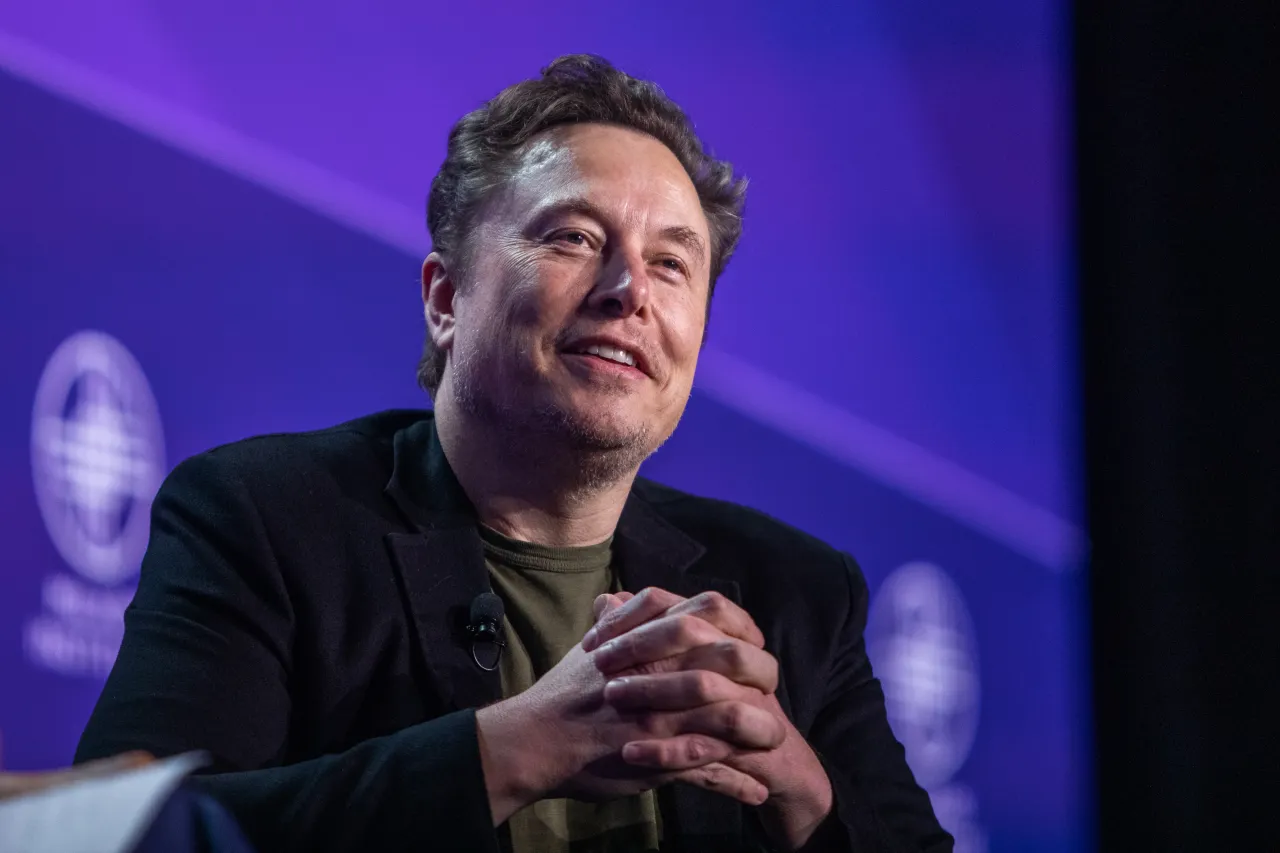


- Elon Musk said on Monday that lost crypto wallets could become accessible in the future if quantum computers break current encryption.
- New research from Google Quantum AI suggests the math securing Bitcoin and Ethereum may be easier to crack than previously believed.
- While no immediate risk exists, the findings are increasing pressure on the industry to prepare for quantum-resistant security.
Advertisement|Remove ads.
Elon Musk added a dose of humor to a debate around crypto security after new research from Google (GOOG/GOOGL) Quantum AI suggested that breaking Bitcoin’s encryption may require far fewer quantum resources than previously believed.
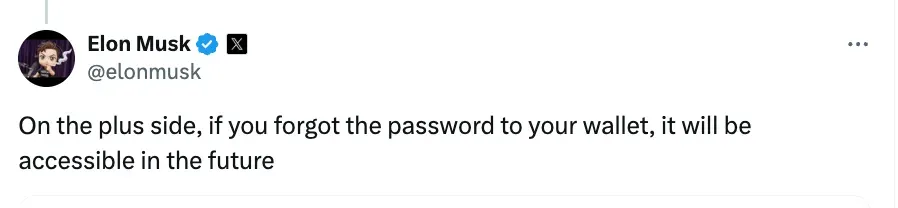
Responding to the discussion, the SpaceX founder commented, “On the plus side, if you forgot the password to your wallet, it will be accessible in the future,” pointing to the theoretical risk that quantum computers could eventually bypass existing encryption methods.
Google Research Reassesses Quantum Threat
Google Quantum AI, a Google Research initiative, published a paper on Monday that revisited earlier assumptions about the computational cost of breaking widely used encryption schemes.
Advertisement|Remove ads.
The research focused on Shor’s algorithm, a quantum method capable of solving the mathematical problems that secure systems like Bitcoin and Ethereum (ETH), and examined how improvements at both the software and hardware levels could make such attacks more efficient.
Why Fewer Qubits Matter For Bitcoin, Ethereum
According to the research, advances in quantum algorithms and error correction could significantly reduce the number of qubits, the basic units of quantum computation, required to carry out these computations, compared to earlier estimates. This means that while today’s quantum computers remain far from capable of breaking crypto encryption, the threshold for doing so in the future may be lower.
Bitcoin was trading at $66,690, down by 1.6% over the past 24 hours. On Stocktwits, the retail sentiment around BTC moved from the ‘bearish’ to ‘extremely bearish’ territory, while chatter levels around it remained ‘low’ over the past day.
Advertisement|Remove ads.
Q-Day Timeline May Be Moving Closer
Meanwhile, Justin Drake, a researcher at the Ethereum Foundation and a co-author of the paper, highlighted the implications for blockchain networks.
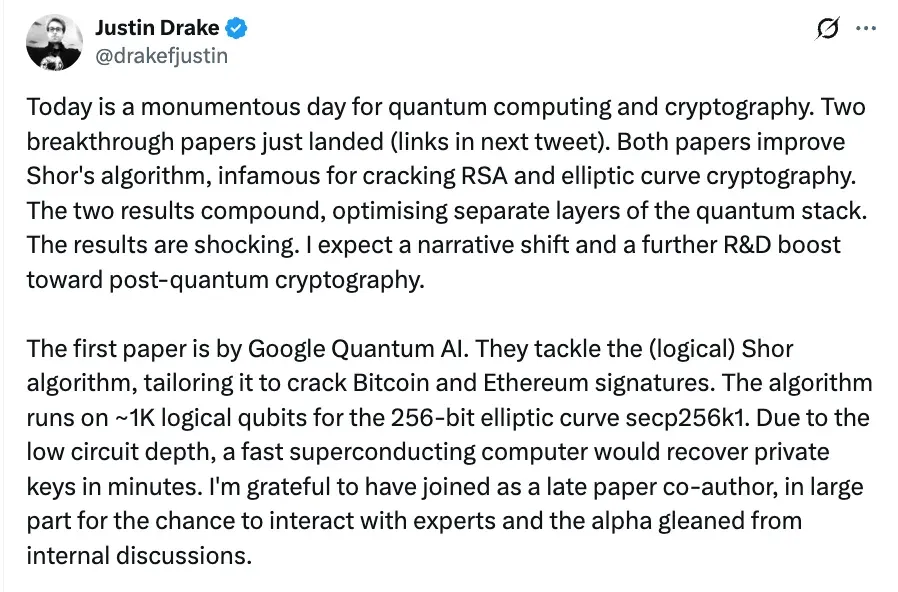
He noted that while the threat remains long-term, the updated estimates could shorten preparation timelines, requiring earlier adoption of quantum-resistant cryptography. Drake wrote that “my confidence in Q-Day by 2032 has shot up significantly,” referring to the day when quantum computers could begin breaking current encryption systems.
Advertisement|Remove ads.
Coin Bureau CEO Nick Pucrin also commented on the paper, saying the research suggested fewer quantum resources may be needed than earlier estimates, noting that breaking Bitcoin’s encryption may require “fewer than 1,450 high-quality qubits,” rather than the much higher figures like millions.
However, a testnet implementing Bitcoin Improvement Proposal 360 (BIP-360), aimed at strengthening Bitcoin against quantum threats, has already been deployed, allowing real-world testing of quantum-resistant transactions.
Advertisement|Remove ads.
For updates and corrections, email newsroom[at]stocktwits[dot]com.
Comments posted here will also appear on symbol pages.

Latest News
/filters:format(webp)https://news.stocktwits-cdn.com/large_oil_stocks_jpg_6935abe231.webp)
/filters:format(webp)https://news.stocktwits-cdn.com/Aashika_Suresh_Profile_Picture_jpg_2acd6f446c.webp) Aashika Suresh·12m ago
Aashika Suresh·12m ago/filters:format(webp)https://news.stocktwits-cdn.com/large_Getty_Images_2245341683_0cb2bc89f5.jpg)
/filters:format(webp)https://news.stocktwits-cdn.com/1707726834303_jpg_11f20a9aa9.webp) Shashank Nayar·2h ago
Shashank Nayar·2h ago/filters:format(webp)https://news.stocktwits-cdn.com/large_Getty_Images_2269282844_jpg_933bcaa49e.webp) Shashank Nayar·3h ago
Shashank Nayar·3h ago/filters:format(webp)https://news.stocktwits-cdn.com/large_chips_ai_4770ebc76c.jpg) Shashank Nayar·3h ago
Shashank Nayar·3h ago/filters:format(webp)https://news.stocktwits-cdn.com/large_Anthropic_ec1c7b5ee9.jpg) Shashank Nayar·5h ago
Shashank Nayar·5h ago/filters:format(webp)https://st-everywhere-cms-prod.s3.us-east-1.amazonaws.com/large_bloom_energy_resized_d69c98fd7a.jpg) Shashank Nayar·6h ago
Shashank Nayar·6h ago