


Advertisement|Remove ads.
Export Control Restrictions On Anthropic Show Frontier AI Models Are Strategic Assets, Says Macquarie’s Jamie Morse
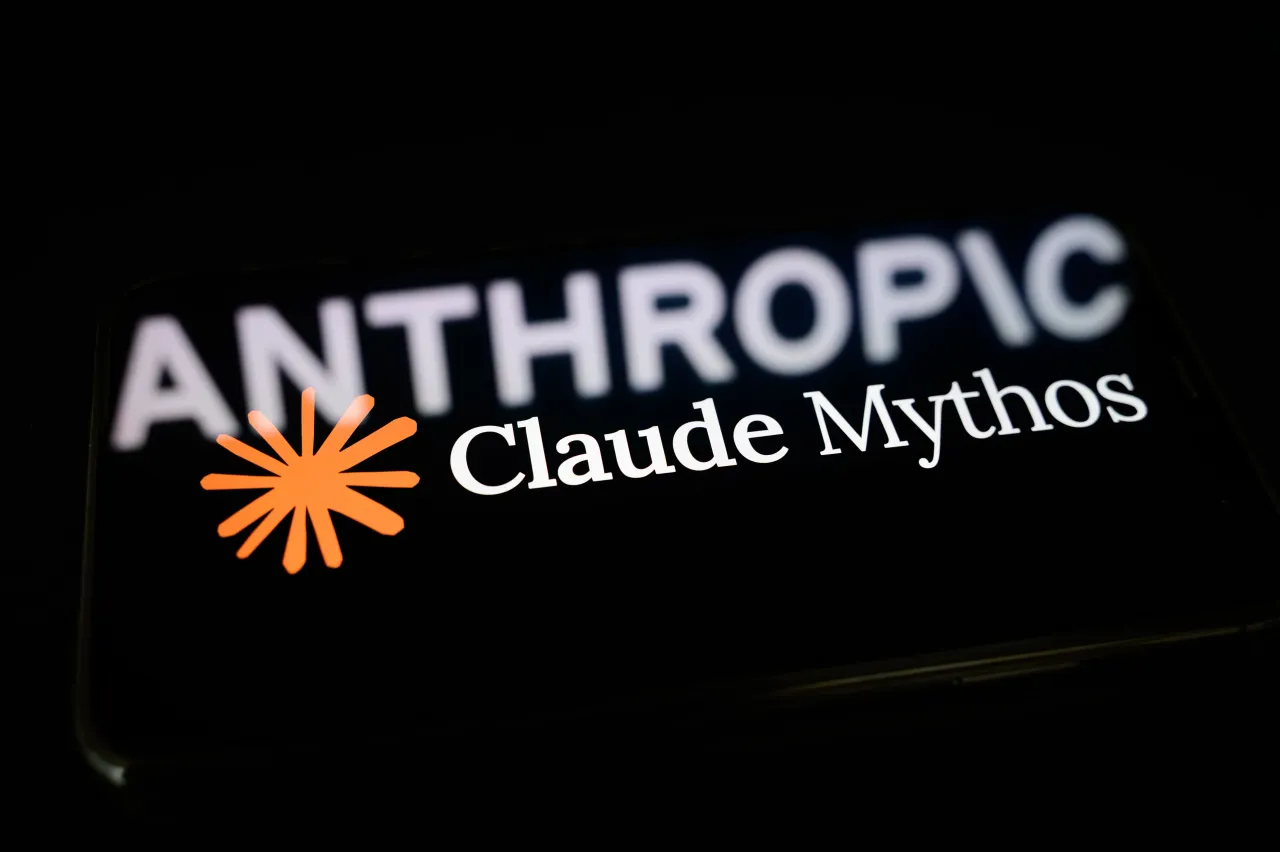


- He stated that access to critical AI capabilities is increasingly governed by sovereign authority rather than markets or partnerships.
- Morse cited the U.S. government's export-control directive affecting access to Anthropic's Mythos and Fable models as a key example of sovereign intervention in AI.
- He said that systems that rely on access instead of control will inherently be vulnerable to sovereign intervention.
Advertisement|Remove ads.
The AI arms race is no longer just about chips. The recent export control restrictions affecting Anthropic's Mythos and Fable models suggest governments are beginning to treat frontier AI systems as strategic assets, prompting questions about AI sovereignty, access, and control in an increasingly fragmented technological landscape.
Macquarie Technology Group’s Head of Industry and Policy, Jamie Morse, believes that the implications of the Anthropic incident are immediate and profound. “The episode demonstrates that frontier AI models are now treated as strategic assets, subject to intervention on national security grounds,” he said.

Access To AI Increasingly Under Shadow Of Sovereign Authority
Morse argued that access to critical AI capabilities is increasingly governed by sovereign authority rather than markets or partnerships. He highlighted the U.S. government's export-control directive affecting Anthropic's Mythos and Fable models, which forced the company to restrict access shortly after launch.
Advertisement|Remove ads.
Anthropic launched its Claude Fable 5 and Mythos 5 models earlier this month, but within 72 hours, the company said it had received a U.S. export-control directive requiring it to suspend access for foreign nationals.
Anthropic subsequently disabled access to the models more broadly to ensure compliance, effectively removing the newly launched systems from availability.
It Started With Chips
The development may mark a notable evolution in Washington's approach to AI governance.
Advertisement|Remove ads.
For years, U.S. restrictions have largely targeted the hardware underpinning artificial intelligence, including advanced chips from Nvidia Corp. (NVDA) and Advanced Micro Devices Inc. (AMD), semiconductor manufacturing equipment, and computing infrastructure.
Those measures were designed to limit who could build cutting-edge AI systems.
The emphasis on controlling critical AI inputs is also evident in Washington's broader semiconductor strategy. President Donald Trump on Tuesday said that the U.S. would account for 50% of global chip production by the end of his term, underscoring the administration's focus on securing technologies viewed as strategically important.
Advertisement|Remove ads.
The Battleground — Access Versus Control
The Anthropic episode suggests the focus may be moving up the stack, from controlling the infrastructure that powers AI to controlling access to the intelligence itself, Morse argued. “Interdependence may distribute capability, but it does not distribute control,” he said.
This also highlights a growing reality: countries and companies may be able to use frontier AI systems without necessarily controlling whether that access continues.
“Systems that rely on access, rather than control, are inherently vulnerable to sovereign intervention,” Morse added.
Advertisement|Remove ads.
Why Investors Should Care
For investors, the debate is no longer just about which company builds the best AI model. It is increasingly about which companies and countries can maintain reliable access to the technologies underpinning the AI economy.
The Anthropic episode suggests the next phase of the AI race may be defined not only by who can build the most powerful models, but also by who controls access to them. As Morse noted, the concentration of control over critical AI inputs also concentrates the power to restrict access.
The Invesco QQQ Trust (QQQ) is up 37% over the past 12 months, while the iShares U.S. Technology ETF (IYW) is up 51%.
Advertisement|Remove ads.
Also See: This Overlooked CoreWeave Disclosure Has Cantor Growing More Bullish — What Investors Need To Know
For updates and corrections, email newsroom[at]stocktwits[dot]com.
Comments posted here will also appear on symbol pages.

Latest News
/filters:format(webp)https://news.stocktwits-cdn.com/large_Getty_Images_1445160636_5780a5fdde.jpg)
/filters:format(webp)https://news.stocktwits-cdn.com/Anushka_Basu_make_me_smile_in_the_picture_b92832aa_af59_4141_aacc_4180d2241ba8_1_2_png_1086e0ed8c.webp) Anushka Basu·3m ago
Anushka Basu·3m ago/filters:format(webp)https://news.stocktwits-cdn.com/Getty_Images_540198451_jpg_3e5f3d8ee7.webp) Anushka Basu·57m ago
Anushka Basu·57m ago/filters:format(webp)https://news.stocktwits-cdn.com/large_Getty_Images_2228875514_jpg_ae066f5c0f.webp)
/filters:format(webp)https://st-everywhere-cms-prod.s3.us-east-1.amazonaws.com/i_OS_App_Icon_1_8054f2a2fe.png) Stocktwits News Desk·1h ago
Stocktwits News Desk·1h ago/filters:format(webp)https://news.stocktwits-cdn.com/large_tom_lee_OG_2_jpg_9ae5c049c3.webp) Stocktwits News Desk·2h ago
Stocktwits News Desk·2h ago/filters:format(webp)https://news.stocktwits-cdn.com/large_Getty_Images_1491619356_jpg_1a9c6d5342.webp) Anushka Basu·3h ago
Anushka Basu·3h ago/filters:format(webp)https://news.stocktwits-cdn.com/Getty_Images_2293869390_5f3fe09614.jpg) Stocktwits News Desk·3h ago
Stocktwits News Desk·3h ago