


Advertisement|Remove ads.
Bernie Sanders Wants You To Own Half Of Big AI As Anthropic, OpenAI Mega IPOs Loom: ‘Through A One-Time 50% Tax’
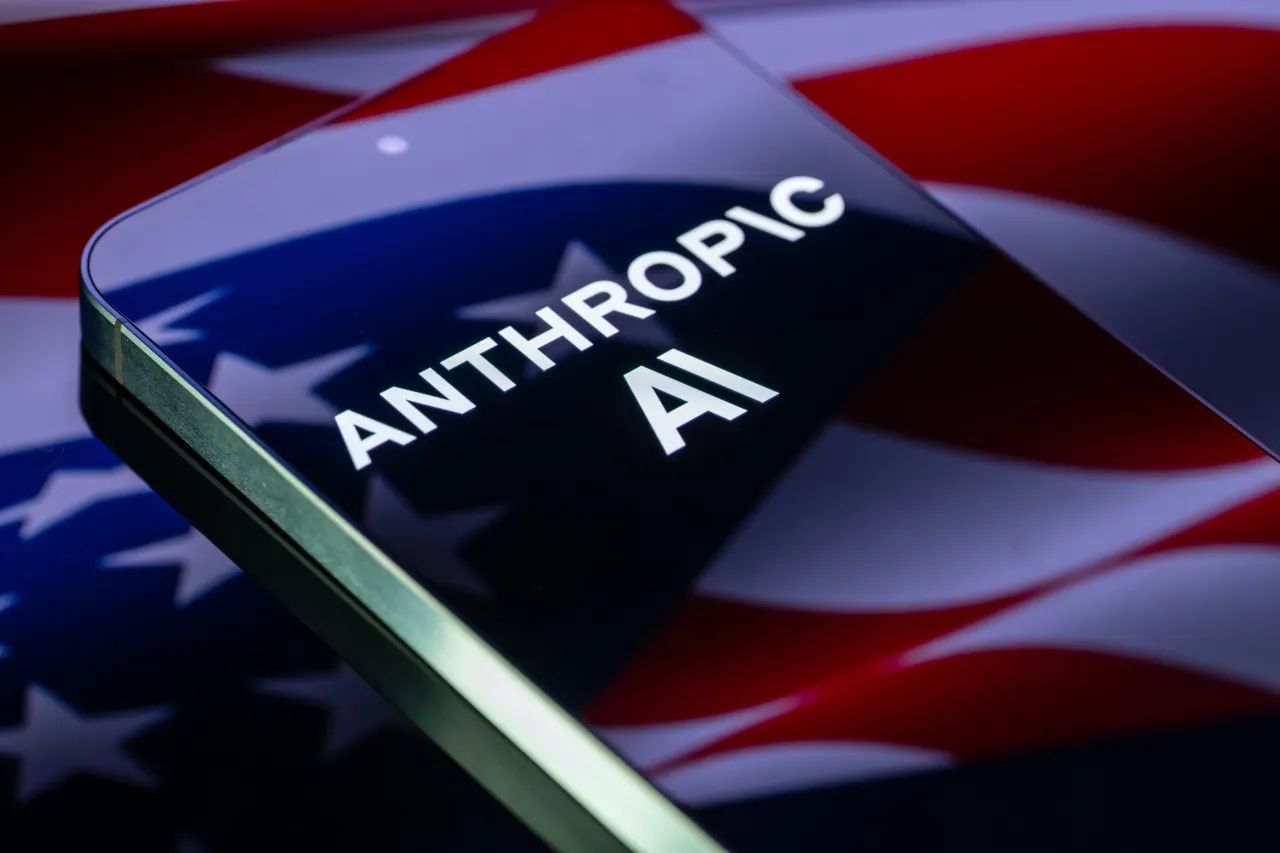


- Sanders proposed giving the public a direct stake in major AI companies through a one-time 50% tax on company stock.
- Sanders called AI one of the most transformative technologies ever, saying it is already affecting the economy, education and society.
- The proposal comes as AI competition intensifies, with major tech companies expected to spend more than $750 billion on AI infrastructure this year.
Advertisement|Remove ads.
Sen. Bernie Sanders (I-Vt) is planning to introduce legislation that would give the public a 50% ownership interest in the nation’s largest artificial intelligence companies, arguing that the economic gains created by the technology should benefit society broadly rather than a small group of corporate leaders.
Sanders’ Proposed Ownership Model
The senator outlined the proposal in remarks posted on the social media platform X, where he said the measure would help ensure that future AI-generated wealth improves public living standards while limiting the influence of powerful private interests over decisions that affect Americans.
“The question is not whether AI will change the world. It will. The question is who will own and control that future? Who will benefit from it and who will be hurt by it? Will AI be used to make life better for working families? Will it help us eliminate poverty, extend life expectancies, and help us solve the climate crisis? Or will the future of humanity be determined by a handful of billionaires who have developed AI to become even richer and more powerful than they are?” Sanders said.
Advertisement|Remove ads.
Sanders framed AI as a technological shift that can reshape nearly every aspect of modern life. Under his proposal, the public would receive a direct stake in the companies expected to generate enormous value from AI-driven products and services.
He added that such a structure could help distribute the technology's financial rewards more broadly across society. “This legislation would give the public a direct ownership stake in the largest AI companies in America through a one-time 50% tax, not on profits, but on stock,” said Sanders.
Political commentator and media personality Megan Kelly also echoed a similar sentiment, saying that AI companies should help pay the huge $39 trillion U.S. national debt. “They're the only ones who can afford it. They actually could get us out of this jam,” Kelly said on the Shawn Ryan podcast.
Advertisement|Remove ads.
Investors Await Anthropic, OpenAI IPOs
Beyond infrastructure spending, attention is increasingly turning toward several highly valued AI-focused companies expected to seek public listings. Among the most closely watched are Anthropic, OpenAI, and SpaceX.
Anthropic has officially submitted its draft S-1 registration statement with the SEC to kickstart its public debut. The company’s estimated value has risen to about $965 billion after strong adoption by business customers and a $65 billion funding round. On Stocktwits, retail sentiment remained in ‘extremely bullish’ territory for Anthropic.
Advertisement|Remove ads.
OpenAI, the company behind ChatGPT, is aiming for an IPO valuation of roughly $852 billion to $1.1 trillion. The company hopes to raise more than $60 billion through its stock market debut. Retail sentiment around the ticker remained in ‘bullish’ territory.
Meanwhile, SpaceX is seeking an IPO valuation of about $1.75 trillion to $2 trillion and aims to raise around $75 billion, which would make it one of the largest public offerings ever. Retail sentiment for SPCX remained in ‘bullish’ territory at the time of writing.
Why AI Matters For The Economy Today
According to Sanders, AI’s effects are already being felt across the economy, education, environmental policy, civic institutions and personal well-being. The senator suggested that the technology’s reach will continue expanding as AI systems become more capable.
Advertisement|Remove ads.
Sanders also highlighted concerns surrounding increasingly advanced AI systems. “There is also a very real fear that as AI becomes smarter than human beings, it could eventually function independent of human control with potentially catastrophic consequences,” he added.
Sanders supported his case with proposals from business heads. He said that OpenAI has proposed a public wealth fund that would give citizens a stake in AI-driven growth, while Anthropic has backed sovereign wealth funds that invest in AI. Elon Musk has argued that direct government payments could help offset job losses caused by AI.
The proposal arrives as the race to dominate artificial intelligence enters a new phase, with technology companies committing unprecedented sums to infrastructure while several of the industry's most valuable private firms move closer to public stock market debuts.
Advertisement|Remove ads.
The largest cloud and technology providers continue expanding data center capacity and AI computing resources at a rapid pace. Industry estimates suggest that combined capital expenditures from Amazon.com (AMZN), Microsoft (MSFT), Alphabet (GOOGL), Meta Platforms (META) and other major enterprise cloud operators could surpass $750 billion this year. Other Major beneficiaries of the AI boom include Nvidia (NVDA), Micron (MU) and Advanced Micro Devices (AMD).
Also See: The Short Seller Who Took On GameStop Just Got Convicted Of Fraud – And Says ‘This Is Not Over’
For updates and corrections, email newsroom[at]stocktwits[dot]com.
Advertisement|Remove ads.
Comments posted here will also appear on symbol pages.

Latest News
/filters:format(webp)https://news.stocktwits-cdn.com/large_Getty_Images_2157750376_jpg_2621e10cf1.webp)
/filters:format(webp)https://news.stocktwits-cdn.com/Heera_1_1c30cb0170.PNG) Heera Hari·8m ago
Heera Hari·8m ago/filters:format(webp)https://news.stocktwits-cdn.com/large_Getty_Images_2232147590_jpg_a31aecbfad.webp)
/filters:format(webp)https://news.stocktwits-cdn.com/Prabhjote_DP_67623a9828.jpg) Prabhjote Gill·16m ago
Prabhjote Gill·16m ago/filters:format(webp)https://news.stocktwits-cdn.com/large_coreweave_logo_original_jpg_d5b88ecdd9.webp)
/filters:format(webp)https://news.stocktwits-cdn.com/Harshita_3cfe02022c.jpg) Harshita Tyagi·43m ago
Harshita Tyagi·43m ago/filters:format(webp)https://news.stocktwits-cdn.com/large_Getty_Images_2265959250_jpg_151f783c77.webp)
/filters:format(webp)https://news.stocktwits-cdn.com/vivekkrishnanphotography_58_jpg_0e45f66a62.webp) Arnab Paul·44m ago
Arnab Paul·44m ago/filters:format(webp)https://news.stocktwits-cdn.com/large_Getty_Images_2287298723_67960e9982.jpg)
/filters:format(webp)https://news.stocktwits-cdn.com/Anushka_Basu_make_me_smile_in_the_picture_b92832aa_af59_4141_aacc_4180d2241ba8_1_2_png_1086e0ed8c.webp) Anushka Basu·1h ago
Anushka Basu·1h ago/filters:format(webp)https://news.stocktwits-cdn.com/large_Tesla_Elon_Musk_8a1452b68e.jpg) Arnab Paul·1h ago
Arnab Paul·1h ago