


Advertisement|Remove ads.
Bitcoin Has A Wall Street Winner And A Main Street Casualty – Bitcoin Depot Is The Latest Proof
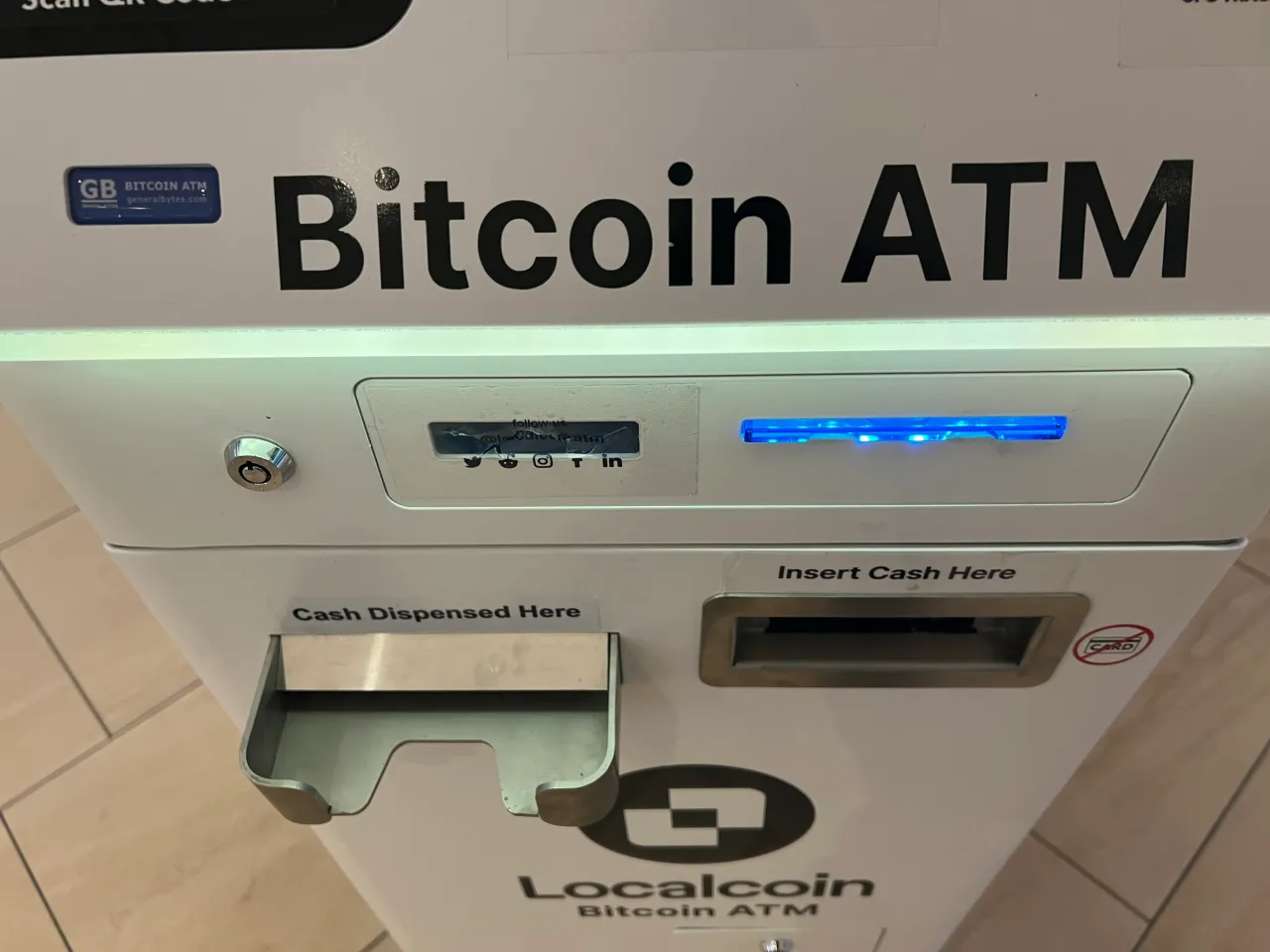


- Bitcoin Depot filed for Chapter 11, taking over 9,000 kiosks offline on Monday.
- Iowa, Massachusetts AGs sue operator for more than $30M in fraud losses tied to its machines.
- U.S. spot Bitcoin ETFs hold $104 billion in assets, with BlackRock’s IBIT alone being almost 2,000 times Bitcoin Depot's market cap on Friday.
Advertisement|Remove ads.
Bitcoin Depot (BTM), once one of the largest U.S. crypto ATM operators, filed for Chapter 11 bankruptcy on Monday, shutting down the largest U.S. network linking cash to cryptocurrencies. This comes at a time when Wall Street has ramped up its Bitcoin (BTC) roadmap. U.S. spot Bitcoin exchange-traded funds (ETFs) topped $104 billion in assets last week. These contrasting developments show the shift in the crypto economy.
The Nasdaq-listed company filed voluntary Chapter 11 proceedings in the U.S. Bankruptcy Court for the Southern District of Texas, taking its network of more than 9,000 kiosks offline and starting an orderly wind-down.
BTM shares plummeted 74.28% to $0.7535 in pre-market. On Stocktwits, retail sentiment around BTM remained in the ‘bearish’ zone, while chatter stayed at ‘low’ levels over the past day.
Advertisement|Remove ads.
The Collapse Of Crypto ATM Trade
Founded in 2016, “with a mission to connect cash users to the bigger, digital financial system,” Bitcoin Depot had kiosks inside Circle K stores and gas stations in 47 states. Its customer, by design, had no brokerage account and often, no bank account.
Operators of cash-enabled cryptocurrency ATMs continue to face multiple obstacles, while compliant spot Bitcoin ETFs are thriving by relying on regulatory frameworks.
The cash ramp model of Bitcoin ATM operator Bitcoin Depot has completely failed within its operational framework. The firm has been investigated and sued by the attorneys general of the U.S. states of Iowa and Massachusetts, resulting in cumulative losses of over $30 million for residents of these two states.
Advertisement|Remove ads.
"The regulatory environment for BTM operators has shifted significantly," CEO Alex Holmes said, citing increased compliance obligations, new transaction limits, and outright bans in some jurisdictions. The company's current business model is not sustainable given the circumstances, said Holmes.
Preliminary first-quarter revenue fell 49% to $83.5 million, while the company posted a net loss of $9.5 million, compared with a profit of $12.2 million a year ago. A security lapse in April cost another $3.7 million.
Bitcoin ETFs Are Winning The Regulatory Battle
The contrast with Wall Street’s Bitcoin trade is stark. U.S. spot Bitcoin ETFs have $104.29 billion in net assets, which stands for nearly 7% of Bitcoin’s market cap, with cumulative net inflows of $58.34 billion since launch, according to SoSoValue data. BlackRock’s IBIT IBIT alone holds $64.63 billion in assets — nearly 2,000 times Bitcoin Depot's market value at Friday's close.
The ETF side, however, is not without volatility. The daily net outflow totaled $290.42 million as of Friday, with Bitcoin’s price falling over 2% to $76,795. For ETF issuers, the compliance burden that sank the kiosk model is just the cost of doing business as a regulated investment vehicle.
Advertisement|Remove ads.
For updates and corrections, email newsroom[at]stocktwits[dot]com.
Comments posted here will also appear on symbol pages.

Latest News
/filters:format(webp)https://news.stocktwits-cdn.com/large_Getty_Images_2236793425_jpg_2458e96bb4.webp)
/filters:format(webp)https://news.stocktwits-cdn.com/Harshita_3cfe02022c.jpg) Harshita Tyagi·6m ago
Harshita Tyagi·6m ago/filters:format(webp)https://news.stocktwits-cdn.com/large_Eli_Lilly_jpg_953956d5f8.webp)
/filters:format(webp)https://news.stocktwits-cdn.com/vivekkrishnanphotography_58_jpg_0e45f66a62.webp) Arnab Paul·6m ago
Arnab Paul·6m ago/filters:format(webp)https://news.stocktwits-cdn.com/large_terawulf_OG_jpg_a87a18705d.webp)
/filters:format(webp)https://news.stocktwits-cdn.com/Prabhjote_DP_67623a9828.jpg) Prabhjote Gill·31m ago
Prabhjote Gill·31m ago/filters:format(webp)https://news.stocktwits-cdn.com/gettyimages_2295061056_594x594_afda5c9169.jpg)
/filters:format(webp)https://news.stocktwits-cdn.com/Heera_1_1c30cb0170.PNG) Heera Hari·40m ago
Heera Hari·40m ago/filters:format(webp)https://news.stocktwits-cdn.com/large_SPACEX_SPCX_d5bfc46a3b.webp) Arnab Paul·1h ago
Arnab Paul·1h ago/filters:format(webp)https://news.stocktwits-cdn.com/large_Getty_Images_2294367938_81e2686905.jpg) Harshita Tyagi·2h ago
Harshita Tyagi·2h ago