


Advertisement|Remove ads.
Dan Ives Warns ‘No Way To Sugarcoat’ That Democrats’ Blue Wave Is Negative For AI Buildout — But Calls Tech Stocks Sell-Off ‘Irrational’



- Ives said investors were beginning to price in an earlier peak in capital expenditure growth, with concerns about the political environment adding to pressure on AI infrastructure companies.
- However, he argued that the market was extrapolating the election outcome too aggressively.
- Ives added that even if 20% of planned data centers fail to materialize, demand would still significantly outstrip supply over the next two years.
Advertisement|Remove ads.
Wall Street's AI trade is facing a fresh political overhang after Democrats' sweeping midterm victories raised questions about the future of data center expansion. However, Yorkville Ives partner Dan Ives believes investors are overreacting, arguing that the AI boom remains firmly intact despite the political uncertainty.
Speaking on Bloomberg Radio and CNBC on Friday, Ives acknowledged that the Democratic victories could complicate the AI infrastructure buildout, particularly in states such as Texas. However, he pushed back against fears of a broader slowdown, calling the recent technology stock sell-off irrational and describing the pullback as a potential buying opportunity.
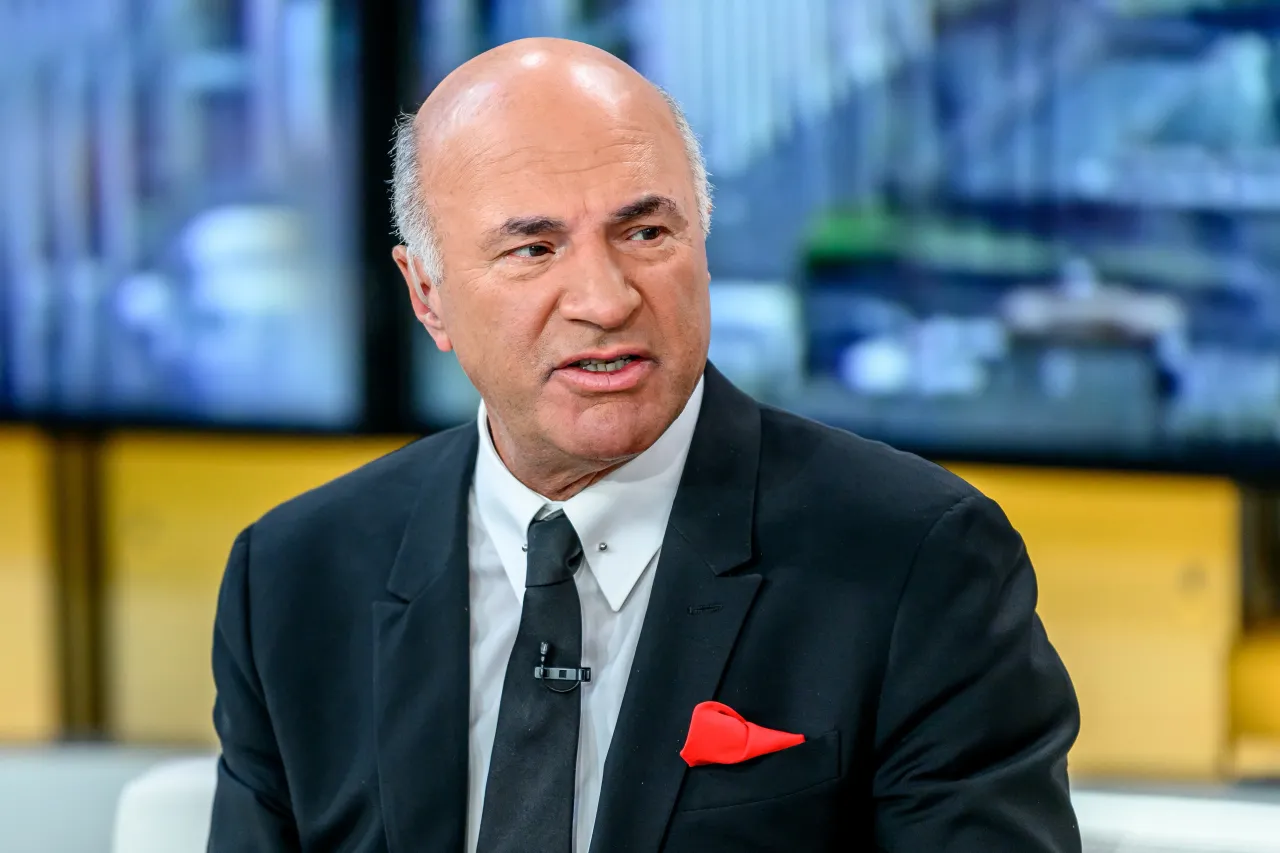
Blue Wave Could Slow AI Buildout, But Ives Says Investors Are Overreacting
"There was no way to sugarcoat that. The blue tidal wave. It's a negative for the AI builder," Ives told Bloomberg.
Advertisement|Remove ads.
He said investors were beginning to price in an earlier peak in capital expenditure growth, with concerns about the political environment adding to pressure on AI infrastructure companies, including neocloud providers and energy players.
However, Ives argued that the market was extrapolating the election outcome too aggressively. He added that even if 20% of planned data centers fail to materialize, demand would still significantly outstrip supply over the next two years.
Ives also pushed back against concerns that semiconductor companies such as Nvidia Corp. (NVDA) and Advanced Micro Devices Inc. (AMD) would face weaker demand or have to cut their forecasts.
Advertisement|Remove ads.
He estimates that 800 to 1,000 data centers would be built, adding that roughly 75% of planned projects were already permitted or under construction and therefore likely to proceed.
Ives described the AI boom as being in its early stages, comparing it to a party that is far from over despite the political disruption.
"The cops came to the party for a noise violation," Ives said, estimating that the AI party was still around 11:30 p.m. or midnight, with hours left before it ended.
Advertisement|Remove ads.
Ives Calls Tech Sell-Off 'Irrational,' Sees Golden Buying Opportunity
During an interview with CNBC, Ives doubled down on his bullish outlook, arguing that investors were treating technology stocks as though the AI revolution was no longer happening.
"I think this is just irrational selling when it comes to tech," he said.
Ives pointed to semiconductor stocks, hyperscalers and software companies as examples of businesses caught up in the broader market retreat, despite the massive infrastructure spending expected to support AI adoption.
Advertisement|Remove ads.
He acknowledged that capital expenditure growth could peak earlier than previously anticipated, potentially by one or two years. However, he argued that this would not invalidate the longer-term investment opportunity.
"This will be a golden buying opportunity," Ives said, particularly pointing to hyperscalers. Investors betting against the AI boom, he suggested, may be getting ahead of themselves.
During the after-hours session on Friday, the SPDR S&P 500 ETF (SPY), which tracks the S&P 500 index, gained 0.17%; the Invesco QQQ Trust ETF (QQQ) rose 0.21%; and the SPDR Dow Jones Industrial Average ETF Trust (DIA) edged up by 0.06%. Retail sentiment on Stocktwits toward the S&P 500 ETF was in the ‘bearish’ territory at the time of writing.
Advertisement|Remove ads.
The Global X Artificial Intelligence & Technology ETF (AIQ) rose 1.32% on Friday, while the iShares U.S. Technology ETF (IYW) gained 1.31%.
Also See: Cathie Wood-Led Ark Loads Up On GOOG, AMD, NVDA And Biotech Stocks — But Sells CRWV, AVGO, LLY
For updates and corrections, email newsroom[at]stocktwits[dot]com.
Advertisement|Remove ads.
Comments posted here will also appear on symbol pages.

Latest News

 Stocktwits News Desk·13m ago

 Anushka Basu·46m ago
 Stocktwits News Desk·1h ago
 Anushka Basu·2h ago
 Anushka Basu·3h ago
 Anushka Basu·4h ago