


Advertisement|Remove ads.
Fed’s Barr Sees Further Policy Adjustments As Inflation Risks Rise — Flags AI Buildout, Tariffs And Geopolitical Shocks
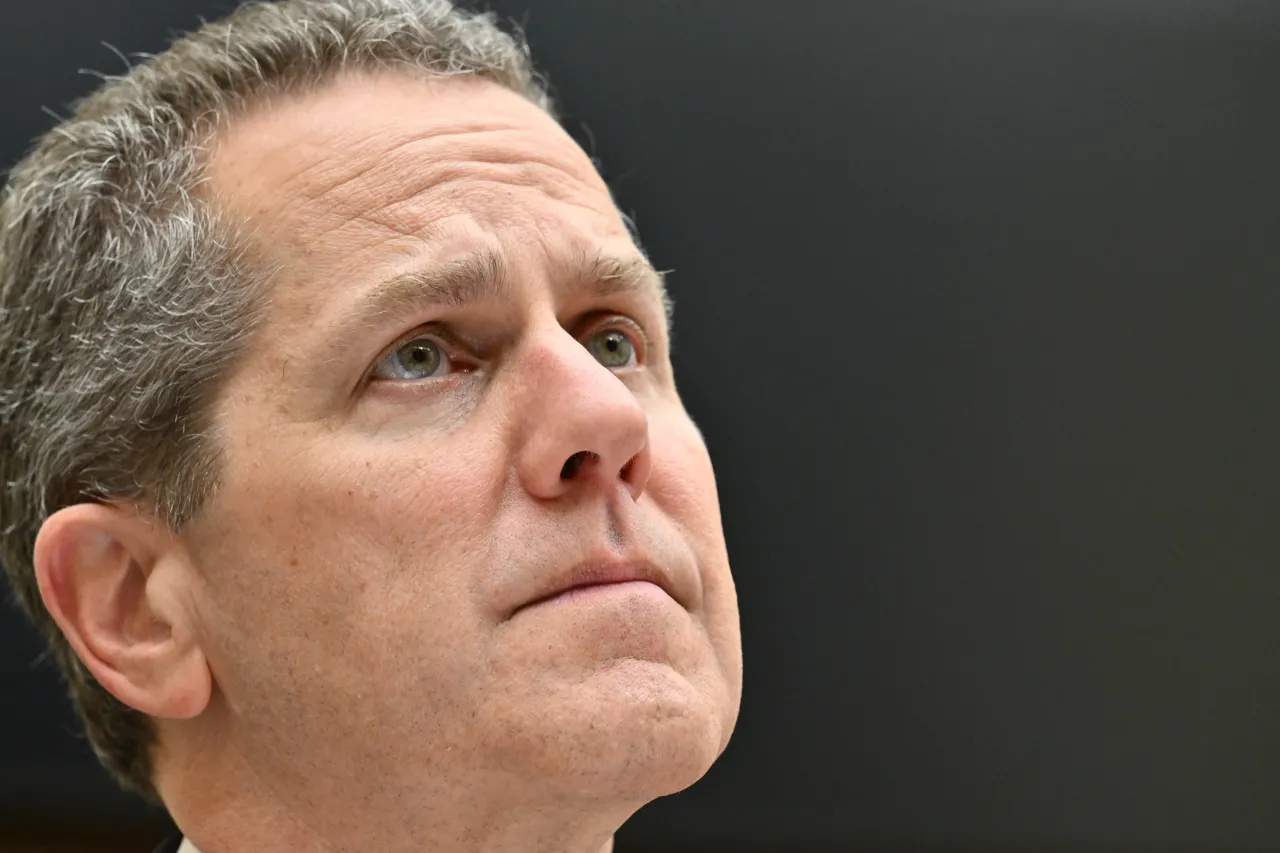


- Barr backed the Fed’s 25-basis-point rate hike, saying policy had been out of position.
- Further policy adjustments are likely because inflation remains above 2% and is not returning to target quickly enough.
- Barr cited tariffs, the Middle East conflict, the war in Ukraine, and surging demand for AI investment as sources of upward price pressure.
Advertisement|Remove ads.
Federal Reserve Governor Michael Barr said Wednesday that further monetary policy adjustments are likely following last week’s rate increase, as inflation remains above the Fed’s 2% target and risks to price stability have increased.
Speaking at an event hosted by the Federal Reserve Bank of Chicago, Barr noted that “given changes to the economy, we were out of position” and said that last week’s 25-basis-point hike to a 3.75%-4% range was an adjustment in the right direction.
Balance Of Risks Has Shifted Toward Inflation
Barr said economic growth is strong and the labor market is solid, but inflation is not clearly trending toward the Fed target in a timely way
Advertisement|Remove ads.
He said risks to achieving the Fed’s inflation target have increased, while risks to the labor market have receded. As a result, Barr said the Fed “needed to recalibrate monetary policy to reflect the balance of risks” to its mandate goals.
“In my base case, further policy adjustments are likely to be needed to ensure inflation comes down to target in a timely fashion,” he said, adding that the Fed wants to support “sustainable, durable growth” and maximum employment, and that “price stability is crucial to that.”
AI, Tariffs And Geopolitics Add To Price Pressure
Barr said the economy has experienced a series of shocks over the past year and a half that have contributed to upward price pressures.
Advertisement|Remove ads.
The Fed governor specifically cited tariffs, the conflict in the Middle East, continued disruptions from Russia’s war on Ukraine and, more recently, a surge in investment demand to support the AI buildout.
Housing Affordability At A 21-Year Low
Barr said high rents and home prices relative to incomes and savings have made shelter increasingly unaffordable for many Americans.
The Atlanta Fed’s Home Ownership Affordability Monitor fell to 68 in July 2026, its lowest level in 21 years. A reading below 100 means a median-income family would not be able to afford a median-priced home at the current mortgage rate.
Advertisement|Remove ads.
Barr said high home prices and high mortgage rates together put homeownership out of reach for many families.
About half of renters are cost-burdened, meaning they spend at least 30% of their income on rent, while about one-fourth spend at least half their income on rent, he added.
Housing Supply Remains A Structural Constraint
Barr cited estimates that the U.S. is short 2 million to 5.5 million homes, blaming factors including zoning and permitting restrictions, weak construction productivity, and higher labor and material costs.
Advertisement|Remove ads.
He also pointed to a mortgage “lock-in effect”: about half of outstanding mortgages carry rates of 4% or less, and nearly 80% are below 6%, discouraging homeowners from moving and limiting supply.
Barr said lower inflation generally supports lower mortgage rates over time, while reiterating that further policy adjustments are likely.
Advertisement|Remove ads.
For updates and corrections, email newsroom[at]stocktwits[dot]com.

Latest News
/filters:format(webp)https://news.stocktwits-cdn.com/large_Getty_Images_2250398407_jpg_97e9499fec.webp)
/filters:format(webp)https://news.stocktwits-cdn.com/Harshita_3cfe02022c.jpg) Harshita Tyagi·5m ago
Harshita Tyagi·5m ago/filters:format(webp)https://news.stocktwits-cdn.com/Getty_Images_2225993035_jpg_f4a10b77ff.webp)
/filters:format(webp)https://news.stocktwits-cdn.com/Whats_App_Image_2026_05_11_at_09_45_43_1_jpeg_a08c0cf251.webp) Aveek Bhowmik·11m ago
Aveek Bhowmik·11m ago/filters:format(webp)https://news.stocktwits-cdn.com/large_Getty_Images_2043993986_9bb32b86c7.jpg)
/filters:format(webp)https://news.stocktwits-cdn.com/Prabhjote_DP_67623a9828.jpg) Prabhjote Gill·19m ago
Prabhjote Gill·19m ago/filters:format(webp)https://news.stocktwits-cdn.com/Getty_Images_2235778544_jpg_2b7ceca102.webp) Aveek Bhowmik·24m ago
Aveek Bhowmik·24m ago/filters:format(webp)https://news.stocktwits-cdn.com/large_iren_OG_jpg_ba842dd11a.webp)
/filters:format(webp)https://news.stocktwits-cdn.com/Anushka_Basu_make_me_smile_in_the_picture_b92832aa_af59_4141_aacc_4180d2241ba8_1_2_png_1086e0ed8c.webp) Anushka Basu·53m ago
Anushka Basu·53m ago/filters:format(webp)https://news.stocktwits-cdn.com/large_Getty_Images_2290041247_65311fa8ea.jpg)
/filters:format(webp)https://news.stocktwits-cdn.com/shivani_photo_jpg_dd6e01afa4.webp) Shivani Kumaresan·2h ago
Shivani Kumaresan·2h ago