


Advertisement|Remove ads.
Fed’s Williams Sees No Near-Term Reason To Cut Rates, Expects Inflation To Peak In H1 Of 2026
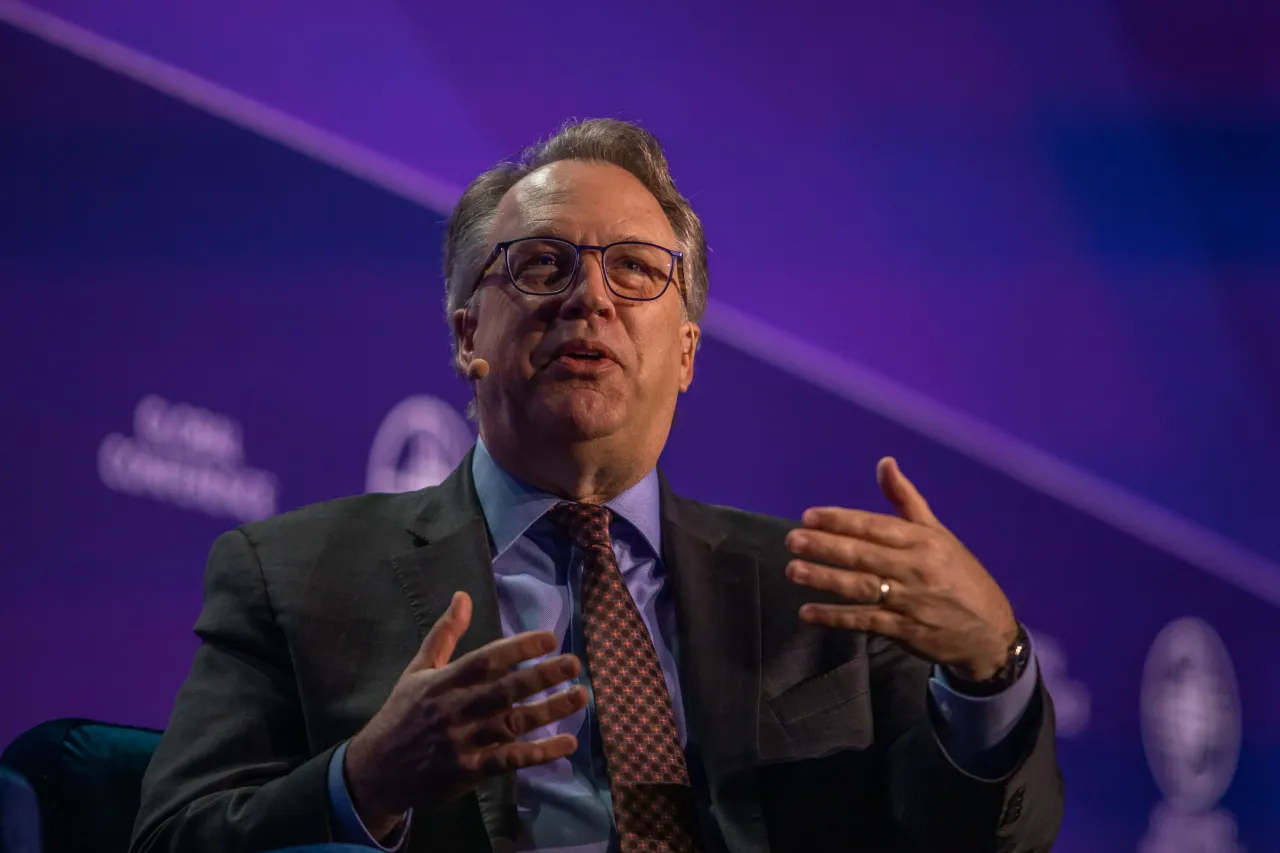

- The President of the Federal Reserve Bank of New York said underlying inflation trends have been pretty favorable, and he sees no signs of broader inflationary pressures.
- Williams said that he sees real GDP growth between 2.5% to 2.75% in 2026.
- Williams said that the tariffs have meaningfully increased U.S. prices of imported goods, although the full effects have likely not yet been felt.
Advertisement|Remove ads.
John Williams, President of the Federal Reserve Bank of New York, said on Monday that he sees no near-term reason to cut interest rates.
“Monetary policy is now well positioned to support the stabilization of the labor market and the return of inflation to the FOMC’s longer-run goal of 2%,” he said in a written speech prepared for delivery at the Council on Foreign Relations in New York.
According to data from the CME FedWatch tool, there is a 95.6% probability of the Fed holding interest rates steady at the current 3.50% to 3.75% in the next policy meeting.
Advertisement|Remove ads.
Wiiliams said that he expects a healthy economy in 2026 and added that the interest-rate-setting Federal Open Market Committee has moved the modestly restrictive stance of monetary policy closer to neutral.
He expects GDP growth in the U.S. to pick up in 2026 and sees the real GDP growth between 2.5% to 2.75% which is expected to be fueled by tailwinds from fiscal policy, favorable financial conditions, and increased investments in artificial intelligence.
Inflation
Williams said that “the tariffs have already meaningfully increased U.S. prices of imported goods, although the full effects have likely not yet been felt.” Inflation is likely to peak sometime in the first half of 2026 as the full effects of tariffs are felt, he added.
Advertisement|Remove ads.
He estimates that the increase in tariffs to date has contributed around one half of a percentage point to the current inflation rate of about 2.75%. Tariffs aside, underlying inflation trends have been pretty favorable, and he sees no signs of broader inflationary pressures.
Cooling Labor Market
Williams said the labor market continued to cool during 2025, with labor demand not keeping up with supply. Over the course of last year, the unemployment rate moved up, and ended the year at 4.4%.
Nonfarm payrolls rose lower than expected by 50,000 in December, according to the latest report from the Bureau of Labor Statistics (BLS). Analysts had expected an addition of 73,000 payrolls during the month.
Advertisement|Remove ads.
Market Reaction
U.S. equities were largely unchanged in Monday’s after-hours trading after ending the day in green. At the time of writing, the SPDR S&P 500 ETF (SPY), which tracks the S&P 500 index, was largely unchanged after closing 0.16% higher at the end of the day. Retail sentiment around the S&P 500 ETF on Stocktwits was in the ‘bullish’ territory.
The Invesco QQQ Trust ETF (QQQ) was also unchanged after ending the day 0.08% higher, while the SPDR Dow Jones Industrial Average ETF Trust (DIA) declined 0.09% in after-market hours after closing 0.18% higher.
Comments posted here will also appear on symbol pages.

Latest News
/filters:format(webp)https://news.stocktwits-cdn.com/large_Getty_Images_2294264991_a1d08b075d.jpg)
/filters:format(webp)https://news.stocktwits-cdn.com/Anushka_Basu_make_me_smile_in_the_picture_b92832aa_af59_4141_aacc_4180d2241ba8_1_2_png_1086e0ed8c.webp) Anushka Basu·13h ago
Anushka Basu·13h ago/filters:format(webp)https://news.stocktwits-cdn.com/large_Getty_Images_1925090359_f160f05588.jpg) Anushka Basu·14h ago
Anushka Basu·14h ago/filters:format(webp)https://news.stocktwits-cdn.com/large_Getty_Images_2213700296_87303c323b.jpg) Anushka Basu·14h ago
Anushka Basu·14h ago/filters:format(webp)https://news.stocktwits-cdn.com/large_franklin_templeton_OG_jpg_4b3a7330d9.webp) Anushka Basu·16h ago
Anushka Basu·16h ago/filters:format(webp)https://news.stocktwits-cdn.com/large_Getty_Images_1445160636_5780a5fdde.jpg) Anushka Basu·17h ago
Anushka Basu·17h ago/filters:format(webp)https://news.stocktwits-cdn.com/Getty_Images_540198451_jpg_3e5f3d8ee7.webp) Anushka Basu·18h ago
Anushka Basu·18h ago