


Advertisement|Remove ads.
Goldman Sachs CEO Says US Economy Can Weather AI Market 'Speed Bumps' – GS Stock Hits All-Time High After Record Quarter
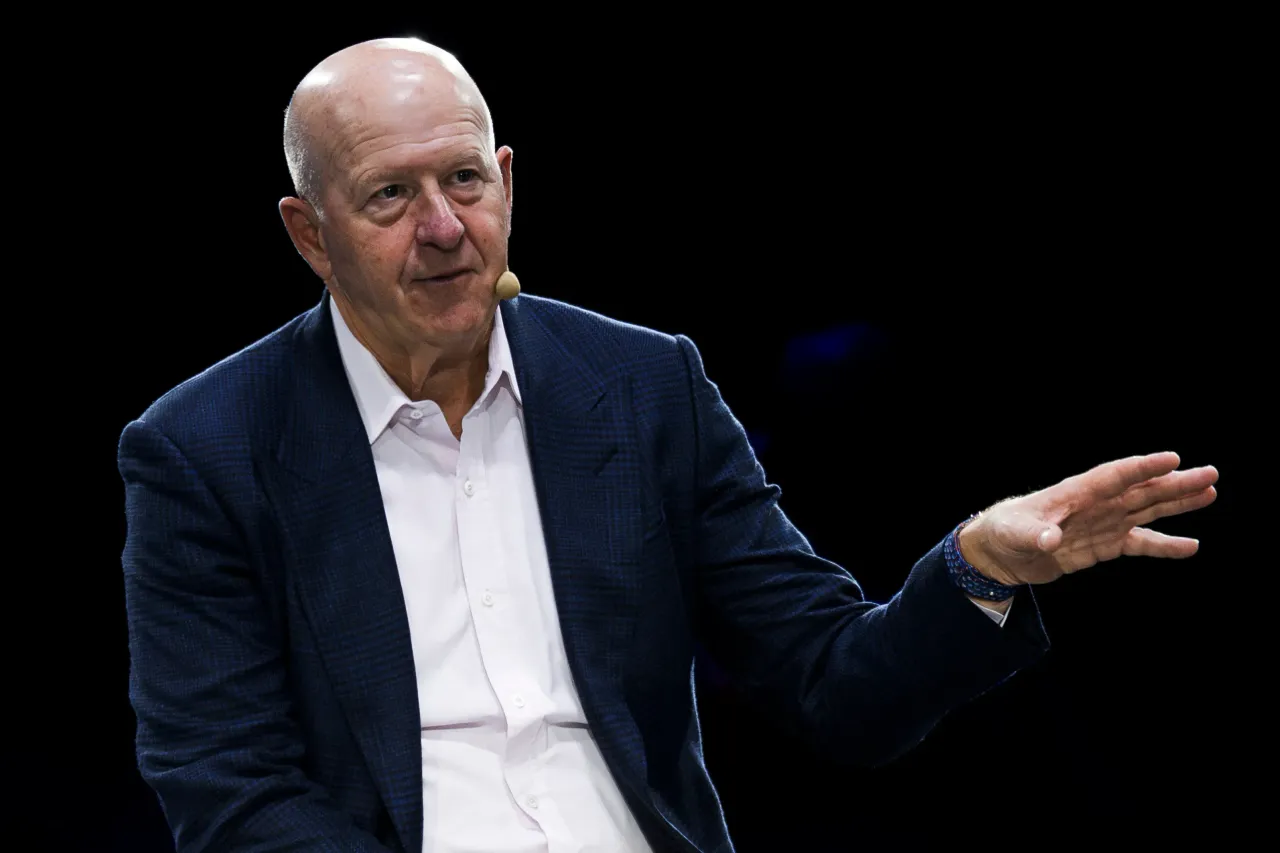


- David Solomon’s comments came after Goldman Sachs reported record second-quarter earnings, lifting the stock to a new all-time high.
- Solomon rejected the view that AI is a bubble, saying the technology has long-term secular growth potential despite some investments failing to generate attractive returns.
- The Goldman CEO also stated that ample capital remains available to finance AI-related projects, reducing the risk of funding constraints.
Advertisement|Remove ads.
Goldman Sachs (GS) CEO David Solomon said in an interview on Tuesday that the U.S. economy is well positioned to withstand any volatility stemming from the artificial intelligence (AI) investment boom.
In a conversation with CNBC, he stated that while markets are likely to experience periodic "speed bumps," the broader AI-driven transformation still has years of growth ahead.
"We will see dislocations. There'll be speed bumps," Solomon said. "But I think we've got a great ability to navigate and move forward. I do think the U.S. economy is just very well positioned in all this."
Advertisement|Remove ads.
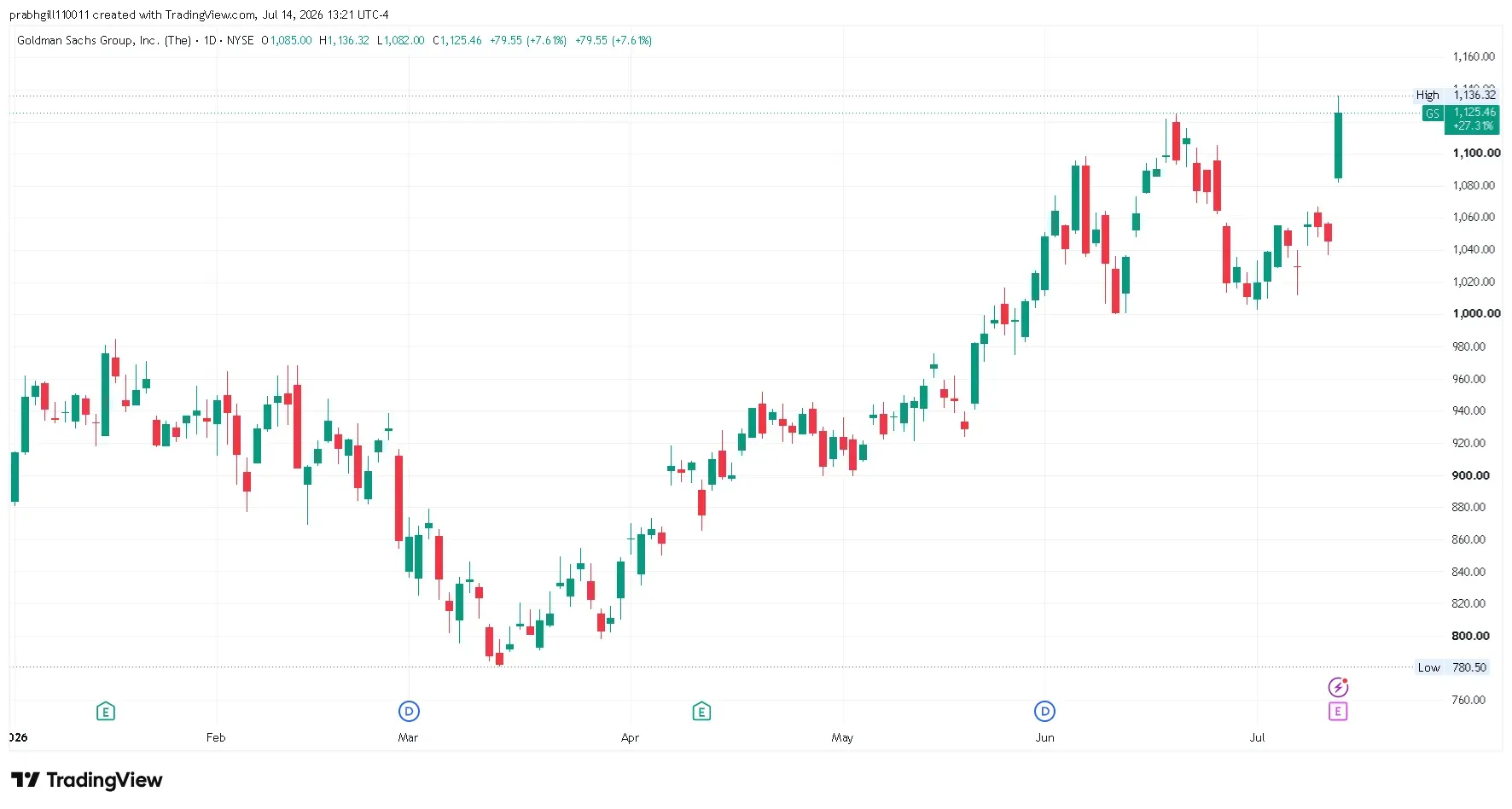
His comments came after Goldman Sachs reported record second-quarter (Q2) results, sending the stock to an all-time high. GS stock climbed to a record high of over $1,136 in intra-day trade, before paring gains to around $1,125, still up over 7.5%.
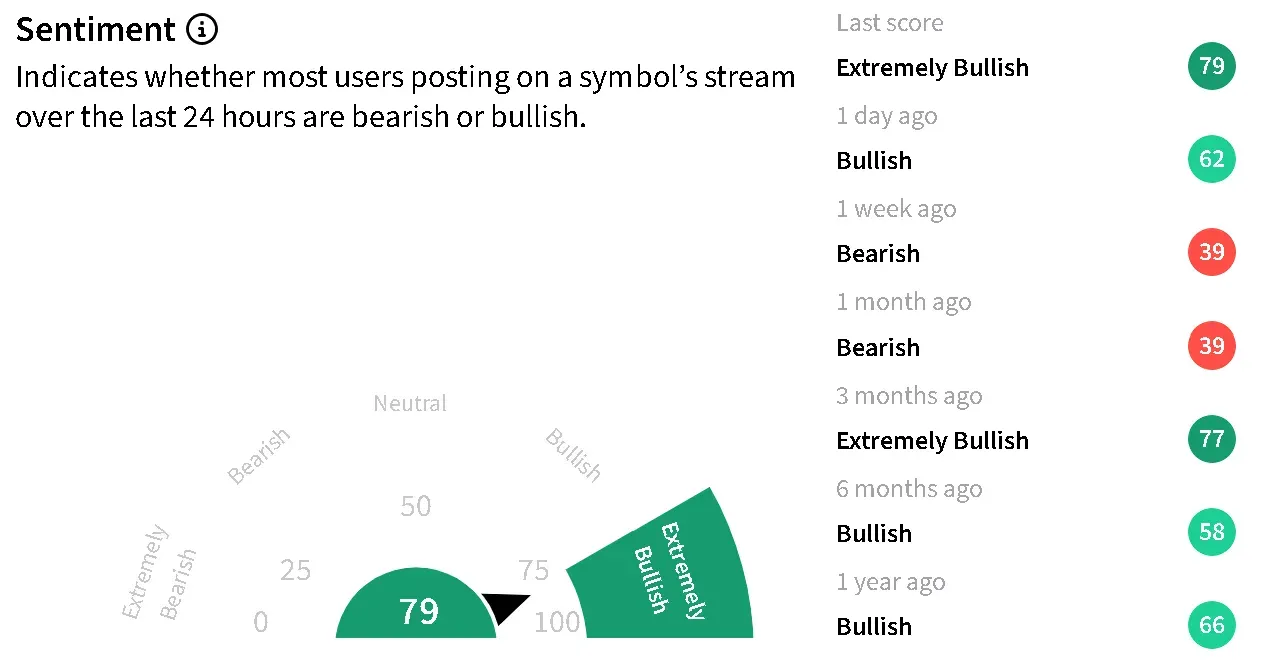
Retail sentiment around the stock on the platform rose to ‘extremely bullish’ from ‘bullish’ territory over the past day, while chatter stayed at ‘normal’ levels.
The investment bank reported a record revenue of $20.98 billion, beating analyst estimates of $16.4 billion, as per Koyfin data. It saw earnings of $15.91 per share, also above the consensus estimate of $14.40, on net income of $6.32 billion, the highest quarterly print for Goldman Sachs on record.
Advertisement|Remove ads.
The bank said the beat was driven by strength in investment banking, equities trading and asset management as companies continued to raise capital and pursue strategic transactions tied to the AI buildout.
AI Investment Cycle Still Has Room To Run
Rather than dismissing concerns about market excesses, Solomon acknowledged that corrections are inevitable. "You can always have recalibrations and resettings when you have extremely fast movements in markets," he said.
However, he stated that a “speed bump” doesn’t mean that it’s the end of the AI cycle. Instead, Solomon said investors should distinguish between short-term market swings and the long-term economic impact of AI adoption, which he expects will continue driving productivity gains across industries.
Advertisement|Remove ads.
"I don't think that's a bubble. I think that's a trend that's going to have long secular legs."
– David Solomon, Goldman Sachs, CEO
Not Every AI Investment Will Succeed
Solomon also cautioned that not every company or investment tied to AI will generate attractive returns. "When you step back, and you say five years from now, is there going to be a lot of growth, a lot of productivity gains in the economy because of the deployment of this? Absolutely,” he said. "I think there's capital that we're going to get an adequate return on, and there's capital that we're not. That’s been the case in any major technology.”
Solomon also sought to temper fears that demand for AI-related financing reflects speculative excess. While Goldman continues to see exceptionally strong demand for capital, he noted that the firm remains disciplined in allocating capital and that substantial liquidity remains available across financial markets.
"There's a lot of capital out there," he said. "I'm not concerned about the ability for the capital to be available for things that make sense."
GS stock has gained over 25% this year and jumped nearly 60% in the last 12 months.
Advertisement|Remove ads.
For updates and corrections, email newsroom[at]stocktwits[dot]com
Comments posted here will also appear on symbol pages.

Latest News
/filters:format(webp)https://news.stocktwits-cdn.com/gettyimages_2267701500_594x594_1cfbb8b517.jpg)
/filters:format(webp)https://news.stocktwits-cdn.com/Aashika_Suresh_Profile_Picture_jpg_2acd6f446c.webp) Aashika Suresh·37m ago
Aashika Suresh·37m ago/filters:format(webp)https://news.stocktwits-cdn.com/large_bitdeer_OG_jpg_8f9fd0249d.webp)
/filters:format(webp)https://news.stocktwits-cdn.com/shivani_photo_jpg_dd6e01afa4.webp) Shivani Kumaresan·51m ago
Shivani Kumaresan·51m ago/filters:format(webp)https://news.stocktwits-cdn.com/large_Microsoft_Open_AI_jpg_ee4722f551.webp)
/filters:format(webp)https://news.stocktwits-cdn.com/IMG_9209_1_d9c1acde92.jpeg) Yuvraj Malik·1h ago
Yuvraj Malik·1h ago/filters:format(webp)https://news.stocktwits-cdn.com/large_space_stocks_864a31f176.jpg)
/filters:format(webp)https://news.stocktwits-cdn.com/IMG_8805_JPG_6768aaedc3.webp) Deepti Sri·1h ago
Deepti Sri·1h ago/filters:format(webp)https://st-everywhere-cms-prod.s3.us-east-1.amazonaws.com/large_Archer_Aviation_Unsplash_c5e1b4bf24.jpg) Shivani Kumaresan·1h ago
Shivani Kumaresan·1h ago/filters:format(webp)https://news.stocktwits-cdn.com/large_Michael_Burry_jpg_fa0de6ac92.webp) Deepti Sri·2h ago
Deepti Sri·2h ago