


Advertisement|Remove ads.
Kevin Warsh Downplays Concerns Of Job Losses Due To AI, Says He's Not A Doomer — 'It's Called The Lump Of Labor Fallacy'
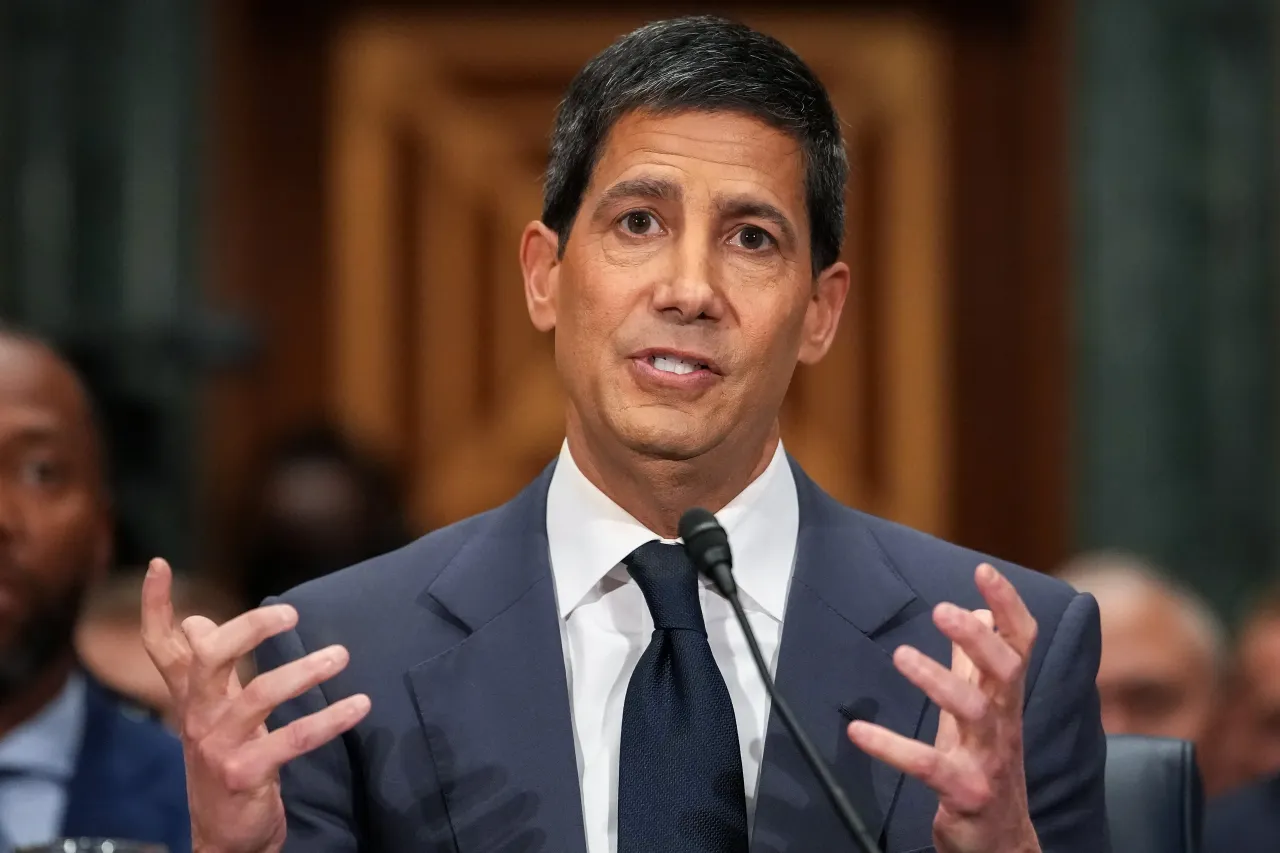


- Warsh said he expects the U.S. to emerge as a major winner in AI in the medium term, noting that improvements in AI models are happening at an exponential pace.
- He added that AI technology represents a major paradigm shift for central bank policies and economies.
- Warsh also noted that the Fed is seeing the impact of the AI shock on the demand side, driven by soaring capital expenditures.
Advertisement|Remove ads.
Federal Reserve Chair Kevin Warsh on Wednesday downplayed concerns that artificial intelligence will lead to job losses, saying he is not an AI doomer or pessimist.
During an interview at the ECB Forum on Central Banking in Sintra, Portugal, Warsh said he believes the number of jobs created by AI will be greater and prosperity stronger.
“It’s called the lump of labor fallacy for a reason. Who knew when the internet was born that the internet was going to create a million and a half jobs as Uber drivers? We’re only in the first or second inning of this revolution,” he added.
Advertisement|Remove ads.
Warsh Expects US To Be A Big Winner In AI
Warsh said he expects the U.S. to emerge as a major winner in AI in the medium term, noting that improvements in AI models are happening at an exponential pace.
“The U.S. is not afraid of productivity-led economic growth, but we don’t view the economics of this as zero-sum. We’re not rooting for another country to fail, we’re rooting for economic growth to be broad-based. That’s good for the United States… it will make all of our jobs easier,” he added.
Warsh said that AI technology represents a major paradigm shift for central bank policies and economies.
Advertisement|Remove ads.
However, the Fed Chair said the central bank would monitor the pace of AI advancements and their impact on inflation and jobs as it seeks to balance its dual mandate of maximum employment and stable prices.
Seeing Impact Of AI Shock On Demand Side, Says Warsh
Warsh also noted that the Fed is seeing the impact of the AI shock on the demand side, driven by soaring capital expenditures. He added that he is confident this will also be reflected on the supply side eventually, while noting that the Fed is spending most of its time monitoring these developments.
Warsh also said that this is a good problem to have, rather than the “financial engineering” that companies undertook by buying back their own shares.
Advertisement|Remove ads.
“Right now they’re investing in the future because their expectation is that the supply side of the economy will expand, and if it does, that has huge implications for monetary policy. But again, I’m not going to make a judgment now,” he added.
Warsh Says Prices Are ‘Too High’
Speaking about inflation, Warsh said prices are currently “too high,” adding that central bank officials have become more open-minded about the impact of AI.
“We’re all in the price stability business, that might not be our only business, but if there was a common thing I heard over the last couple of days, it was open-mindedness on these questions of AI, open-mindedness on productivity. But we’ve all looked around, and we’ve seen that prices are too high,” he said.
Advertisement|Remove ads.
However, Warsh said that inflation expectations and risks have declined over the past four weeks. He also reiterated that the Fed will remain independent and that there will be no changes on that front.
Warsh’s comments come at a time when the Fed’s preferred inflation gauge, the Personal Consumption Expenditures (PCE) Index, advanced 4.1% in May on an annualized basis, the highest level since October 2023.
Meanwhile, U.S. equities declined in Wednesday’s opening trade. At the time of writing, the SPDR S&P 500 ETF (SPY), which tracks the S&P 500 index, was down 0.17%; the Invesco QQQ Trust ETF (QQQ) fell 0.9%; and the SPDR Dow Jones Industrial Average ETF Trust (DIA) edged lower by 0.04%. Retail sentiment on Stocktwits regarding the S&P 500 ETF was in ‘bearish’ territory.
Advertisement|Remove ads.
The iShares 20+ Year Treasury Bond ETF (TLT) was down 0.9% at the time of writing, while the iShares 7-10 Year Treasury Bond ETF (IEF) fell 0.46%.
For updates and corrections, email newsroom[at]stocktwits[dot]com.
Advertisement|Remove ads.
Comments posted here will also appear on symbol pages.

Latest News
/filters:format(webp)https://news.stocktwits-cdn.com/large_Getty_Images_1140163617_f532763e0e.jpg)
/filters:format(webp)https://news.stocktwits-cdn.com/Anushka_Basu_make_me_smile_in_the_picture_b92832aa_af59_4141_aacc_4180d2241ba8_1_2_png_1086e0ed8c.webp) Anushka Basu·4h ago
Anushka Basu·4h ago/filters:format(webp)https://news.stocktwits-cdn.com/large_Getty_Images_1241727187_186fa8e2c2.jpg) Anushka Basu·6h ago
Anushka Basu·6h ago/filters:format(webp)https://news.stocktwits-cdn.com/large_Grant_Cardone_e02d86f642.webp) Anushka Basu·7h ago
Anushka Basu·7h ago/filters:format(webp)https://news.stocktwits-cdn.com/large_Getty_Images_2291403399_8dbede0ce6.jpg) Anushka Basu·8h ago
Anushka Basu·8h ago/filters:format(webp)https://news.stocktwits-cdn.com/large_us_treasury_yields_jpg_074c6369d6.webp)
/filters:format(webp)https://st-everywhere-cms-prod.s3.us-east-1.amazonaws.com/i_OS_App_Icon_1_8054f2a2fe.png) Stocktwits News Desk·9h ago
Stocktwits News Desk·9h ago/filters:format(webp)https://news.stocktwits-cdn.com/large_Getty_Images_2203983775_jpg_74bdd5dd43.webp) Stocktwits News Desk·10h ago
Stocktwits News Desk·10h ago