


Advertisement|Remove ads.
Michael Burry Adds To Micron, Nebius, Palantir Shorts As Acer Flags Rising Memory Supply
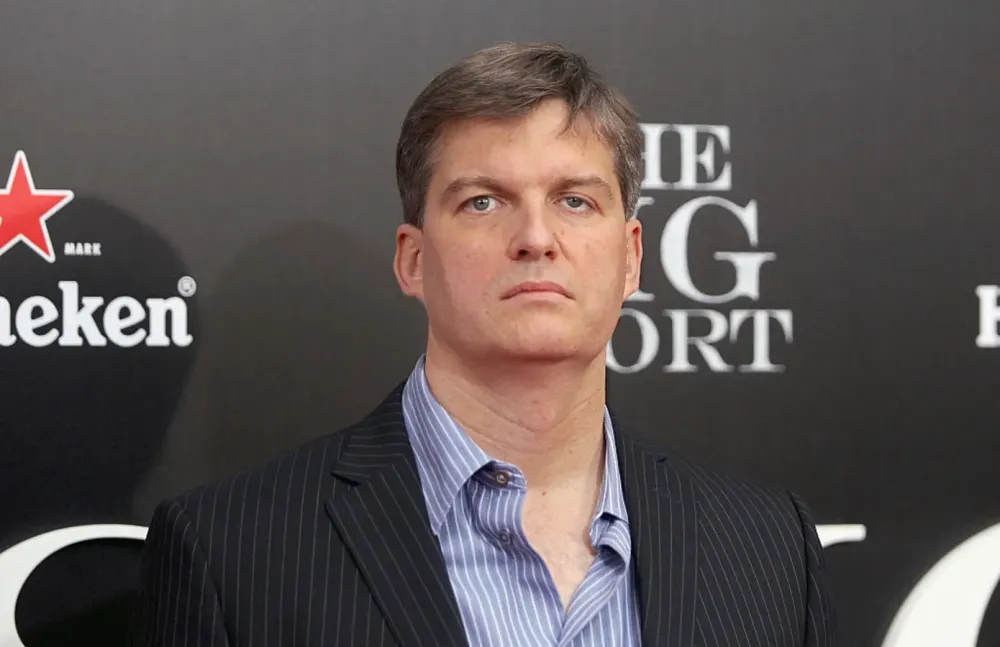


- Burry said he increased his short positions in Micron, Nebius, the iShares Semiconductor ETF and Palantir (PLTR).
- The 'Big Short' investor added that he made the trades “in some size.”
- Burry also disclosed additional purchases of QXO, Build-A-Bear Workshop, Sprouts Farmers Market, Birkenstock and MercadoLibre .
Advertisement|Remove ads.
Michael Burry’s bearish memory-stock thesis gained another data point on Tuesday after Acer CEO Jason Chen warned that rising Chinese production could eventually ease supply constraints and pressure prices.
In a Substack post, Burry cited Chen’s interview, in which he said memory inventories are building, and that mainland Chinese suppliers are releasing more volume into the market, challenging forecasts that the current shortage could persist for years.
“Interpreting this news, which is from a few days ago, before the big run up yesterday, is fraught,” Burry wrote. “Nevertheless, it aligns with what I believe to be true.”
Advertisement|Remove ads.
According to Burry, the shortage in conventional memory was created in part by manufacturers shifting production toward high-bandwidth memory (HBM) for artificial intelligence applications. Now, “normal RAM” production is ramping back up, he said.
Burry Adds To AI, Semiconductor Shorts
Burry wrote that he had shorted more more Micron (MU), Nebius (NBIS), iShares Semiconductor (SOXX), and Palantir (PLTR). “I did this in some size,” Burry wrote.
MU stock gained over 2% in midday trade on Tuesday. On Stocktwits, retail sentiment around the firm rose to ‘bullish’ from ‘neutral’ territory over the past day. SOXX price was up around 1.5% with retail sentiment trending in the ‘bullish’ zone.
Advertisement|Remove ads.
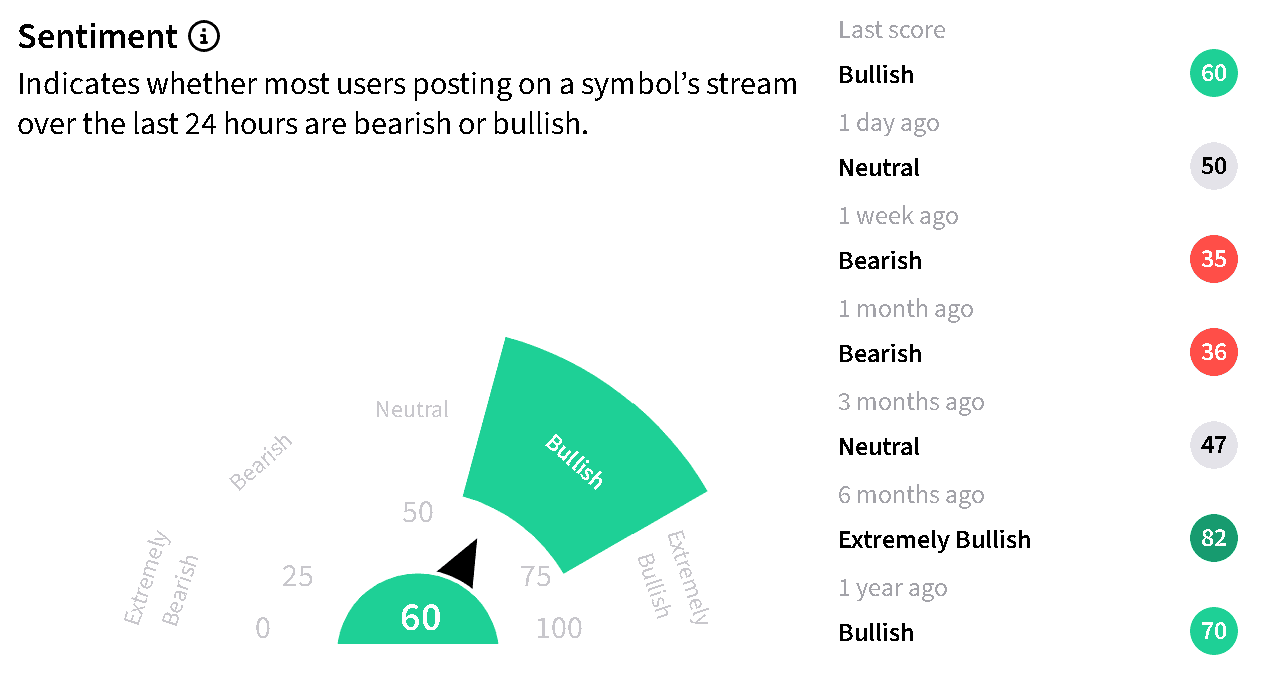
Meanwhile, NBIS stock edged 0.6% higher, with retail sentiment trending in the ‘bullish’ zone, while PLTR stock moved around 0.7% higher but saw retail sentiment in the ‘bearish’ zone.
Burry also disclosed additional purchases of QXO (QXO), Build-A-Bear Workshop (BBW), Sprouts Farmers Market (SFM), Birkenstock (BIRK) and MercadoLibre (MELI). “All have corrected tremendously, and I find the prices offered by the market rather attractive,” Burry wrote, adding that all five positions are now “full positions” for him.
Burry Is Betting Against The Memory Cycle
Burry’s interest in the memory market predates Acer’s latest comments. His bearish view on the AI boom was already taking shape by late 2025, when Scion Asset Management’s third-quarter filing disclosed large put positions in Nvidia (NVDA) and Palantir. The firm has since shut down.
Advertisement|Remove ads.
By late June 2026, Burry had expanded that view into a broader semiconductor trade. He shorted Nvidia, Applied Materials (AMAT) and the iShares Semiconductor ETF, while also extending his SOXX puts into March 2027.
Two days later, he added Micron Technology to the trade, shorting the memory-chip maker outright at around $1,051. At the time, Burry said he preferred the outright short because Micron’s put options were too expensive.
Acer Challenges Long-Term Memory Shortage Outlook
In his interview, Chen said memory inventories are already building and that Chinese manufacturers are increasing supply. He expects the additional capacity to eventually put pressure on prices, with the impact becoming more visible from late 2027.
Advertisement|Remove ads.
Chinese memory makers, including ChangXin Memory Technologies (CXMT) and Yangtze Memory Technologies (YMTC), are expanding production, adding another source of supply to a market constrained by the AI boom.
The current memory cycle differs from previous ones because AI data centers are consuming large amounts of HBM. Samsung, SK Hynix and Micron (MU) have redirected capacity toward HBM to meet that demand.
For Burry, however, the broader question is whether the semiconductor industry's capacity expansion eventually catches up with demand.
Advertisement|Remove ads.
For updates and corrections, email newsroom[at]stocktwits[dot]com
Comments posted here will also appear on symbol pages.

Latest News
/filters:format(webp)https://news.stocktwits-cdn.com/large_Getty_Images_2227347090_jpg_672398fbc4.webp)
/filters:format(webp)https://news.stocktwits-cdn.com/Whats_App_Image_2026_05_11_at_09_45_43_1_jpeg_a08c0cf251.webp) Aveek Bhowmik·24m ago
Aveek Bhowmik·24m ago/filters:format(webp)https://news.stocktwits-cdn.com/large_Amgen_resized_jpg_c3e08049b7.webp)
/filters:format(webp)https://news.stocktwits-cdn.com/unnamed_jpg_9dff551b50.webp) Anan Ashraf·40m ago
Anan Ashraf·40m ago/filters:format(webp)https://news.stocktwits-cdn.com/large_apple_iphone18promax_10a3113689.jpg)
/filters:format(webp)https://news.stocktwits-cdn.com/1707726834303_jpg_11f20a9aa9.webp) Shashank Nayar·40m ago
Shashank Nayar·40m ago/filters:format(webp)https://news.stocktwits-cdn.com/large_Stock_chart_representative_image_resized_jpg_dacf5b1590.webp)
/filters:format(webp)https://news.stocktwits-cdn.com/vivekkrishnanphotography_58_jpg_0e45f66a62.webp) Arnab Paul·54m ago
Arnab Paul·54m ago/filters:format(webp)https://news.stocktwits-cdn.com/Getty_Images_2235778544_jpg_2b7ceca102.webp)
/filters:format(webp)https://news.stocktwits-cdn.com/Prabhjote_DP_67623a9828.jpg) Prabhjote Gill·1h ago
Prabhjote Gill·1h ago/filters:format(webp)https://news.stocktwits-cdn.com/large_tom_lee_fundstrat_bmnr_OG_jpg_94a105e116.webp)
/filters:format(webp)https://news.stocktwits-cdn.com/Anushka_Basu_make_me_smile_in_the_picture_b92832aa_af59_4141_aacc_4180d2241ba8_1_2_png_1086e0ed8c.webp) Anushka Basu·1h ago
Anushka Basu·1h ago