


Advertisement|Remove ads.
Michael Burry Says His Puts Give Him 'Far More Upside' In A Crash As He Pulls His AI Bubble Timeline Forward
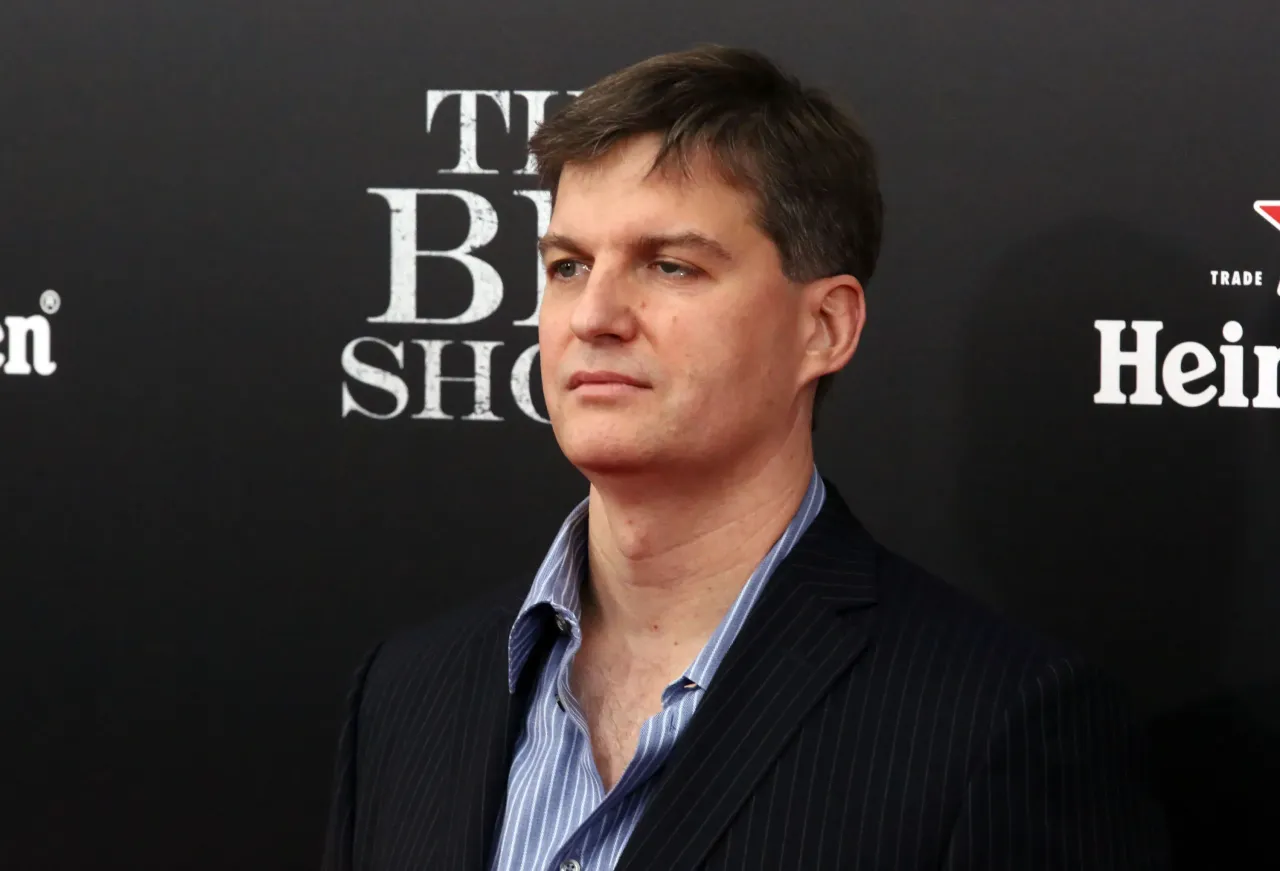


- Burry said replacing stock shorts with derivatives gives him “far more upside” in a market crash.
- He said falling volatility makes options more attractive for developments he sees potentially unfolding over the next year.
- Burry closed his CoreWeave short but was waiting for attractively priced puts before replacing it.
Advertisement|Remove ads.
“The Big Short” Michael Burry said that his shift from stock shorts to derivatives has given him “far more upside” in a market crash, as he brings forward the timeline for his bearish AI thesis and favors options for developments he sees potentially unfolding over the next year.
“Actually I have far more upside in a crash situation now than I did by just having the short positions,” Burry told subscribers in a Substack chat.
Burry said outright shorts can be difficult to size for a significant payoff even during a steep decline. Falling volatility, he added, had made options more attractive. “When vol crashes as it did recently, it can make the options much more attractive, as it is where I would want to be anyway if I see something playing out over the next year,” he said.
Advertisement|Remove ads.
Burry’s warning comes amid a mixed September: So far this month, the tech-heavy Invesco QQQ Trust (QQQ) has gained about 3%, while the SPDR S&P 500 ETF (SPY) has slipped 0.1%, and the SPDR Dow Jones Industrial Average ETF Trust (DIA) has fallen 3.3%.
Why Burry Switched To Puts
The comments came after Burry’s recent Substack trading update, in which he disclosed that he had closed his outright stock shorts and shifted into put options. However, he had not yet replaced his CoreWeave short with puts as he was waiting for attractively priced contracts.
Some transactions involved tax loss harvesting, he said, but most of the reshuffle stemmed from research conducted over the preceding weekend. The research left him thinking “the bubble in AI may burst sooner than later.”
Advertisement|Remove ads.
“Fundamentally, I am moving timelines up. As such, I want more leverage in my short positions. Better timelines make leverage more palatable,” Burry said. The development came after his August trading post, when he identified 2028 as his base case. Burry said that increasingly debt-funded AI investment was putting the bubble on a clock, while urging investors to avoid leverage.
In June, he outlined why timing mattered to his approach. Burry noted that outright stock shorts have a theoretical maximum gain of 100%, while repeated losses during rising markets can inflict “death by a thousand cuts.”
He also said he had massively leveraged a short position only once in his life: through mortgage-related and corporate credit-default swaps in the 2000s, which offered leverage in the right direction with a relatively concrete timeline.
Advertisement|Remove ads.
Burry: Debt Puts AI Boom On A Clock
In July and August trading posts, Burry argued that capital injected into the AI ecosystem was returning to participating companies as revenue through circular financing arrangements. His August post explicitly said companies were funding one another to buy from one another.
His analysis from earlier this month also examined hyperscalers’ purchase commitments, future leases and guarantees backing third-party debt. Burry put S&P 500 companies’ net capital investment — capital expenditures minus depreciation — at about 2.07% of nominal GDP, using the latest available data as of June 30.
According to his analysis, the ratio exceeded levels in previous capital cycles over nearly four decades, except the investment surge associated with the dot-com boom and its aftermath. Later on, he also argued that market peaks had preceded peaks in net investment. “We are near one of those moments again,” he said.
Advertisement|Remove ads.
Burry also highlighted an Ares Management alternative-credit note that examined about $573 billion across 26 disclosed AI financings over the preceding 12 months. The arrangements included bonds, data-center construction loans, leases, GPU-backed borrowing and guarantees.
For updates and corrections, email newsroom[at]stocktwits[dot]com.
Advertisement|Remove ads.
Comments posted here will also appear on symbol pages.

Latest News
/filters:format(webp)https://news.stocktwits-cdn.com/large_Getty_Images_2274862442_jpg_5211d9550f.webp)
/filters:format(webp)https://news.stocktwits-cdn.com/Anushka_Basu_make_me_smile_in_the_picture_b92832aa_af59_4141_aacc_4180d2241ba8_1_2_png_1086e0ed8c.webp) Anushka Basu·42m ago
Anushka Basu·42m ago/filters:format(webp)https://news.stocktwits-cdn.com/gettyimages_2278069829_594x594_96874d5ac3.jpg)
/filters:format(webp)https://news.stocktwits-cdn.com/Harshita_3cfe02022c.jpg) Harshita Tyagi·57m ago
Harshita Tyagi·57m ago/filters:format(webp)https://news.stocktwits-cdn.com/large_RTX_Raytheon_2e21b4a62e.jpg)
/filters:format(webp)https://news.stocktwits-cdn.com/Heera_1_1c30cb0170.PNG) Heera Hari·1h ago
Heera Hari·1h ago/filters:format(webp)https://news.stocktwits-cdn.com/gettyimages_2213626542_612x612_3c8b123cbd.jpg)
/filters:format(webp)https://news.stocktwits-cdn.com/Prabhjote_DP_67623a9828.jpg) Prabhjote Gill·2h ago
Prabhjote Gill·2h ago/filters:format(webp)https://news.stocktwits-cdn.com/gettyimages_902959070_594x594_26e25e3cea.jpg) Harshita Tyagi·2h ago
Harshita Tyagi·2h ago/filters:format(webp)https://news.stocktwits-cdn.com/large_blackrock_bitcoin_OG_jpg_5f4aa439e5.webp) Anushka Basu·2h ago
Anushka Basu·2h ago