


Advertisement|Remove ads.
Michael Burry Flags New AI Bubble Risk, Says GDP Growth Is ‘Really Counting On’ Data Center Buildout
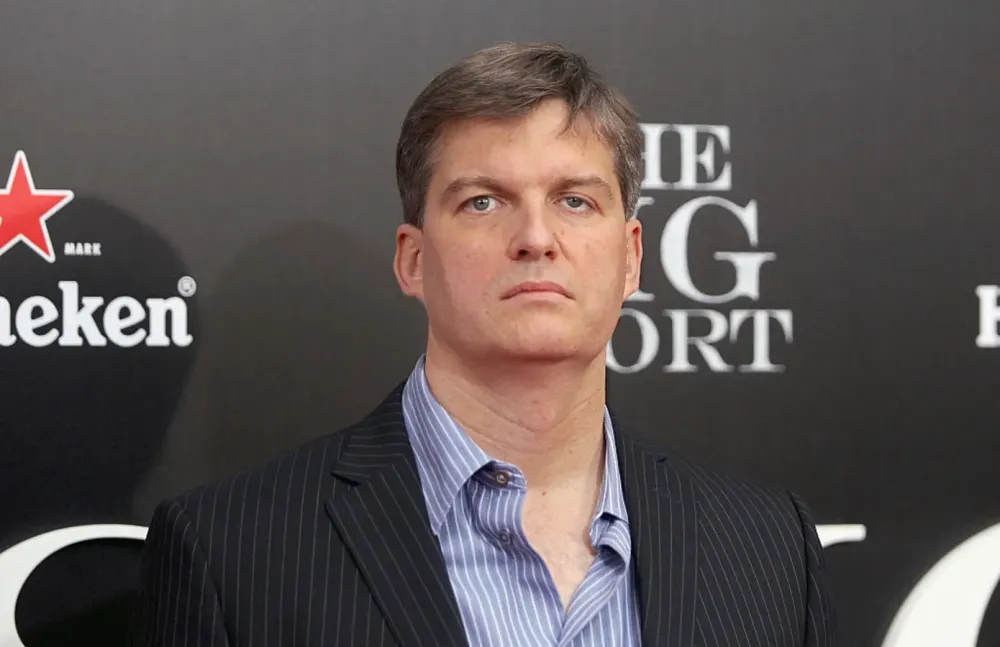


- Burry noted that private non-residential construction excluding data centers fell 7.9% year over year in June.
- According to him, the acceleration in data center construction despite rising interest rates is a potential source of risk for the economy.
- He reiterated the risks associated with rising leverage and special-purpose vehicle off-balance-sheet financing in AI infrastructure investments.
Advertisement|Remove ads.
Michael Burry, the investor best known for shorting the 2008 housing market, on Friday sharpened his warning that the AI data center boom is repeating the exact structural warning signs that preceded the 2008 financial crisis, just with different collateral.
In his latest Substack post, Burry highlighted a chart from Torsten Slok, Apollo’s chief economist, showing how data center construction has continued to accelerate even after the Federal Reserve began raising interest rates in 2022. Other traditionally rate-sensitive areas, including office construction, slowed sharply during the same period.
Slok stated that AI spending has been unusually resistant to higher borrowing costs because companies and investors expect AI infrastructure returns to justify the cost of capital. Burry, however, sees that resilience as a potential source of risk rather than a sign of strength.
Advertisement|Remove ads.
“The shenanigans are apparent today for those that care to look,” Burry wrote.
Data Centers Become A Bigger Growth Driver
Burry pointed to June data showing that private non-residential construction excluding data centers fell 7.9% from a year earlier. He said the contrast matters because data center investment has become an increasingly important source of overall construction activity and economic growth. “GDP growth is really counting on that data center buildout,” Burry wrote.
As in prior iterations, Burry compared the current environment with the period before the Great Financial Crisis, when leverage, fraud, and excessive reliance on rising housing prices helped create the conditions for the 2008 collapse.
Advertisement|Remove ads.
This time, he sees AI infrastructure taking on a similar role to that of a potential concentration risk.
Nvidia Sits At The Center Of Burry’s AI Concerns
Burry’s latest macro warning also ties into his more specific concerns about Nvidia (NVDA) and the hyperscalers. In recent posts, he has described a “circular financing” web in which major AI buyers and chip suppliers are increasingly intertwined.
According to Burry, much of Nvidia’s demand is financed through arrangements that can keep obligations away from buyers’ balance sheets, with future revenues “majority financed in a circular arrangement” rather than driven entirely by organic end-user demand.
Advertisement|Remove ads.
NVDA stock edged higher in pre-market trade on Friday, after clocking five consecutive sessions in the red. Retail sentiment around the AI bellwether on Stocktwits trended in ‘extremely bearish’ territory over the past day.
He has also positioned against several companies he sees as beneficiaries of the AI infrastructure boom, including Micron (MU), Oracle (ORCL), Nvidia-backed Nebius (NBIS), Palantir (PLTR), and Tesla (TSLA).
A Different AI Bubble Warning
Burry stated that leverage is building around the AI buildout, while increasingly complicated financing structures could make those risks harder to see. He specifically pointed to special-purpose vehicle off-balance-sheet financing and captive insurers as mechanisms that could absorb risky assets or debt.
Advertisement|Remove ads.
For Burry, the question is no longer just about whether AI demand is real. It is whether the investment boom has created a financial system increasingly dependent on that demand continuing at a rapid pace.
For updates and corrections, email newsroom[at]stocktwits[dot]com.
Advertisement|Remove ads.
Comments posted here will also appear on symbol pages.

Latest News
/filters:format(webp)https://st-everywhere-cms-prod.s3.us-east-1.amazonaws.com/large_Western_digital_logo_2_resized_ec96a6ef9a.jpg)
/filters:format(webp)https://news.stocktwits-cdn.com/IMG_8805_JPG_6768aaedc3.webp) Deepti Sri·6m ago
Deepti Sri·6m ago/filters:format(webp)https://news.stocktwits-cdn.com/large_Getty_Images_2216752418_4e0e6786a3.jpg)
/filters:format(webp)https://news.stocktwits-cdn.com/shivani_photo_jpg_dd6e01afa4.webp) Shivani Kumaresan·9m ago
Shivani Kumaresan·9m ago/filters:format(webp)https://news.stocktwits-cdn.com/large_Getty_Images_1359446412_jpg_93cc2c92dd.webp)
/filters:format(webp)https://news.stocktwits-cdn.com/Aashika_Suresh_Profile_Picture_jpg_2acd6f446c.webp) Aashika Suresh·23m ago
Aashika Suresh·23m ago/filters:format(webp)https://news.stocktwits-cdn.com/large_mrna_100157676a.jpg) Deepti Sri·40m ago
Deepti Sri·40m ago/filters:format(webp)https://news.stocktwits-cdn.com/large_Bloom_Energy_jpg_de9372f92d.webp) Aashika Suresh·57m ago
Aashika Suresh·57m ago/filters:format(webp)https://news.stocktwits-cdn.com/large_Getty_Images_2199291636_jpg_3c282601d9.webp)
/filters:format(webp)https://news.stocktwits-cdn.com/unnamed_jpg_9dff551b50.webp) Anan Ashraf·2h ago
Anan Ashraf·2h ago