


Advertisement|Remove ads.
MSFT No Longer Wants To Just Back OpenAI — AI Chief Eyes Spot Among ‘Top Four Labs In The World’

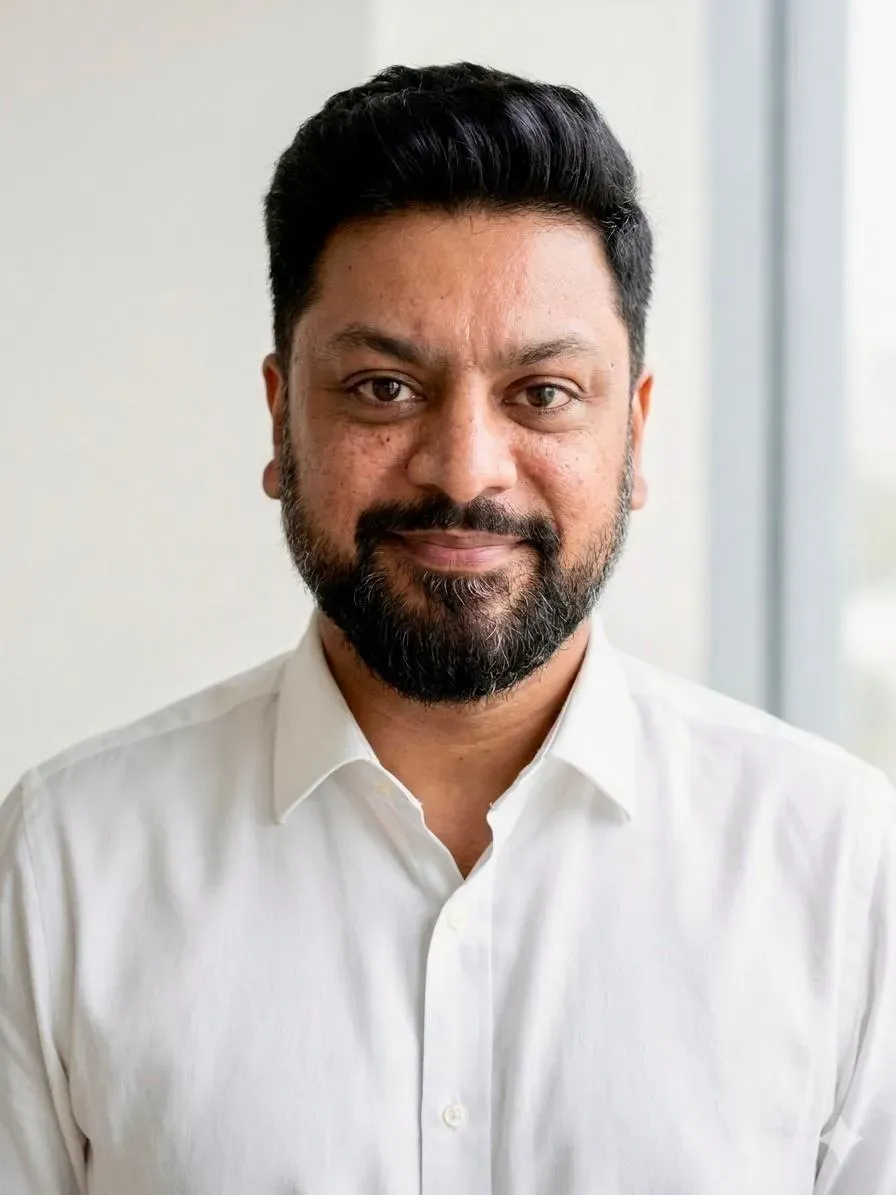

- Microsoft's AI chief, Mustafa Suleyman, said the company aims to join what he considers the industry’s top tier of AI labs, alongside OpenAI, Anthropic, and Google DeepMind.
- Executives emphasized that Microsoft’s latest models were developed using its own data and intellectual property rather than relying on model distillation.
- Microsoft believes its enterprise customer base, cloud infrastructure, and financial resources give it an advantage as competition for AI leadership intensifies.
Advertisement|Remove ads.
Microsoft (MSFT) used its annual Build developer conference to roll out a wave of new AI tools and agentic features, but the sharper signal from executives this week was the company’s accelerating push for self-reliance in frontier AI development.
Microsoft shares were down 3.06% in afternoon trading, at the time of writing.
A New Tone From MSFT
Speaking at Build, Microsoft CEO Satya Nadella described the current moment as a period of significant change, telling attendees that developer conferences are about "coming to grips with the new opportunity."
Advertisement|Remove ads.
Microsoft AI chief Mustafa Suleyman was even more direct about the company's ambitions. Suleyman told The Verge that Microsoft wants to join what he views as the small group of AI labs leading the industry. “The goal is to prove that we can become one of the top four labs in the world,” The Verge quoted Suleyman as saying.
He identified Google DeepMind, OpenAI, and Anthropic as the labs that currently matter most in the AI race and acknowledged that Microsoft is not yet in that group.
According to Suleyman, the company’s objective is to build frontier AI systems internally and demonstrate that it can develop the technology from the ground up rather than depending on outside innovation.
Advertisement|Remove ads.
OpenAI Relationship Has Changed
A recurring theme throughout Microsoft's AI presentation was independence. Suleyman pointed to a renegotiated agreement with OpenAI as a big moment for the company. He said the updated arrangement allows Microsoft to train larger models and pursue advanced AI development using its own intellectual property, data, and research.
“The pivotal moment was renegotiating our contract with OpenAI,” Suleyman told The Verge.
He added that Microsoft can now pursue its long-term AI goals with “our own IP, with our own data, no distillation, training from scratch.”
Advertisement|Remove ads.
OpenAI and Microsoft renegotiated their partnership in April, giving the ChatGPT-maker the flexibility to distribute its products across different cloud platforms. The move represented a shift away from the companies’ earlier exclusive relationship, which, according to a Financial Times report from March, had become a point of contention following OpenAI’s agreement with Amazon.com’s cloud business, Amazon Web Services.
MSFT Playing To Its Advantages
While OpenAI, Anthropic and other AI companies continue expanding their enterprise offerings, Microsoft believes it has entered the competition with several advantages already in place.
The company has an established customer base, extensive cloud infrastructure through Azure, and significant financial resources. Suleyman suggested those strengths allow Microsoft to take a longer-term approach than some rivals.
Advertisement|Remove ads.
“There’s a lot of people who are either like chasing startup valuations or about to IPO, so we can operate with a little bit more humility and a little bit more long-term optimization,” Suleyman told The Verge, adding that Microsoft's scale gives it flexibility while it continues building its own AI systems.
MSFT Stock: What Stocktwits Retail Sentiment Says
Retail sentiment around MSFT was in the ‘bullish’ territory at the time of writing, unchanged in the last 24 hours, while message volume was ‘high’. According to the platform’s internal data, retail chatter around Microsoft surged 452.6% in the last 30 days.
One bullish retail trader expressed optimism that Microsoft could return to the $460 range after the stock “filled the gap” on its chart.
Advertisement|Remove ads.
The MSFT stock is down nearly 9% year-to-date.
For updates and corrections, email newsroom[at]stocktwits[dot]com.
Advertisement|Remove ads.
Comments posted here will also appear on symbol pages.

Latest News
/filters:format(webp)https://news.stocktwits-cdn.com/large_Getty_Images_2229072591_jpg_18a80f859a.webp)
/filters:format(webp)https://news.stocktwits-cdn.com/vivekkrishnanphotography_58_jpg_0e45f66a62.webp) Arnab Paul·2m ago
Arnab Paul·2m ago/filters:format(webp)https://news.stocktwits-cdn.com/large_Getty_Images_2295195765_631ba29211.jpg)
/filters:format(webp)https://news.stocktwits-cdn.com/Anushka_Basu_make_me_smile_in_the_picture_b92832aa_af59_4141_aacc_4180d2241ba8_1_2_png_1086e0ed8c.webp) Anushka Basu·10m ago
Anushka Basu·10m ago/filters:format(webp)https://st-everywhere-cms-prod.s3.us-east-1.amazonaws.com/large_Morgan_Stanley_b6f4ee64ac.jpg)
/filters:format(webp)https://news.stocktwits-cdn.com/Heera_1_1c30cb0170.PNG) Heera Hari·22m ago
Heera Hari·22m ago/filters:format(webp)https://news.stocktwits-cdn.com/large_Getty_Images_2296215726_e82f86b85a.jpg)
/filters:format(webp)https://news.stocktwits-cdn.com/Harshita_3cfe02022c.jpg) Harshita Tyagi·55m ago
Harshita Tyagi·55m ago/filters:format(webp)https://news.stocktwits-cdn.com/gettyimages_2297721790_612x612_7ed81ac2ea.jpg)
/filters:format(webp)https://news.stocktwits-cdn.com/Prabhjote_DP_67623a9828.jpg) Prabhjote Gill·1h ago
Prabhjote Gill·1h ago/filters:format(webp)https://news.stocktwits-cdn.com/large_viking_fc92506daa.jpg) Arnab Paul·1h ago
Arnab Paul·1h ago