


Advertisement|Remove ads.
OpenAI's Jalapeno Chip Is Outperforming Nvidia, AMD And Google Chips, SemiAnalysis Says
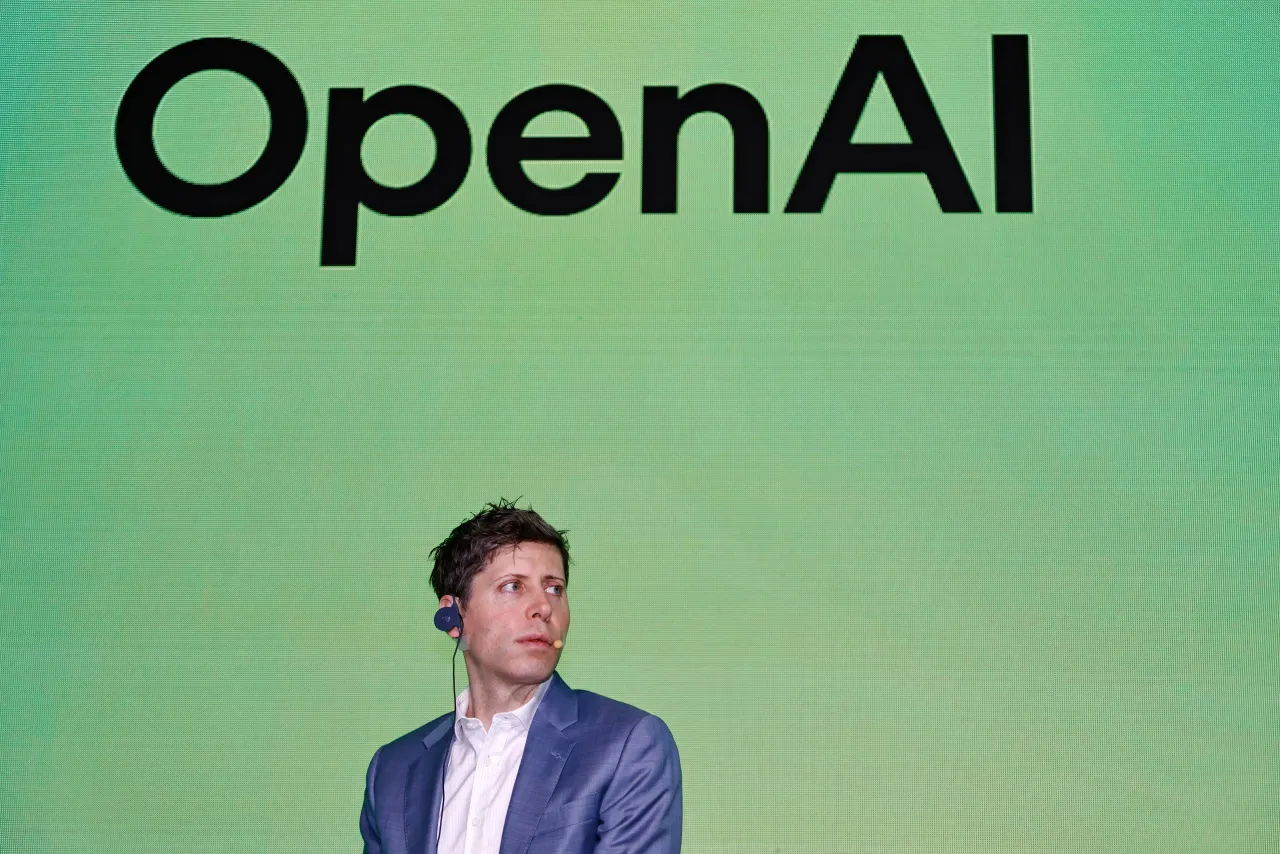


- In standard test suites, Jalapeño delivered up to 1.9 times more output per watt and cut end-to-end latency by up to 3.6 times compared to Nvidia’s Blackwell.
- OpenAI leveraged its own generative AI models to accelerate hardware engineering, reducing design-to-tapeout timelines to just nine months.
- While establishing a custom silicon foundation to slash operating costs and lower reliance on single vendors, OpenAI maintains it will continue purchasing accelerators from Nvidia and other third-party partners.
Advertisement|Remove ads.
OpenAI unveiled the first live performance benchmarks for its maiden custom inference silicon, code-named Jalapeño, demonstrating marked advantages in speed and energy efficiency over Nvidia Corp.’s flagship Blackwell architecture.
“Jalapeño beats Blackwell… across almost all scenarios without being tuned for any specific point in the curve. It excels not only in low-latency scenarios but also in high-throughput scenario,” SemiAnalysis said.
According to evaluation data, Jalapeño delivered higher token-generation speeds per user and superior throughput per kilowatt-hour when evaluated alongside AMD and Google chips.
Advertisement|Remove ads.
“In general, first-generation chips are not competitive, but OpenAI bucks the trend by being industry-leading and beating every Nvidia, AMD, and Google chip we have been able to test on multiple top open source models,” SemiAnalysis’ research showed.
Jalapeño's ability to pull ahead of Nvidia's Blackwell setup represents a significant milestone in custom silicon, proving that in-house hardware tailored specifically for modern artificial intelligence workloads can rival or exceed general-purpose graphics processing units (GPUs).
Breakthrough Performance: SemiAnalysis Findings
To establish real-world validity, OpenAI evaluated Jalapeño using InferenceX, a public benchmark framework maintained by SemiAnalysis that measures end-to-end AI request processing. The system was benchmarked across three major large-scale models: GPT-OSS 120B, DeepSeek R1 670B, and Kimi K2.5 1T.
Advertisement|Remove ads.
Across the tested operating range, Jalapeño achieved 1.5 to 1.9 times higher peak work throughput per watt than benchmarked Nvidia Blackwell configurations. Beyond resolving latency bottlenecks, Jalapeño lowered end-to-end response times by 1.7x to 3.6x, removing the standard trade-off between throughput capacity and output speed.
OpenAI developed Jalapeño to eliminate key structural bottlenecks in AI serving, balancing the compute-heavy prefill phase of processing input context with the memory-bound decode phase of generating output tokens.
AI-Assisted Hardware & Software Engineering
OpenAI revealed that its generative AI models played a vital role in creating Jalapeño, developed in partnership with Broadcom (AVGO). Using internal models alongside Codex and domain-specific platforms like GPT-Astra, engineering teams moved from initial concept to chip tapeout in just nine months.
Advertisement|Remove ads.
Beyond initial hardware synthesis, OpenAI employed AI to optimize arithmetic logic circuits and generate highly optimized software kernels. For selected architectural blocks within GPT-OSS, AI-written implementations outperformed human-expert kernels by 1.5 to 1.8 times, dramatically shortening the software bring-up phase for external models to less than two months.
While Jalapeño's benchmark gains over Blackwell showcase strong architectural execution, SemiAnalysis cautioned that the hardware environment continues to evolve rapidly. Nvidia has begun initial delivery of its next-generation Rubin platform, which features high-bandwidth memory (HBM4) upgrades that will sharpen competition once Jalapeño reaches mass production.
OpenAI plans to begin deploying initial low-volume batches of Jalapeño within its production data centers by late 2026, followed by broader infrastructure scaling into 2027.
Advertisement|Remove ads.
For updates and corrections, email newsroom[at]stocktwits[dot]com.
Comments posted here will also appear on symbol pages.

Latest News
/filters:format(webp)https://news.stocktwits-cdn.com/large_Getty_Images_2259210124_jpg_af08ba0a87.webp)
/filters:format(webp)https://news.stocktwits-cdn.com/Anushka_Basu_make_me_smile_in_the_picture_b92832aa_af59_4141_aacc_4180d2241ba8_1_2_png_1086e0ed8c.webp) Anushka Basu·2m ago
Anushka Basu·2m ago/filters:format(webp)https://news.stocktwits-cdn.com/large_foxconn_logo_resized_jpg_7a524a20a4.webp)
/filters:format(webp)https://news.stocktwits-cdn.com/Prabhjote_DP_67623a9828.jpg) Prabhjote Gill·38m ago
Prabhjote Gill·38m ago/filters:format(webp)https://news.stocktwits-cdn.com/large_walll_street_trading_floor_resized_jpg_a607eff36e.webp)
/filters:format(webp)https://news.stocktwits-cdn.com/Harshita_3cfe02022c.jpg) Harshita Tyagi·41m ago
Harshita Tyagi·41m ago/filters:format(webp)https://st-everywhere-cms-prod.s3.us-east-1.amazonaws.com/large_cardmapr_nl_Ej_Akf_N_Qb46k_unsplash_3c13d430bf.jpg)
/filters:format(webp)https://news.stocktwits-cdn.com/Heera_1_1c30cb0170.PNG) Heera Hari·1h ago
Heera Hari·1h ago/filters:format(webp)https://news.stocktwits-cdn.com/large_Getty_Images_2273703424_jpg_8635ddf3a3.webp)
/filters:format(webp)https://news.stocktwits-cdn.com/vivekkrishnanphotography_58_jpg_0e45f66a62.webp) Arnab Paul·1h ago
Arnab Paul·1h ago/filters:format(webp)https://news.stocktwits-cdn.com/large_Getty_Images_1243796855_jpg_594b4eab0d.webp) Anushka Basu·1h ago
Anushka Basu·1h ago