


Advertisement|Remove ads.
iRobot, Richtech Robotics Stocks Surge As Trump Administration Reportedly Considers Executive Order To Accelerate Development
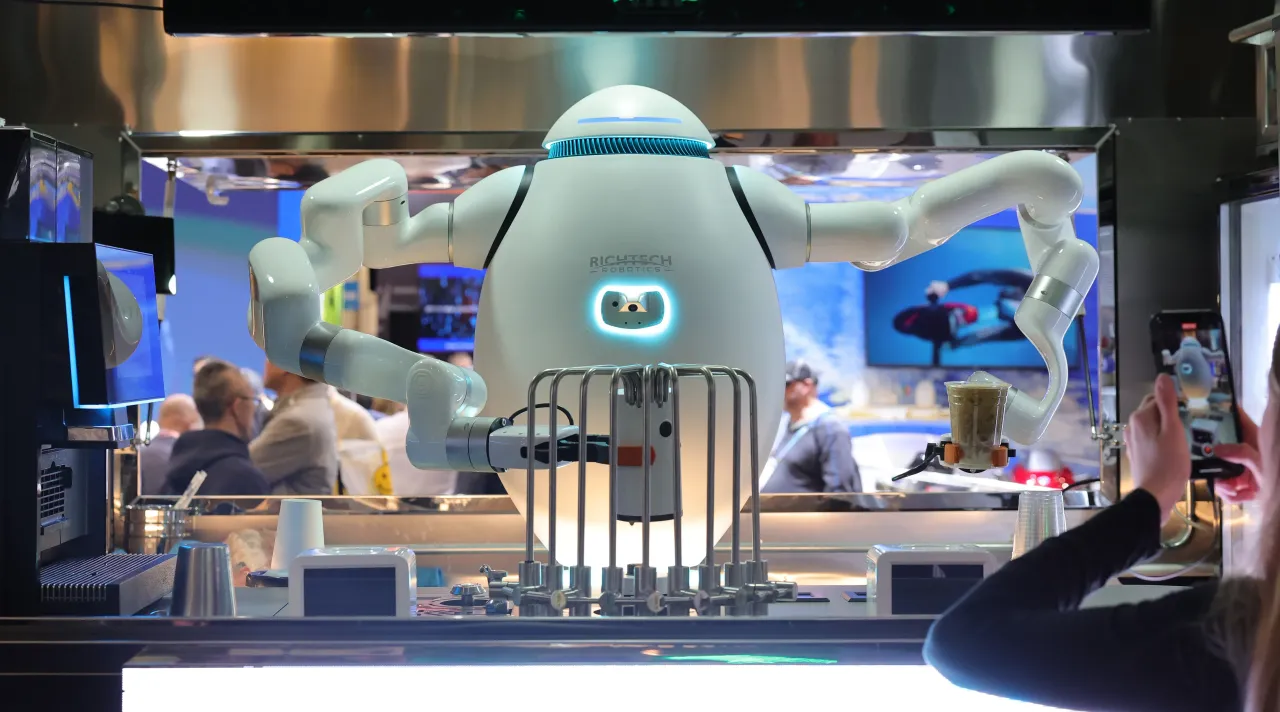


- Founded in 1990, iRobot designs and builds consumer robots.
- Richtech Robotics is focused on designing and developing robotics for use in industries such as service and hospitality, retail and logistics, and industrial and commercial cleaning.
- Commerce Secretary Howard Lutnick is said to be “all in” on accelerating the industry's development, and he has been meeting with robotics industry CEOs.
Advertisement|Remove ads.
Shares of robotics companies surged on Wednesday after a report said the Trump administration is considering an executive order to accelerate industry development.
The Trump administration is reportedly considering issuing an executive order on robotics in 2026. Commerce Secretary Howard Lutnick is said to be “all in” on accelerating the industry's development, and he has been meeting with robotics industry CEOs.
“We are committed to robotics and advanced manufacturing because they are central to bringing critical production back to the United States,” said a Commerce Department spokesperson, according to the report.
Advertisement|Remove ads.
Shares of iRobot Corp. (IRBT) were up nearly 62% in Wednesday morning’s trade, while Richtech Robotics Inc. (RR) shares gained almost 6%. Retail sentiment on Stocktwits around the iRobot stock trended in the ‘extremely bullish’ territory, while users felt ‘bullish’ about Richtech Robotics.
Tesla Inc. (TSLA), which is currently developing the Optimus humanoid robot, also saw its shares rise by nearly 3%.
Founded in 1990, iRobot designs and builds consumer robots. Richtech Robotics is focused on designing and developing robotics for use in industries such as service and hospitality, retail and logistics, and industrial and commercial cleaning.
Advertisement|Remove ads.
Reviving Manufacturing
The push to accelerate the development of the robotics industry comes amid the Trump administration’s focus on reshoring manufacturing in the U.S.
“We are committed to robotics and advanced manufacturing because they are central to bringing critical production back to the United States,” said a Commerce Department spokesperson, according to the report.
Tesla CEO Elon Musk had previously stated in a post on X that AI and robotics seem to be “the only way” for the U.S. to grow out of the way of the $38 trillion in federal debt.
Advertisement|Remove ads.

Impact On Employment
According to a paper by the National Bureau of Economic Research, automation and AI could result in job losses.
“Our task-based framework emphasizes the displacement effect that automation creates as machines and AI replace labor in tasks that it used to perform. This displacement effect tends to reduce the demand for labor and wages,” the paper said.
The NBER noted in its findings that there would be productivity gains, which would further fuel the demand for labor; however, that would still not be enough to compensate for the decrease in labor in national income. An effective counter to this would be the creation of new labor-intensive tasks, it observed.
Advertisement|Remove ads.
For updates and corrections, email newsroom[at]stocktwits[dot]com.
Comments posted here will also appear on symbol pages.

Latest News
/filters:format(webp)https://news.stocktwits-cdn.com/Getty_Images_1485519874_1_jpg_82b28a6517.webp)
/filters:format(webp)https://news.stocktwits-cdn.com/vivekkrishnanphotography_58_jpg_0e45f66a62.webp) Arnab Paul·47m ago
Arnab Paul·47m ago/filters:format(webp)https://news.stocktwits-cdn.com/large_cathie_wood_OG_jpg_b069c5eb62.webp)
/filters:format(webp)https://news.stocktwits-cdn.com/Harshita_3cfe02022c.jpg) Harshita Tyagi·57m ago
Harshita Tyagi·57m ago/filters:format(webp)https://news.stocktwits-cdn.com/large_Getty_Images_2290038559_c6f6528203.jpg)
/filters:format(webp)https://news.stocktwits-cdn.com/Whats_App_Image_2026_05_11_at_09_45_43_1_jpeg_a08c0cf251.webp) Aveek Bhowmik·2h ago
Aveek Bhowmik·2h ago/filters:format(webp)https://news.stocktwits-cdn.com/large_Getty_Images_2301241048_efc5b32b0a.jpg)
/filters:format(webp)https://news.stocktwits-cdn.com/shivani_photo_jpg_dd6e01afa4.webp) Shivani Kumaresan·3h ago
Shivani Kumaresan·3h ago/filters:format(webp)https://st-everywhere-cms-prod.s3.us-east-1.amazonaws.com/large_Crown_Castle_resized_jpg_1ddf452bb6.webp) Shivani Kumaresan·4h ago
Shivani Kumaresan·4h ago/filters:format(webp)https://news.stocktwits-cdn.com/large_space_stocks_2_6f2aa9bc90.jpg)
/filters:format(webp)https://news.stocktwits-cdn.com/IMG_8805_JPG_6768aaedc3.webp) Deepti Sri·4h ago
Deepti Sri·4h ago