


Advertisement|Remove ads.
Sam Altman's Brother Calls QQQ A 'Tough Hurdle To Beat' — But AI Is Fueling A New ETF Winner In 2026
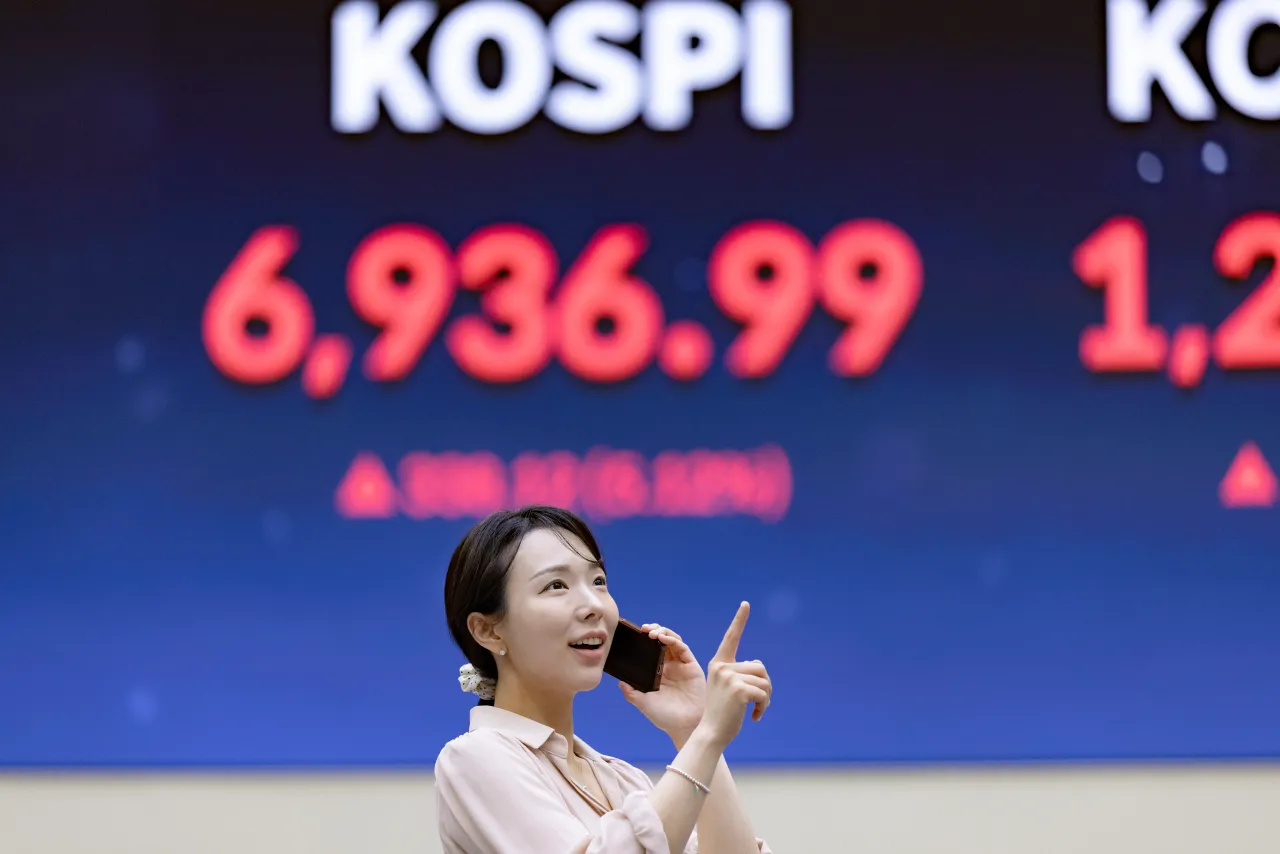


- The AI-driven rally has significantly boosted the iShares MSCI Emerging Markets ETF.
- According to Koyfin data, Taiwan Semiconductor Manufacturing Co., Samsung Electronics, and SK Hynix make up nearly 28% of EEM.
- The Invesco QQQ Trust also has a heavy concentration in AI-linked names, with Nvidia, Apple, Microsoft, Amazon and Micron Technology collectively making up more than 30% of its portfolio.
Advertisement|Remove ads.
The Invesco QQQ Trust (QQQ), which tracks the tech-heavy Nasdaq-100 index in the U.S., has been one of the market’s defining winners over the past decade, surging more than 616%.
“QQQ has been a 6.5x net in the last 10 years… tough hurdle to beat,” Jack Altman, general partner at venture capital firm Benchmark, and brother of OpenAI CEO Sam Altman, said in a post on X.

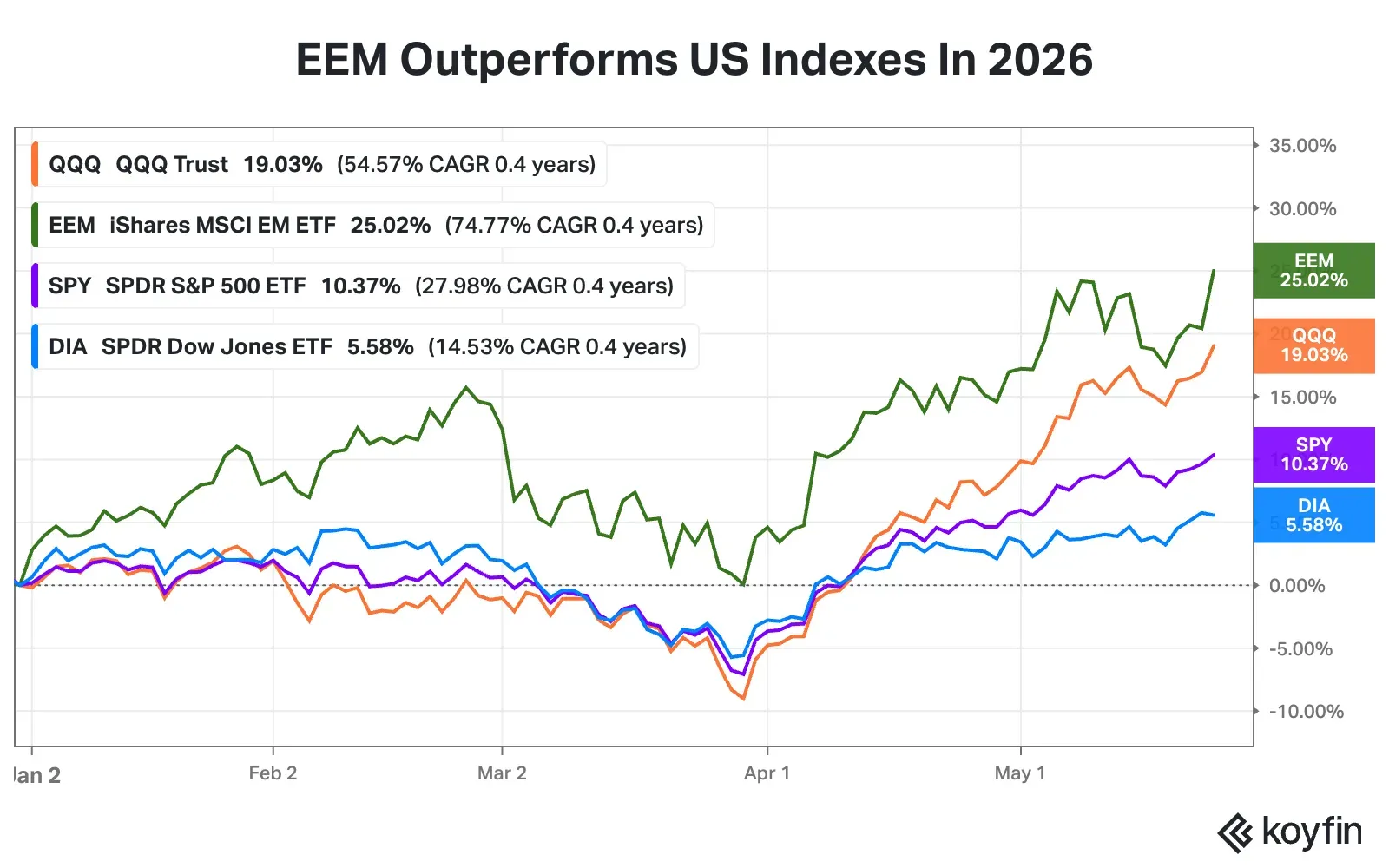
Yet, emerging markets are stealing the spotlight in 2026. The iShares MSCI Emerging Markets ETF (EEM), which is largely dominated by Asian emerging markets, has surged 25% so far this year, overtaking the State Street SPDR S&P 500 ETF Trust (SPY), State Street SPDR Dow Jones Indust Avg ETF Trust (DIA), and the QQQ.
Advertisement|Remove ads.
AI Boom Drives Asian Markets Higher
Emerging markets, especially in Asia, have delivered strong returns due to the artificial intelligence trade. Markets in South Korea and Taiwan, which have a heavy concentration of tech hardware companies that are critical to the AI investment cycle, have rallied significantly.
According to a report from Investing.com, Yardeni Research recently highlighted the strength of the rally in a note, highlighting that equities in South Korea and Taiwan have surged 87.2% and 52.4% year-to-date, respectively, fueled by robust semiconductor earnings and rising AI-related demand.
Meanwhile, Taiwan’s stock market has overtaken India’s to become the fifth largest in the world, trailing the U.S., mainland China, Japan, and Hong Kong, as per a Bloomberg report. The boost is mainly due to a sharp rally in Taiwan Semiconductor Manufacturing Co. (TSM), the world’s largest chipmaker. U.S.-listed shares of Taiwan Semiconductor Manufacturing have more than doubled in value in the last year as demand for advanced AI chips continues to soar.
Advertisement|Remove ads.
The AI-driven rally has significantly boosted the iShares MSCI Emerging Markets ETF. According to Koyfin data, TSM alone accounts for 14.28% of the fund’s portfolio. Combined with South Korean chip giants Samsung Electronics and SK Hynix, semiconductor companies now make up nearly 28% of the ETF’s total holdings.
SK Hynix surged more than 10% in Seoul trading on Wednesday, pushing the company past the $1 trillion market capitalization milestone. Samsung Electronics also climbed 6.4%.
“Markets with limited exposure to tech hardware are increasingly being overshadowed by tech hardware–heavy markets such as Taiwan and Korea,” Yi Ping Liao, a fund manager at Franklin Templeton, reportedly told Bloomberg.
Advertisement|Remove ads.
US To Lag Rest Of The World?
The Invesco QQQ Trust also has a heavy concentration in AI-linked names, with Nvidia, Apple, Microsoft, Amazon and Micron Technology collectively making up more than 30% of its portfolio. MU alone accounts for a 3.81% weighting.
However, Yardeni Research has highlighted how the All Country World ex-U.S. MSCI has already outperformed the U.S. MSCI over the past year and early this year for the first time since the 2000s.
In a note, the firm has reportedly reiterated its "Go Global" investment strategy, noting that "the rest of the world might soon start outperforming the US again on expectations that the end of the war is in sight."
Advertisement|Remove ads.
The outlook signals a growing investor shift toward global cyclical markets, export-driven economies, and semiconductor-heavy regions as energy costs and inflation pressures continue to ease.
What’s Retail Thinking?
On Stocktwits, retail sentiment around EEM was in the ‘bullish’ territory amid ‘high’ message volumes at the time of writing. For QQQ as well, sentiment was in the ‘bullish’ territory, but message volumes remained ‘low.’
One user on the QQQ feed said, “sell off starts with month end rebalancing! Take profit at ATH.”
Advertisement|Remove ads.
Another user said that the market “is stuck in drive, only going up, calls all day everyday you can’t lose at this rate.”
Advertisement|Remove ads.
QQQ has rallied 40% in the last one year, while EEM has surged 48% in the same time.
For updates and corrections, email newsroom[at]stocktwits[dot]com.
Advertisement|Remove ads.
Comments posted here will also appear on symbol pages.

Latest News
/filters:format(webp)https://news.stocktwits-cdn.com/large_Getty_Images_2295800057_fd745de575.jpg)
/filters:format(webp)https://news.stocktwits-cdn.com/shivani_photo_jpg_dd6e01afa4.webp) Shivani Kumaresan·12m ago
Shivani Kumaresan·12m ago/filters:format(webp)https://news.stocktwits-cdn.com/large_Oil_drill_06147e8349.webp)
/filters:format(webp)https://news.stocktwits-cdn.com/Aashika_Suresh_Profile_Picture_jpg_2acd6f446c.webp) Aashika Suresh·18m ago
Aashika Suresh·18m ago/filters:format(webp)https://news.stocktwits-cdn.com/large_pharma_stock_jpg_490939e580.webp)
/filters:format(webp)https://news.stocktwits-cdn.com/IMG_8805_JPG_6768aaedc3.webp) Deepti Sri·22m ago
Deepti Sri·22m ago/filters:format(webp)https://news.stocktwits-cdn.com/large_Getty_Images_2203983775_jpg_74bdd5dd43.webp) Aashika Suresh·57m ago
Aashika Suresh·57m ago/filters:format(webp)https://news.stocktwits-cdn.com/large_Getty_Images_2247874160_jpg_4fb51355e6.webp) Deepti Sri·1h ago
Deepti Sri·1h ago/filters:format(webp)https://news.stocktwits-cdn.com/large_Getty_Images_2261740761_jpg_17808aac0f.webp) Aashika Suresh·2h ago
Aashika Suresh·2h ago