


Advertisement|Remove ads.
SPCX, TSLA Eye Weekly Losses: Elon Musk Sheds Trillionaire Crown As SpaceX’s Red-Hot IPO Rally Loses Steam
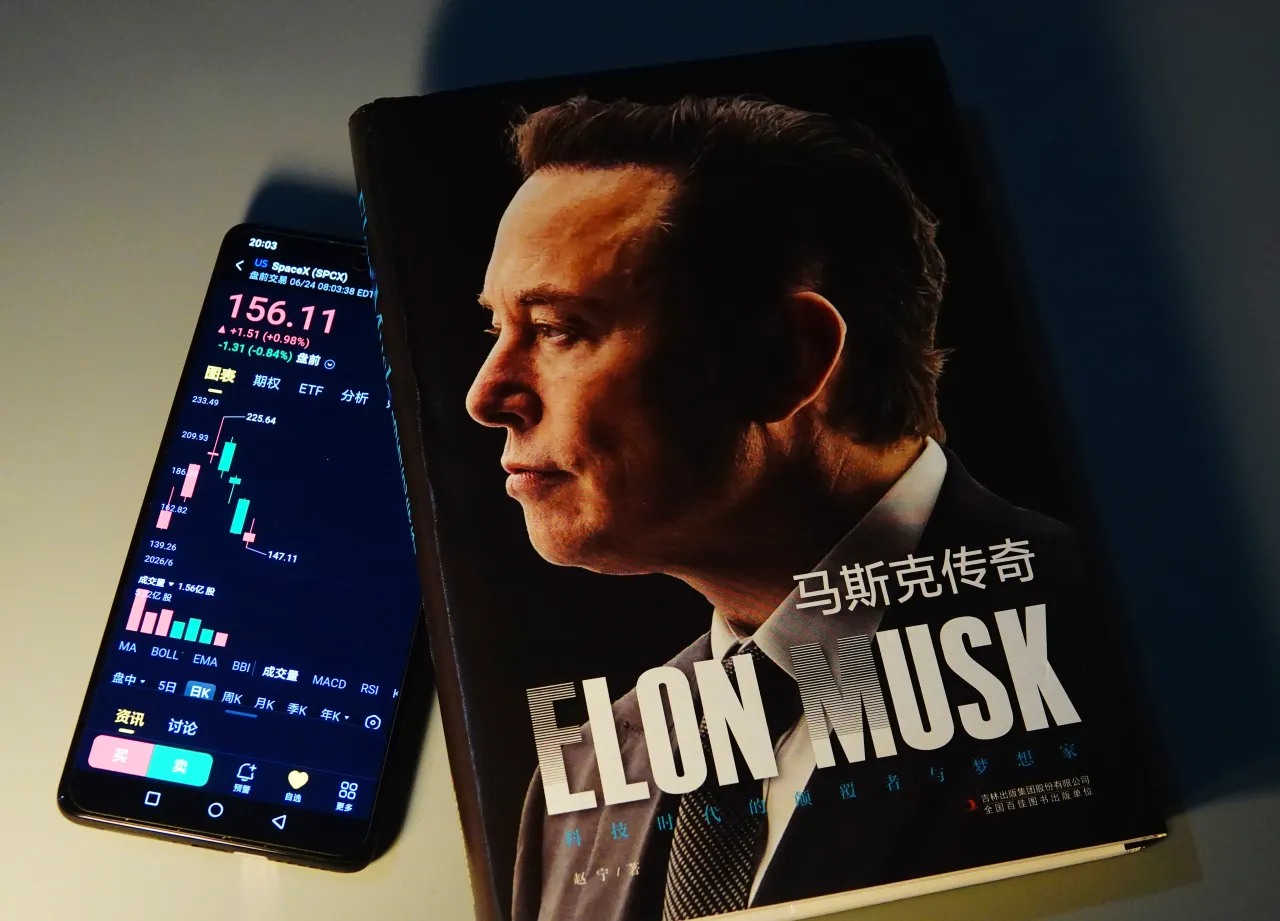


- Musk’s net worth fell to $946 billion on Wednesday, down from about $1.11 trillion less than two weeks earlier.
- SpaceX’s June 12 Nasdaq debut briefly pushed Musk above $1 trillion, helped by his 42% stake in the company.
- A 16% SpaceX plunge on Monday wiped an estimated $240 billion from Musk’s personal balance sheet.
Advertisement|Remove ads.
Elon Musk’s brief run as the world’s first trillionaire has ended, after a sharp pullback in SpaceX (SPCX) and Tesla (TSLA) shares erased part of the wealth surge that followed SpaceX’s blockbuster market debut.
Musk’s net worth fell to $946 billion on Wednesday, according to the Bloomberg Billionaires Index, down from about $1.11 trillion less than two weeks earlier and a recent peak of $1.32 trillion. Despite the drop, Musk remains the world’s richest person by a significant margin.

SpaceX IPO Rally Cools Fast
Musk crossed the trillion-dollar mark after SpaceX’s June 12 Nasdaq debut. The company priced its IPO at $135 per share, opened at $150 per share, and was valued at over $1.77 trillion. Since Musk owned 42% of SpaceX, the listing instantly pushed his paper fortune past $1 trillion. SpaceX shares later surged to $225.64 on June 16, lifting his net worth to around $1.32 trillion.
Advertisement|Remove ads.
That rally has cooled sharply since then. SpaceX has dropped over 30% from its peak, recently trading at $154, as investors weighed soaring tech valuations, AI spending and capital-intensive expansion plans. Meanwhile, Musk has confirmed that Starmind is the official name of SpaceX’s AI data center in orbit, which is a proposed network of up to one million satellites that would process AI workloads in space instead of functioning as a Starlink-style internet relay system.
The biggest blow came on Monday, when SpaceX plunged 16%, wiping an estimated $240 billion from Musk’s personal balance sheet. Tesla shares then deepened the pressure, sliding nearly 6% the next day. Musk’s fortune is unusually exposed to these moves as it is concentrated in two stocks: SpaceX, which accounts for most of his net worth, and Tesla, where he owns about 12% of outstanding shares.
The selloff also comes amid a broader pullback in tech stocks, with investors growing more cautious about AI infrastructure costs, heavy capital spending, and stubborn interest rates. Despite the steep slide, bearish bets remain modest. About 40 million SpaceX shares are sold short, or 5% to 7% of the public float, according to S3 Partners.
Advertisement|Remove ads.
Investors Eye SpaceX’s First Earnings
SpaceX’s volatility also comes as the company taps debt markets soon after its IPO. The offering, which drew reported demand of nearly $89 billion, carries coupons ranging from 5.35% to 6.65% and maturities from 2031 to 2056. SpaceX plans to use the proceeds to repay its bridge loan, cover related fees and support general corporate purposes.
The refinancing replaces a $20 billion bridge loan related to debt from xAI, which SpaceX acquired in February. It could also lower annual interest costs as X and xAI would have spent $1.8 billion servicing prior debt this year, compared with about $1.5 billion annually for SpaceX’s new bonds.
SpaceX’s first earnings report as a public company, expected in late July or early August, could be the next major test. Investors will be watching Starlink subscriber growth and Starship R&D spending closely. “Starlink is the biggest revenue and profit driver for the company right now,” Morningstar said in a note earlier this month.
Advertisement|Remove ads.
How Do Retail Traders Feel About SPCX?
On Stocktwits, retail sentiment for SPCX was ‘bearish’ amid ‘high’ message volume.

One user said, “This current valuation is already taking into account the company turning a profit and scaling 10x, it would still be making less money than the top 10 stocks by valuation currently even if they 10x revenue and became profitable. Thats how unrealistic this is”
Advertisement|Remove ads.
Another user said, “$SPCX shoulda listened to my non-existent fin advisor and stayed out of this the first 45 days”
For updates and corrections, email newsroom[at]stocktwits[dot]com.
Advertisement|Remove ads.
Comments posted here will also appear on symbol pages.

Latest News
/filters:format(webp)https://st-everywhere-cms-prod.s3.us-east-1.amazonaws.com/large_hal_gatewood_i_Pl3q_g_E_Gz_Y_unsplash_f5aaa11469.jpg)
/filters:format(webp)https://news.stocktwits-cdn.com/vivekkrishnanphotography_58_jpg_0e45f66a62.webp) Arnab Paul·16m ago
Arnab Paul·16m ago/filters:format(webp)https://news.stocktwits-cdn.com/large_Getty_Images_2183604828_0179169ddb.jpg)
/filters:format(webp)https://news.stocktwits-cdn.com/Anushka_Basu_make_me_smile_in_the_picture_b92832aa_af59_4141_aacc_4180d2241ba8_1_2_png_1086e0ed8c.webp) Anushka Basu·46m ago
Anushka Basu·46m ago/filters:format(webp)https://news.stocktwits-cdn.com/large_microsoft_office_jpg_db5ba55187.webp)
/filters:format(webp)https://news.stocktwits-cdn.com/Heera_1_1c30cb0170.PNG) Heera Hari·1h ago
Heera Hari·1h ago/filters:format(webp)https://st-everywhere-cms-prod.s3.us-east-1.amazonaws.com/large_vecteezy_medicine_doctor_or_pharmacist_use_tablet_or_mobile_12169773_e621e41aee.jpg) Arnab Paul·1h ago
Arnab Paul·1h ago/filters:format(webp)https://news.stocktwits-cdn.com/large_Anthropic_ec1c7b5ee9.jpg)
/filters:format(webp)https://news.stocktwits-cdn.com/Prabhjote_DP_67623a9828.jpg) Prabhjote Gill·2h ago
Prabhjote Gill·2h ago/filters:format(webp)https://news.stocktwits-cdn.com/large_crcl_jpg_2d18b8ee37.webp) Anushka Basu·2h ago
Anushka Basu·2h ago