


Advertisement|Remove ads.
Treasury Chief Bessent Predicts Oil Price Drop To $40 Following End Of Iran Conflict
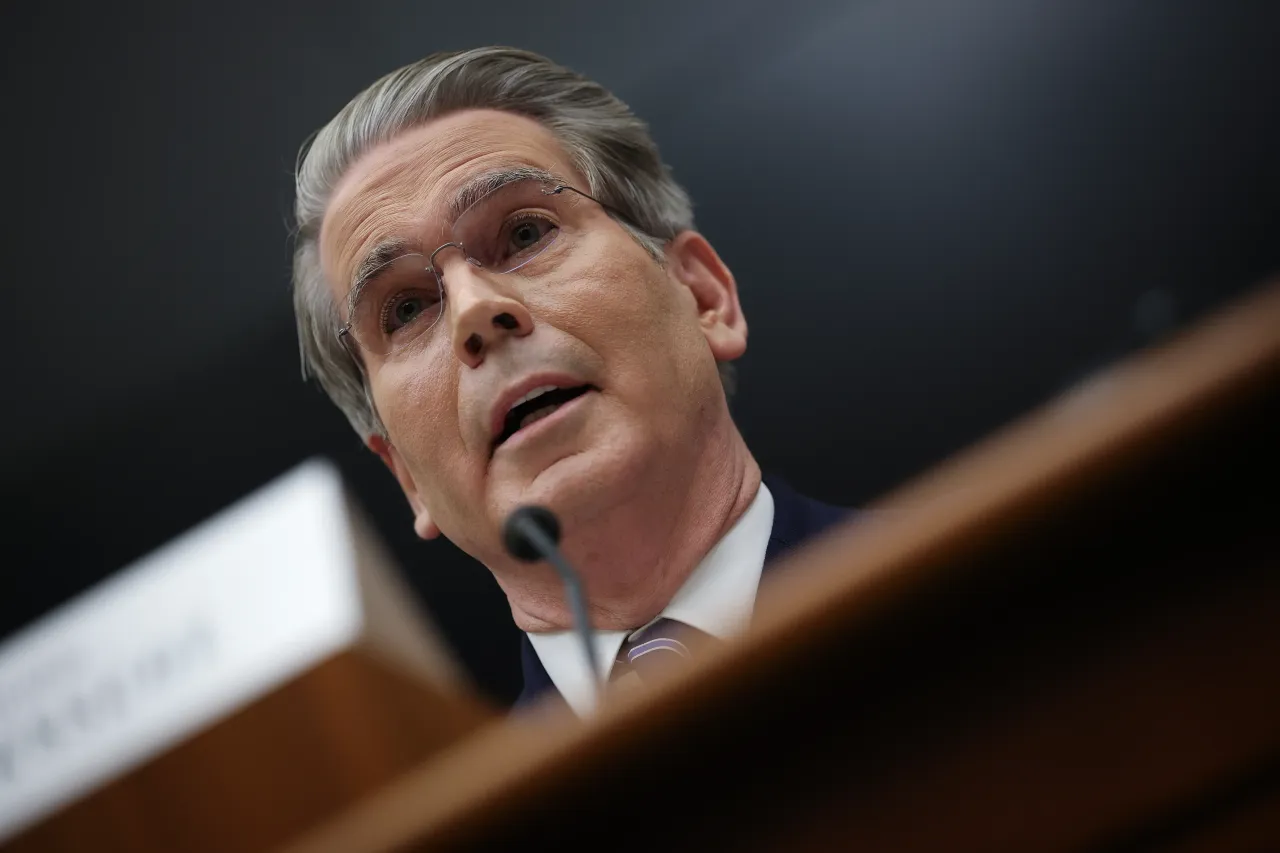


- Oil could fall to between $40 and $50 per barrel post-conflict due to an impending surge in global market supply.
- Falling energy costs are expected to ease headline inflation and push down benchmark interest rates, which recently hit multi-year highs.
- Bessent dismissed concerns over Norway’s sovereign wealth fund reducing its U.S. Treasury holdings, suggesting a pivot toward higher-yielding U.S. housing agency debt.
Advertisement|Remove ads.
U.S. Treasury Secretary Scott Bessent predicted on Friday that global crude prices could plummet to as low as $40 per barrel once the military conflict involving Iran reaches a resolution.
The Treasury chief signaled that an influx of market supply will drive down energy costs and help alleviate pressure on sovereign bond yields, while speaking to Bloomberg in an interview.
"We're going to get on the other side of this Iran conflict, and I expect that oil will come down," Bessent said. He emphasized that an upcoming surplus could drive West Texas Intermediate and Brent crude levels significantly lower.
Advertisement|Remove ads.
Market Pressure And Inflation
The projections come amid elevated energy markets following recent military exchanges between U.S. and Iranian forces. Brent crude traded above $95 a barrel on Friday, reaching its highest level since July, while West Texas Intermediate hovered near $91.
The recent surge in energy pricing has fueled persistent inflationary fears, driving interest rates on 10-year U.S. Treasury bonds to levels not seen since 2023. Bessent pointed out a strong historical correlation between current oil prices and interest rate movements, reassuring markets that both inflation spikes and bond yields will decline as geopolitics stabilize.
Rising inflation concerns have also fueled rate-hike fears among investors, with Friday’s strong jobs report fanning investor angst. As per the CME FedWatch tool, traders anticipate a 58% chance of a rate hike by the Federal Reserve at the September meeting.
Advertisement|Remove ads.
Sovereign Debt And Foreign Holdings
Bessent also addressed market nervousness regarding a proposal from Norway’s sovereign wealth fund to reduce its U.S. government debt footprint by an estimated $75 billion. The potential divestment comes as U.S. national debt metrics hit a landmark $40 trillion.
Downplaying concerns about diminishing international demand for U.S. Treasuries, Bessent suggested the fund is simply reallocating capital to higher-yielding, government-backed housing agency debt, such as Fannie Mae, Freddie Mac, and Ginnie Mae securities. "They're just looking to upgrade their yield with other American assets," he noted, expressing support for such portfolio shifts.
Among ETFs tracking benchmark indexes, the SPDR S&P 500 ETF (SPY) fell 0.4%, and Invesco QQQ Trust (QQQ) ended Friday flat, while the SPDR Dow Jones Industrial Average ETF Trust (DIA) was down 0.7%. The U.S. Oil Fund (USO) slipped about 0.1% on Friday.
Advertisement|Remove ads.
Retail sentiment on Stocktwits for QQQ, SPY, and DIA was between ‘bearish’ and ‘neutral ’, with ‘high’ message volumes.
For updates and corrections, email newsroom[at]stocktwits[dot]com.
Comments posted here will also appear on symbol pages.

Latest News
/filters:format(webp)https://news.stocktwits-cdn.com/gettyimages_2267701500_594x594_1cfbb8b517.jpg)
/filters:format(webp)https://news.stocktwits-cdn.com/1707726834303_jpg_11f20a9aa9.webp) Shashank Nayar·1h ago
Shashank Nayar·1h ago/filters:format(webp)https://st-everywhere-cms-prod.s3.us-east-1.amazonaws.com/large_Fintech_stock_bef0de12ed.jpg) Shashank Nayar·1h ago
Shashank Nayar·1h ago/filters:format(webp)https://news.stocktwits-cdn.com/large_Getty_Images_2153399754_46a0047462.jpg)
/filters:format(webp)https://news.stocktwits-cdn.com/unnamed_jpg_9dff551b50.webp) Anan Ashraf·1h ago
Anan Ashraf·1h ago/filters:format(webp)https://news.stocktwits-cdn.com/large_Getty_Images_1358625659_b011ef9a83.jpg) Anan Ashraf·2h ago
Anan Ashraf·2h ago/filters:format(webp)https://news.stocktwits-cdn.com/large_Getty_Images_2295226888_dcdb8e346d.jpg) Shashank Nayar·4h ago
Shashank Nayar·4h ago/filters:format(webp)https://st-everywhere-cms-prod.s3.us-east-1.amazonaws.com/large_novartis_stock_resized_978faa13aa.jpg) Anan Ashraf·4h ago
Anan Ashraf·4h ago