


Advertisement|Remove ads.
Treasury Yield Surge Could Be A ‘Headwind’ For Risk Assets, Says Verdence CIO – Flags Pressure On AI Funding
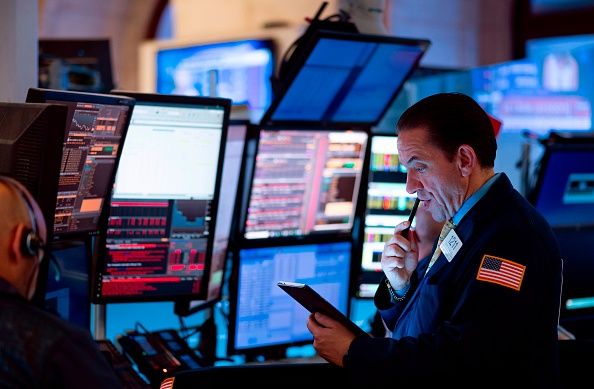


- Horneman said stocks increasingly have to compete with the returns available in the bond market as Treasury yields rise.
- AI companies that have used debt markets to fund capital expenditure no longer have that financing source as easily as before, she said.
- Horneman sees buyers potentially emerging around a 5.5% 10-year Treasury yield, while UBS continues to position for further equity upside.
Advertisement|Remove ads.
Verdence Capital Advisors Chief Investment Officer Megan Horneman said Thursday that the whole Treasury yield curve is becoming a “headwind” for risk assets, warning that continued increases could bring greater stock-market volatility and a “pretty messy end of year.”
The benchmark 10-year Treasury yield climbed to 5.139% on Thursday, its highest level since July 2007, while the 30-year yield reached about 5.43%, its highest since 2004. The moves have brought long-term borrowing costs back to levels not seen in roughly two decades
Stocks Face More Competition From Bonds
In an interview with CNBC, Horneman said investors will increasingly compare stock earnings yields with what they can earn in the bond market.
Advertisement|Remove ads.
Higher Treasury yields can make bonds more competitive with equities because investors can earn greater returns from government debt without taking on the same equity risk.
Horneman also flagged a more direct impact on the artificial intelligence trade. Many companies in the AI space have been using debt markets to finance capital expenditure, but “they don’t have that source of funding as easy as it was once before,” she told CNBC.
That dynamic could contribute to further volatility in equity markets if yields continue to rise, she said. Sharp moves in Treasuries have historically created stress elsewhere in markets, Horneman warned.
Advertisement|Remove ads.
“When you see violent moves in the Treasury market, something ends up cracking,” she said, adding that it could be a stock, a private fund or another part of the financial system.
What Is Driving Yields Higher?
Horneman pointed to several factors, including rising crude oil prices that are pushing inflation expectations higher, the Iran conflict, large government deficits and net interest payments, continued Federal Reserve rate hikes, and weaker Treasury demand from foreign central banks.
According to the Verdence CIO, buyers could begin stepping into the 10-year Treasury around a 5.5% yield, noting nominal gross domestic product is running around 6%.
Advertisement|Remove ads.
Mohamed El-Erian, chief economic adviser at Allianz, argued in an X post that the yield surge should not be such a surprise, citing government and large corporate borrowing plans, strong economic activity, and declining demand from some traditional Treasury buyers.
He also said investors remain psychologically anchored to the unusually low yields that followed the 2008 financial crisis.
UBS Still Sees Equity Upside
UBS Global Wealth Management offered a more constructive view in a note CNBC cited. The firm said its base case is for relatively limited energy disruption and an inflation shock that does not become sufficiently broad or persistent to derail economic growth.
Advertisement|Remove ads.
“We continue to recommend positioning for further equity upside,” UBS strategists said, while warning that volatility could continue as investors weigh geopolitical developments, inflation, government debt and the sustainability of AI capital expenditure.
Meanwhile, Bank of America (BofA) raised its year-end forecast for the 10-year Treasury yield to 5% from 4.5% and lifted its 2-year yield forecast to 5% from 4.5%, citing risks related to Iran, fiscal pressures, trade tensions, and uncertainty around artificial intelligence.
According to an Investing.com report, the bank also raised its second-half Brent crude forecast to $95 per barrel from $83.
Advertisement|Remove ads.
How Are Markets Reacting?
U.S. stock futures fell on Thursday. The Nasdaq-100 futures sank more than 250 points, Dow Jones Industrial futures fell around 130 points, and S&P 500 futures were down 36 points at the time of this writing.
The CBOE Volatility Index (VIX), Wall Street’s fear gauge, jumped about 15%, signalling heightened investor anxiety as markets digested the sharp move in Treasury yields.
Among ETFs tracking benchmark indexes, the SPDR S&P 500 ETF (SPY) was down 0.58%, and the Invesco QQQ Trust (QQQ) lost 1.1% amid ‘bullish’ sentiment. Meanwhile, the SPDR Dow Jones Industrial Average ETF Trust (DIA) traded 0.24% lower amid ‘neutral’ sentiment.
The iShares 20+ Year Treasury Bond ETF (TLT) was down 0.45% amid ‘bullish’ sentiment.
Advertisement|Remove ads.
For updates and corrections, email newsroom[at]stocktwits[dot]com
Comments posted here will also appear on symbol pages.

Latest News
/filters:format(webp)https://news.stocktwits-cdn.com/large_Getty_Images_2274484367_jpg_e7062348b5.webp)
/filters:format(webp)https://news.stocktwits-cdn.com/shivani_photo_jpg_dd6e01afa4.webp) Shivani Kumaresan·11m ago
Shivani Kumaresan·11m ago/filters:format(webp)https://news.stocktwits-cdn.com/large_SK_Hynix_jpg_efba9fa39d.webp)
/filters:format(webp)https://news.stocktwits-cdn.com/IMG_9209_1_d9c1acde92.jpeg) Yuvraj Malik·18m ago
Yuvraj Malik·18m ago/filters:format(webp)https://news.stocktwits-cdn.com/large_rocketlab_jpg_fcfa5bb73e.webp)
/filters:format(webp)https://news.stocktwits-cdn.com/IMG_8805_JPG_6768aaedc3.webp) Deepti Sri·36m ago
Deepti Sri·36m ago/filters:format(webp)https://news.stocktwits-cdn.com/gettyimages_2267701500_594x594_1cfbb8b517.jpg)
/filters:format(webp)https://news.stocktwits-cdn.com/Aashika_Suresh_Profile_Picture_jpg_2acd6f446c.webp) Aashika Suresh·42m ago
Aashika Suresh·42m ago/filters:format(webp)https://news.stocktwits-cdn.com/large_Getty_Images_2279869782_8049b29afc.jpg) Aashika Suresh·1h ago
Aashika Suresh·1h ago/filters:format(webp)https://news.stocktwits-cdn.com/large_Getty_Images_2300173637_79e4bae290.jpg) Yuvraj Malik·2h ago
Yuvraj Malik·2h ago