


Advertisement|Remove ads.
US Black Friday Online Sales To Top $13B, Says Adobe, As Consumers Look Past Inflation And Elevated Gas Prices
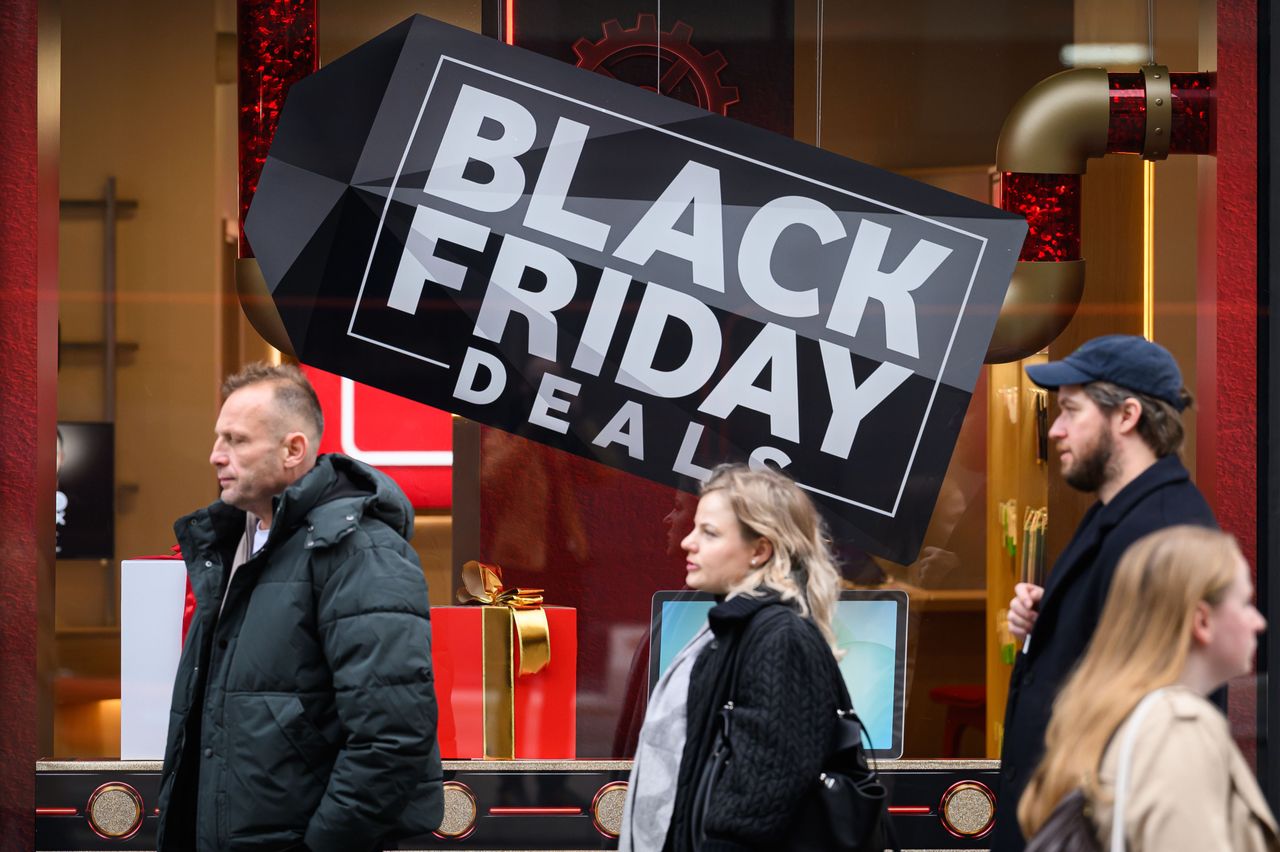


- U.S. online shoppers had already spent $9.7 billion on Black Friday through 6:30 p.m. ET, up 12.8% from the same period last year, according to Adobe Analytics data.
- Adobe expects the final tally to reach between $13 billion and $13.4 billion, potentially making it one of the biggest online shopping days on record.
- Spending momentum is expected to continue through the weekend, with Saturday online sales forecast at $6.1 billion and Sunday spending projected to reach $6.4 billion.
Advertisement|Remove ads.
U.S. consumers are showing little appetite for pulling back on holiday shopping, with online spending expected to set another record on Black Friday despite persistent inflation and elevated fuel costs.
Fresh estimates from Adobe Analytics point to strong momentum heading into the crucial Cyber Week shopping period, suggesting that consumers remain willing to spend as retailers roll out aggressive discounts.

Black Friday Online Spending Heads For $13B Milestone
U.S. online shoppers had already spent $9.7 billion on Black Friday through 6:30 p.m. ET, up 12.8% from the same period last year, according to Adobe Analytics data.
Advertisement|Remove ads.
Adobe expects the final tally to reach between $13 billion and $13.4 billion, potentially making it one of the biggest online shopping days on record.
Spending momentum is expected to continue through the weekend, with Saturday online sales forecast at $6.1 billion, up 6% year over year, and Sunday spending projected to reach $6.4 billion, a 7.5% increase.
Cyber Monday is expected to remain the biggest shopping day of the season, with online spending projected to hit $15.1 billion, up 6.2% from last year.
Advertisement|Remove ads.
Across the five-day period from Thanksgiving through Cyber Monday, Adobe expects U.S. online spending to climb 7.4% to $47.5 billion.
AI Shopping, Mobile Purchases And Buy Now, Pay Later Gain Ground
Adobe's holiday shopping outlook points to changing consumer habits, with artificial intelligence, mobile shopping and flexible payment options playing increasingly important roles.
AI-driven traffic to retail websites is projected to grow 130% year over year across the November-December holiday season, while Thanksgiving alone is expected to see a 159% increase.
Advertisement|Remove ads.
Adobe also found that 69% of consumers said they were less likely to return an item purchased with the help of an AI assistant, highlighting the potential impact of AI-powered shopping recommendations.
Mobile devices are another major driver, with smartphones and other mobile devices accounting for a projected 63.2% of online shopping on Thanksgiving.
Meanwhile, Buy Now, Pay Later (BNPL) spending is forecast to grow 6.6% year over year, with shoppers spending $1.3 billion more through the payment method than in 2025.
Advertisement|Remove ads.
Inflation Remains A Challenge For US Consumers
The strong shopping outlook comes even as inflation continues to weigh on household budgets.
According to the Bureau of Economic Analysis' October Personal Income and Outlays report, released Wednesday, the Personal Consumption Expenditures (PCE) price index rose 0.3% month over month and 3.8% year over year.
Core PCE inflation, which excludes food and energy prices, also increased 0.3% from September and 3.3% from a year earlier.
Advertisement|Remove ads.
Meanwhile, personal consumption expenditures increased 0.3% in October in current-dollar terms. However, inflation-adjusted, or real PCE, was essentially unchanged during the month.
Personal income rose 0.7%, while disposable personal income increased 0.8%, offering some support to household spending.
The figures suggest that while consumers continue to hunt for bargains and take advantage of holiday promotions, persistent price pressures remain an important backdrop to this year's shopping season.
Advertisement|Remove ads.
During the after-hours session on Friday, the SPDR S&P 500 ETF (SPY), which tracks the S&P 500 index, rose 0.41%; the Invesco QQQ Trust ETF (QQQ) declined 0.06%; and the SPDR Dow Jones Industrial Average ETF Trust (DIA) gained 0.23%. Retail sentiment on Stocktwits toward the S&P 500 ETF was in the ‘extremely bullish’ territory at the time of writing.
For updates and corrections, email newsroom[at]stocktwits[dot]com.
Advertisement|Remove ads.

Latest News
 Stocktwits News Desk·11m ago
 Stocktwits News Desk·1h ago

 Anushka Basu·1h ago
 Stocktwits News Desk·2h ago
 Anushka Basu·3h ago

 Anan Ashraf·7h ago
Comments posted here will also appear on symbol pages.