


Advertisement|Remove ads.
Bank Of America CEO Warns Stablecoin Yields Could Negatively Impact Small Businesses
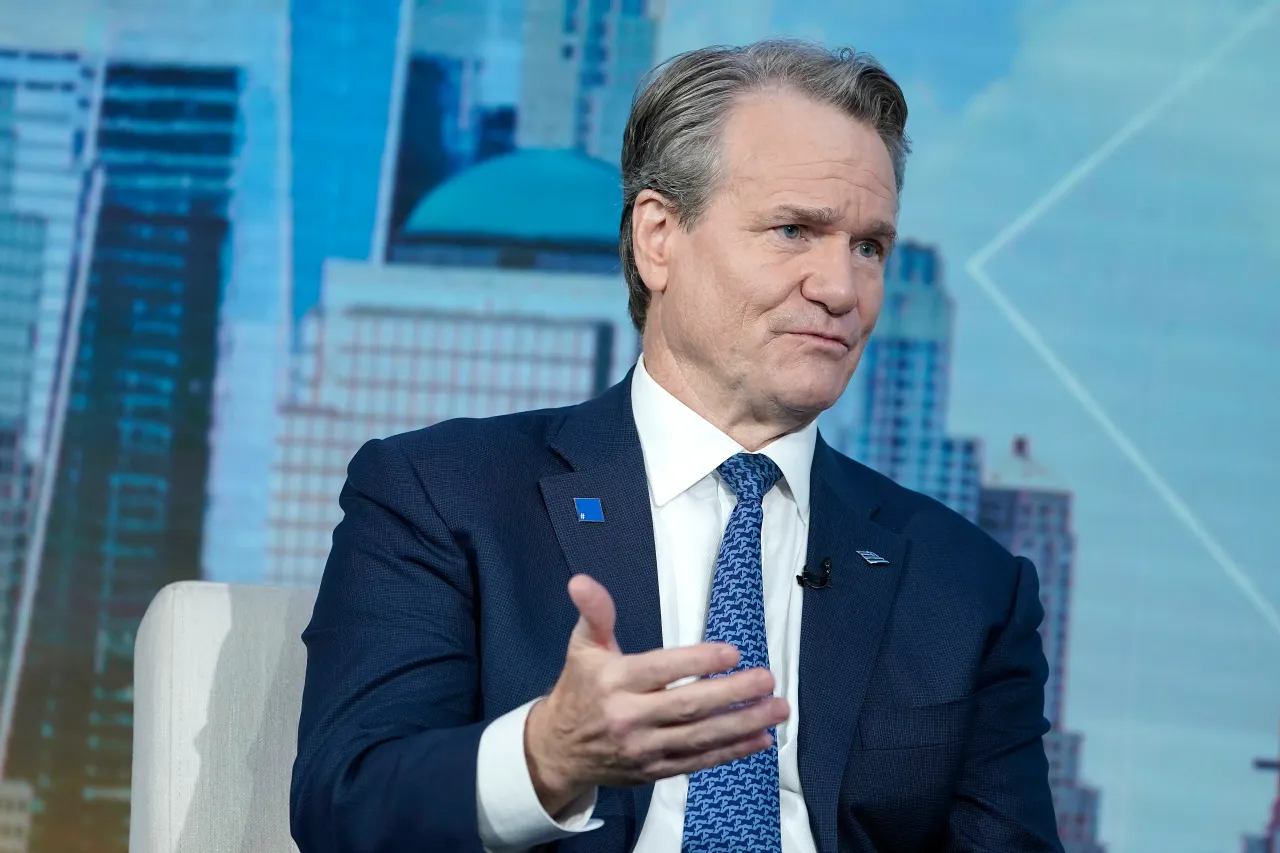


- Bank of America CEO Brian Moynihan said as much as $6 trillion in bank deposits could shift to interest-paying stablecoins.
- Moynihan warned small businesses could feel it first, as fewer bank deposits could mean less lending and higher borrowing costs.
- While Scaramucci characterized the draft as banks stifling competition, Coinbase's CEO opposed it due to concerns about stablecoin rewards.
Advertisement|Remove ads.
Bank of America (BAC) CEO Brian Moynihan pointed out that interest-paying stablecoins could trigger “upwards of $6 trillion” in deposit outflows from the U.S. banking system if lawmakers fail to close a loophole in the market structure bill.
Moynihan’s unique emphasis wasn’t just on bank competition, but on who loses credit access first if deposits move outside banks' small- and medium-sized businesses. In the company’s Fourth Quarter 2025 Earnings Announcement, he said that stablecoin rules effectively force issuers to operate like a money market mutual fund. It would be backed by highly liquid assets, such as Fed deposits or short-term Treasury bills, rather than supporting bank lending.
That matters, he argued, because when deposits leave, banks “either [won’t] be able to loan or they’re going to have to get wholesale funding,” which “will come at a cost.” A move that he believes could raise borrowing costs across the system.
Advertisement|Remove ads.
Moynihan linked the deposit-migration risk to the ongoing policy dispute over whether stablecoins should be allowed to pay yield for simply holding balances. Coinbase CEO Brian Armstrong also said the exchange would not support the bill, arguing it would “kill rewards on stablecoins.”
Bank of America (BAC) closed at $52.97, up $0.38 on Friday, while shares stayed flat after hours at $52.96. On Stocktwits, retail sentiment around Bank of America remained in 'extremely bullish' territory, as chatter remained at 'extremely high' levels over the past day.
Stablecoin-Yield Clash Deepens As Senate Delays Markup
This debate has also drawn commentary from traditional finance and crypto investors. SkyBridge Capital founder Anthony Scaramucci wrote on X that banks are trying to block stablecoin yield to avoid competition. He said jurisdictions that allow yield-bearing rails may be better positioned to attract adoption in emerging markets.
Advertisement|Remove ads.
Senate Banking leaders later postponed the crypto market structure markup as negotiations continued among lawmakers and industry participants, with the White House now aiming to completely drop the bill if Coinbase does not come back with a yield framework that works for both banks and crypto companies.
According to a report citing Galaxy Digital (GLXY), which warned this week that provisions in the draft legislation could significantly expand Treasury Department oversight of digital asset transactions, calling it the largest potential expansion of financial surveillance powers since the post-9/11 era.
Read also: White House Plans To Drop Crypto Bill If Coinbase Does Not Comply
Advertisement|Remove ads.
For updates and corrections, email newsroom[at]stocktwits[dot]com.
Comments posted here will also appear on symbol pages.

Latest News
/filters:format(webp)https://news.stocktwits-cdn.com/Getty_Images_1485519874_1_jpg_82b28a6517.webp)
/filters:format(webp)https://news.stocktwits-cdn.com/vivekkrishnanphotography_58_jpg_0e45f66a62.webp) Arnab Paul·31m ago
Arnab Paul·31m ago/filters:format(webp)https://news.stocktwits-cdn.com/Getty_Images_2208539282_jpg_3307dbd3ff.webp)
/filters:format(webp)https://news.stocktwits-cdn.com/Heera_1_1c30cb0170.PNG) Heera Hari·58m ago
Heera Hari·58m ago/filters:format(webp)https://st-everywhere-cms-prod.s3.us-east-1.amazonaws.com/large_broadcom_hq_resized_8d2f55c61f.jpg)
/filters:format(webp)https://news.stocktwits-cdn.com/Harshita_3cfe02022c.jpg) Harshita Tyagi·1h ago
Harshita Tyagi·1h ago/filters:format(webp)https://news.stocktwits-cdn.com/large_spacex_jpg_0ee570830f.webp) Arnab Paul·1h ago
Arnab Paul·1h ago/filters:format(webp)https://news.stocktwits-cdn.com/large_circle_stablecoins_original_jpg_b238d12be8.webp)
/filters:format(webp)https://news.stocktwits-cdn.com/Anushka_Basu_make_me_smile_in_the_picture_b92832aa_af59_4141_aacc_4180d2241ba8_1_2_png_1086e0ed8c.webp) Anushka Basu·2h ago
Anushka Basu·2h ago/filters:format(webp)https://news.stocktwits-cdn.com/gettyimages_2206659974_594x594_40ea0c533e.jpg) Harshita Tyagi·2h ago
Harshita Tyagi·2h ago