


Advertisement|Remove ads.
Bitcoin Bulls Eye Liquidity Boost: Yen Slides Towards 1980s Lows Against The Dollar
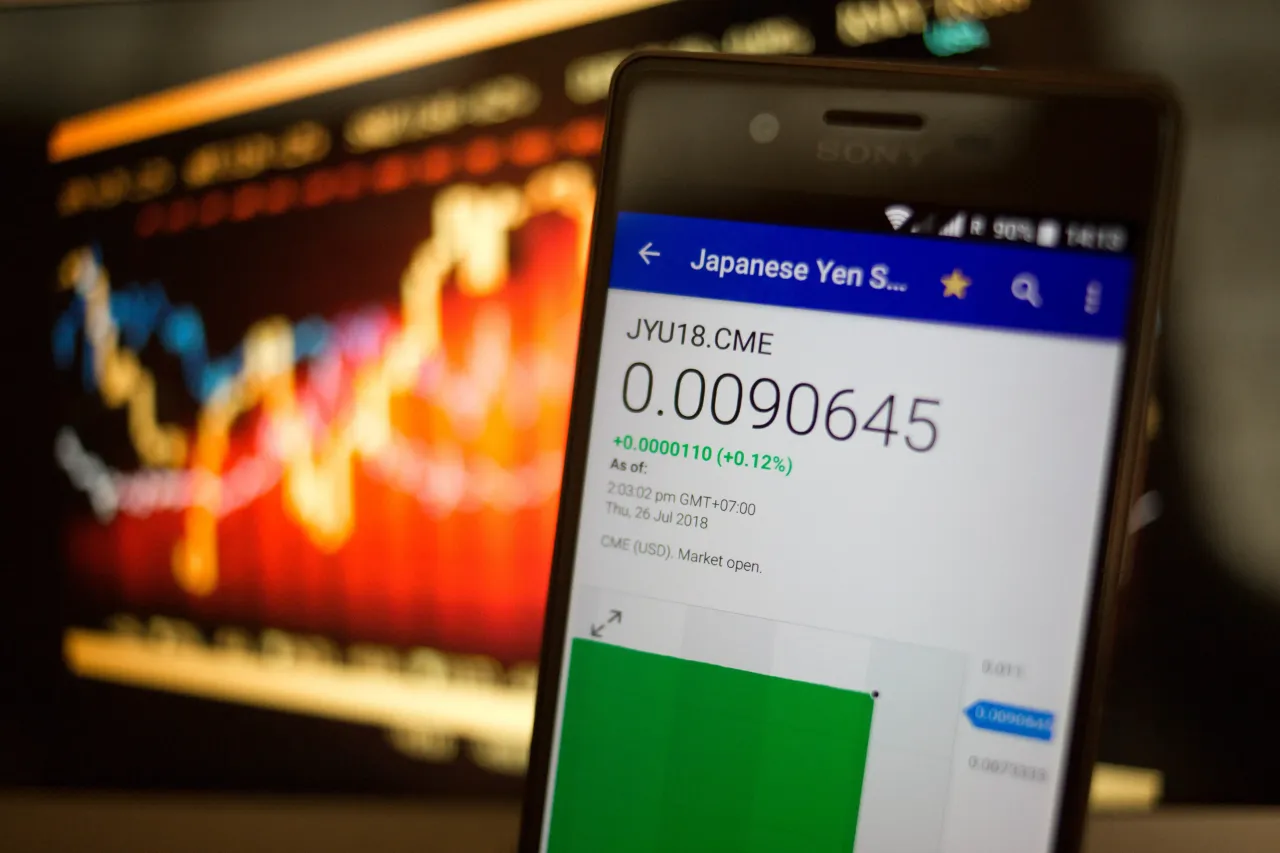


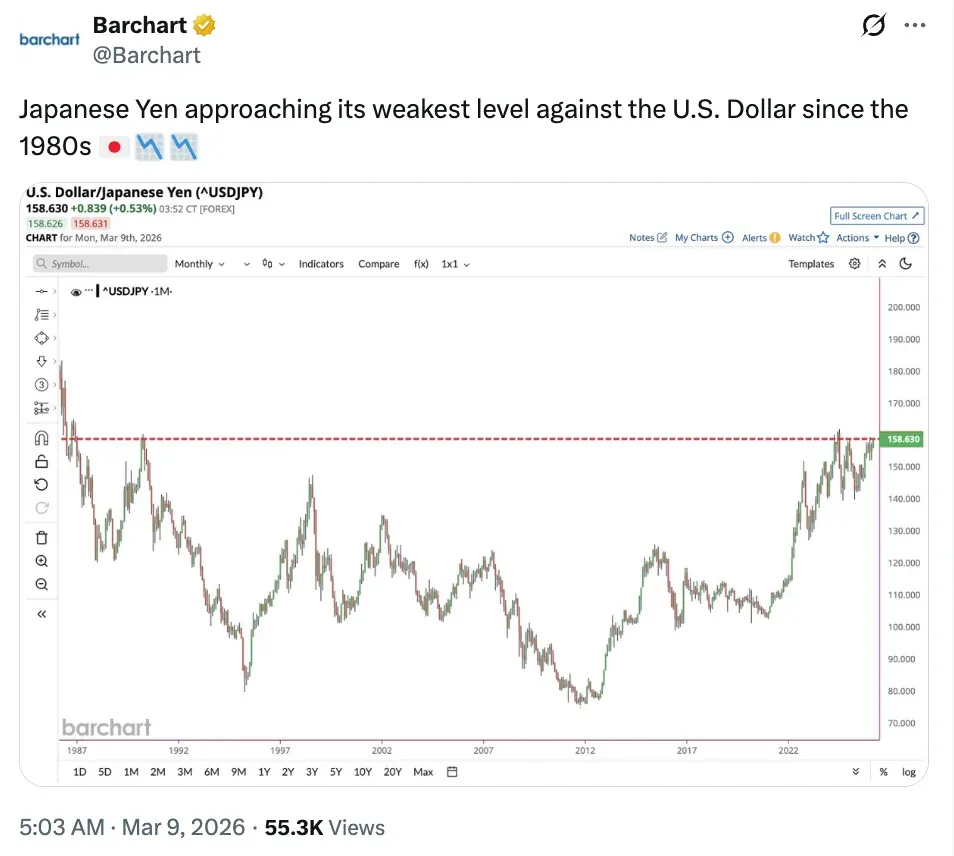
- The USD/JPY exchange rate is close to 158, the highest level since the late 1980s, according to Barchart. This is reviving the global yen carry trade.
- Past cycles suggest such liquidity flows have often coincided with strong rallies in Bitcoin and tech-heavy markets.
- During the yen's weakness seen during the pandemic, Bitcoin surged from $10,000 in 2020 to nearly $69,000 by next year.
Advertisement|Remove ads.
The Japanese yen is approaching its lowest level against the U.S. dollar since the late 1980s. This move is pushing one of the global financial markets’ influential liquidity engines: the yen carry trade.
This is an important signal for investors and crypto traders because when investors borrow cheap yen and use those funds to buy higher-yielding global assets, they push more liquidity into the market. Historically, this has coincided with strong rallies in risk assets, including Bitcoin.

Data from the market analytics platform Barchart showed the USD/JPY exchange rate is trading near 158, close to levels last seen in the late 1980s. This reflects the continued weakness of the Japanese currency, as the Bank of Japan has kept monetary conditions relatively easy, similar to those of the U.S. Federal Reserve.
Advertisement|Remove ads.
In global markets, a yen weakness often follows a yen carry trade, in which investors borrow yen at low interest rates and buy dollars with the proceeds to assets abroad that pay higher interest rates. As of last week, almost $1 trillion was linked to the yen carry trade strategy, according to a Bloomberg report. This could push inflow in crypto assets.
Why Yen Carry Trade Matters For Crypto Investors
Raoul Pal, a macro investor, said on Sunday that Bitcoin's price movements have historically been closely related to global liquidity. This is one of the main reasons he is bullish on the markets, despite oil prices rising amid geopolitical tensions.
Historically, shifts in Japanese monetary policy have also affected crypto markets. Periods when the Bank of Japan tightened policy have coincided with pressure on Bitcoin (BTC) and other assets.
Advertisement|Remove ads.
Historical Instances Of Yen Carry Trade And Its Impact On Crypto Markets
In 2017, Bitcoin's price went from about $1,000 to almost $20,000. At the time, Japan's very low interest rates helped keep the global carry trade active. During the 2020–2021 crypto rally, something analogous played out.
Monetary stimulus from the pandemic and interest rates that were at their lowest levels in history made markets more liquid. Bitcoin went from about $10,000 in 2020 to almost $69,000 in November 2021 as investors put money into technology stocks and digital assets.
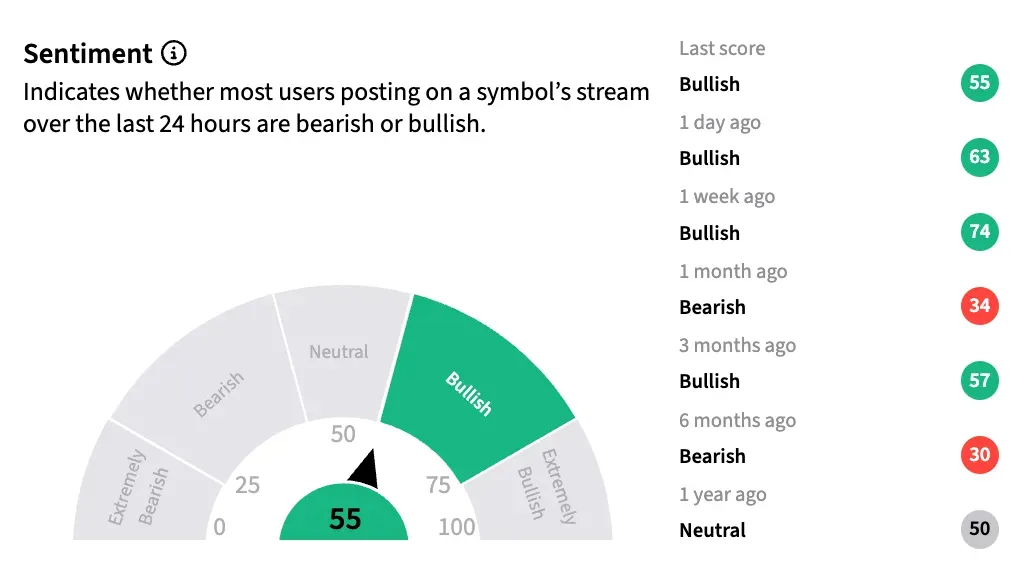
At the time of writing, Bitcoin (BTC) was trading at $67,602.14, down 0.3% in the last 24 hours. On Stocktwits, retail sentiment around BTC remained in ‘bullish’ territory with ‘low’ chatter levels over the past day.
Advertisement|Remove ads.
Crypto Products Demand Persists Despite Geopolitical Stress
Recent investment flows show that institutional demand for digital assets has remained strong despite macroeconomic uncertainty.
A CoinShares report noted that digital asset investment products saw $619 million in net inflows last week, with Bitcoin bringing in $521 million. Ethereum (ETH) had $88.5 million in inflows, while Solana (SOL) had $14.6 million, and Ripple’s XRP (XRP) had $30.3 million in outflows.
The United States accounted for almost all of the positive flows, with $646 million coming in. Europe, Asia, and Canada, on the other hand, had small outflows. At the beginning of the week, inflows were $1.44 billion, but later outflows were $829 million as oil prices rose and tensions between countries grew.
Advertisement|Remove ads.
Read also: Nasdaq Plans To Launch Tokenized Stocks With Kraken Next Year: Report
For updates and corrections, email newsroom[at]stocktwits[dot]com.
Comments posted here will also appear on symbol pages.

Latest News
/filters:format(webp)https://news.stocktwits-cdn.com/datadog_resized_jpg_20b6f8ccc0.webp)
/filters:format(webp)https://news.stocktwits-cdn.com/1707726834303_jpg_11f20a9aa9.webp) Shashank Nayar·49m ago
Shashank Nayar·49m ago/filters:format(webp)https://news.stocktwits-cdn.com/large_Getty_Images_2296204406_1dce30a7be.jpg) Shashank Nayar·2h ago
Shashank Nayar·2h ago/filters:format(webp)https://news.stocktwits-cdn.com/large_musk_adc78b164e.jpg)
/filters:format(webp)https://news.stocktwits-cdn.com/unnamed_jpg_9dff551b50.webp) Anan Ashraf·2h ago
Anan Ashraf·2h ago/filters:format(webp)https://st-everywhere-cms-prod.s3.us-east-1.amazonaws.com/large_pepsico_resized_jpg_9bdd1807dd.webp)
/filters:format(webp)https://news.stocktwits-cdn.com/Heera_1_1c30cb0170.PNG) Heera Hari·2h ago
Heera Hari·2h ago/filters:format(webp)https://news.stocktwits-cdn.com/large_ionis_jpg_80195eb65e.webp)
/filters:format(webp)https://news.stocktwits-cdn.com/vivekkrishnanphotography_58_jpg_0e45f66a62.webp) Arnab Paul·3h ago
Arnab Paul·3h ago/filters:format(webp)https://news.stocktwits-cdn.com/gettyimages_2299257316_612x612_c40e6aa98d.jpg) Shashank Nayar·3h ago
Shashank Nayar·3h ago