


Advertisement|Remove ads.
Michael Saylor Compares Bitcoin Moment To Justin Bieber’s Breakout—Says Investors Have 10 Years To Get In
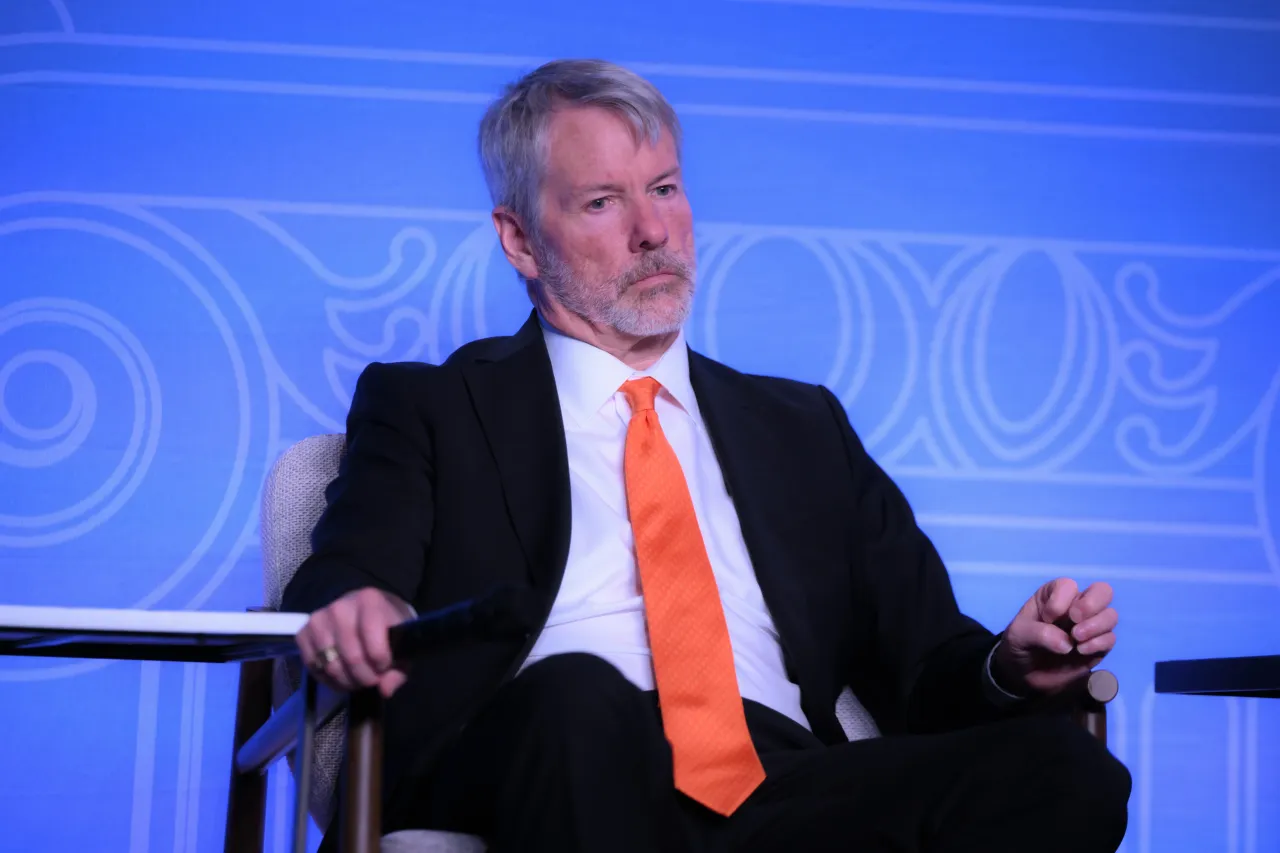


- Michael Saylor said investors have about a decade to “stake their claim” in a new economy, calling Bitcoin the “digital manifestation of economic scarcity.”
- He compared the opportunity to early YouTube-era breakouts like Justin Bieber, urging investors to use new tools to build wealth beyond traditional systems.
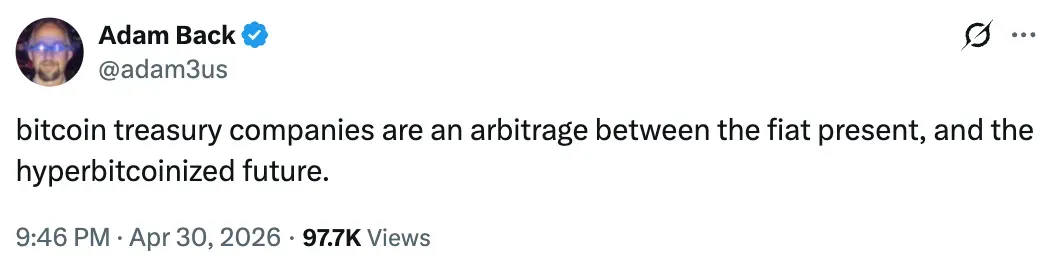
- Blockstream CEO Adam Back echoed the view, describing Bitcoin treasury strategies as an arbitrage between today’s fiat system and a “hyperbitcoinized” future.
Advertisement|Remove ads.
Strategy (MSTR) Executive Chairman framed Bitcoin (BTC) as a rare anchor of ‘scarcity’ in a rapidly expanding, abundance-driven economy.
Speaking on The Peter McCormack Show this week, Saylor explained that investors now have a limited window to position themselves, arguing there are “roughly 10 years to stake your claim in the new economy.” At the center of that shift, he placed Bitcoin, calling it the “digital manifestation of economic scarcity” and “the highest form of capital ever created.”
The Strategy Chairman framed the opportunity in generational terms, comparing it to early internet-era breakthroughs. “Do something nobody has done before, with tools not available to your parents,” he said, likening the moment to how Justin Bieber, the pop music sensation, was discovered on YouTube. He further described Bitcoin accumulation as a hedge against fiat debasement.
Advertisement|Remove ads.
Bitcoin As Arbitrage Between Two Systems
Saylor’s comments rest on a broader view that technological and artificial intelligence (AI) progress will drive an era of excess rather than shortage. “People worry there won’t be enough,” he explained. “The problem is there will be too much.” In that environment, he argued, owning scarce assets will become the only durable form of financial security.
Blockstream CEO Adam Back also resonated with a similar view. Back, who invented Hashcash on which Bitcoin was based, recently described Bitcoin treasury strategies as “an arbitrage between the fiat present and the hyperbitcoinized future,” emphasizing that capital was already beginning to reposition.
Bitcoin’s price was trading at $78,170, up about 1% over the past 24 hours. On Stocktwits, the retail sentiment around BTC moved to ‘bearish’ from the ‘neutral’ zone, while chatter around it remained at ‘normal’ levels over the past day.
Advertisement|Remove ads.
Traditional Markets Still Hold Ground
The outlook, however, stands in contrast to more conventional market views.
Steve Eisman, the investor known for his role in “The Big Short,” where he bet against the US housing market ahead of the 2008 financial crisis, said he does not see major risks in current conditions.
Speaking to CNBC on Friday, Eisman described the economy as increasingly “K-shaped,” in which sectors diverge sharply, with areas like AI and large banks performing strongly while others lag behind.
Advertisement|Remove ads.
“I don’t have a problem with the market right now,” he said, adding that he prefers traditional financial institutions. “I don’t like alternatives,” Eisman noted, while reiterating his bullish stance on banks.
For updates and corrections, email newsroom[at]stocktwits[dot]com.
Advertisement|Remove ads.
Comments posted here will also appear on symbol pages.

Latest News
/filters:format(webp)https://news.stocktwits-cdn.com/large_Getty_Images_2240705289_c6a2c346cc.jpg)
/filters:format(webp)https://news.stocktwits-cdn.com/unnamed_jpg_9dff551b50.webp) Anan Ashraf·20m ago
Anan Ashraf·20m ago/filters:format(webp)https://news.stocktwits-cdn.com/large_stock_chart_falling_resized_jpg_c0ce61eff2.webp)
/filters:format(webp)https://news.stocktwits-cdn.com/1707726834303_jpg_11f20a9aa9.webp) Shashank Nayar·23m ago
Shashank Nayar·23m ago/filters:format(webp)https://news.stocktwits-cdn.com/large_skydance_decde45b1e.jpg) Shashank Nayar·50m ago
Shashank Nayar·50m ago/filters:format(webp)https://news.stocktwits-cdn.com/large_omeros_jpg_4769b8d291.webp) Anan Ashraf·1h ago
Anan Ashraf·1h ago/filters:format(webp)https://news.stocktwits-cdn.com/gettyimages_2300173669_612x612_7f6f3c187e.jpg)
/filters:format(webp)https://news.stocktwits-cdn.com/Prabhjote_DP_67623a9828.jpg) Prabhjote Gill·3h ago
Prabhjote Gill·3h ago/filters:format(webp)https://news.stocktwits-cdn.com/large_exxon_jpg_55190ae0a4.webp) Anan Ashraf·3h ago
Anan Ashraf·3h ago