


Advertisement|Remove ads.
Who Is Satoshi? New NYT Investigation Says Linguistic Analysis Points To Real Bitcoin Creator — And He's Denied It Before
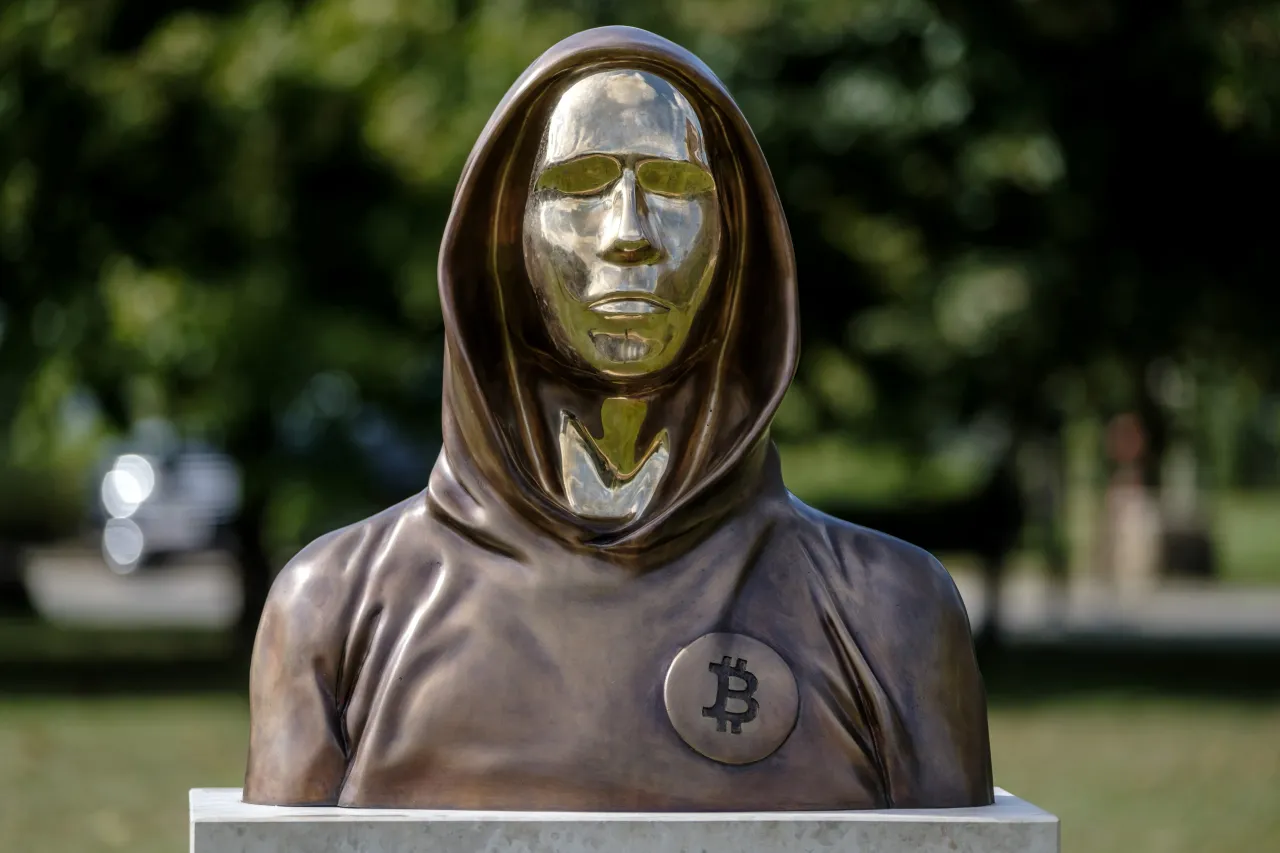


- According to the New York Times, Adam Back may be Satoshi Nakamoto, Bitcoin’s creator, due to his early work on Hashcash and writings similar to Bitcoin's concept.
- John Carreyrou identified common phrasing, mixed British/American spelling, and persistent stylistic eccentricities as important "fingerprints" that connect Back to Satoshi.
- He argued that anonymity shields Bitcoin from legal risks, personal security threats, and scrutiny that could harm it.
Advertisement|Remove ads.
Bitcoin (BTC) creator Satoshi Nakamoto might be British cryptographer Adam Back, according to a new linguistic analysis by investigative journalist John Carreyrou.
A New York Times report on Wednesday stated that the 55-year-old British cryptographer, Blockstream CEO, and inventor of Hashcash could be the person behind Bitcoin's pseudonym. Carreyrou cited evidence, including technical history, timing, and personal connections. According to him, the one thing that stood out is a forensic analysis of Satoshi's writing style.
Bitcoin’s price was up over 3% over the past 24 hours, back above the $71,000 level early Wednesday. On Stocktwits, retail sentiment around BTC moved to ‘neutral’ from the ‘bearish’ zone, while chatter remained at ‘normal’ levels over the past day.
Advertisement|Remove ads.
Nakamoto collectively holds about $79 billion of the crypto, still untouched at that price. Carreyrou said that Back is one of the few people who had both the skills and the ideas for Bitcoin. He came up with Hashcash, the proof-of-work system mentioned in the white paper, and he wrote down important parts of a decentralized digital currency years before Bitcoin came out.
Back has publicly and repeatedly denied being Satoshi. In 2024, when a documentary called "Money Electric: The Bitcoin Story" stated Back as Nakamoto, he denied claims saying, “I'm not. But also the documentary will presumably be wrong, as no one knows who Satoshi is.
The Linguistic Fingerprint
Carreyrou also discussed linguistic evidence, pointing out strange features in Satoshi's writing that closely resemble Back's. Some of these are British and American spellings, unique phrases like "burning the money" and "partial pre-image," strange and inconsistent hyphenation like "proof-of-work," and small style mistakes like ending sentences with "also," using "it's" and "its" wrong, and putting two spaces between sentences.
Advertisement|Remove ads.
By stacking these markers, which forensic linguists call sociolinguistic fingerprints, Carreyrou explained how he was able to narrow down thousands of possible authors to one match.
He also said that if Back were Satoshi, there would be strong reasons for him to never reveal it. Anonymity would protect him from legal and regulatory risks that come with making a system that challenges state control over money, keep him from becoming a central target like the founders of Napster, protect him from the personal security risks of controlling a huge Bitcoin fortune, and stop investigators from "triangulating" his identity through his past work and connections.
McAfee’s ‘Lingo’ Theory Resurfaces
This way of looking at language isn't new, though. In 2018, cybersecurity pioneer John McAfee said he had found Satoshi using similar methods, examining the "lingo," phrasing patterns, and stylistic fingerprints hidden in Satoshi's emails and forum posts. McAfee also pointed to people in the cypherpunk movement, like Adam Back.
Advertisement|Remove ads.
He said, “I don't know if they flipped a coin, drew straws, to see who writes it, but if you want to know which one it was, run some authoring software against it because everybody involved, especially Dr. Back.”
Two separate investigations, each with its own timeline, personality, and level of rigor, now seem to point to the same suspect.
Read also: Republican-Led State Tennessee Seeks Public Approval For Crypto Mining Facilities
Advertisement|Remove ads.
For updates and corrections, email newsroom[at]stocktwits[dot]com.
Comments posted here will also appear on symbol pages.

Latest News
/filters:format(webp)https://news.stocktwits-cdn.com/large_Getty_Images_2274484367_jpg_e7062348b5.webp)
/filters:format(webp)https://news.stocktwits-cdn.com/shivani_photo_jpg_dd6e01afa4.webp) Shivani Kumaresan·10m ago
Shivani Kumaresan·10m ago/filters:format(webp)https://news.stocktwits-cdn.com/large_SK_Hynix_jpg_efba9fa39d.webp)
/filters:format(webp)https://news.stocktwits-cdn.com/IMG_9209_1_d9c1acde92.jpeg) Yuvraj Malik·16m ago
Yuvraj Malik·16m ago/filters:format(webp)https://news.stocktwits-cdn.com/large_rocketlab_jpg_fcfa5bb73e.webp)
/filters:format(webp)https://news.stocktwits-cdn.com/IMG_8805_JPG_6768aaedc3.webp) Deepti Sri·34m ago
Deepti Sri·34m ago/filters:format(webp)https://news.stocktwits-cdn.com/gettyimages_2267701500_594x594_1cfbb8b517.jpg)
/filters:format(webp)https://news.stocktwits-cdn.com/Aashika_Suresh_Profile_Picture_jpg_2acd6f446c.webp) Aashika Suresh·40m ago
Aashika Suresh·40m ago/filters:format(webp)https://news.stocktwits-cdn.com/large_Getty_Images_2279869782_8049b29afc.jpg) Aashika Suresh·1h ago
Aashika Suresh·1h ago/filters:format(webp)https://news.stocktwits-cdn.com/large_Getty_Images_2300173637_79e4bae290.jpg) Yuvraj Malik·2h ago
Yuvraj Malik·2h ago