


Advertisement|Remove ads.
Amazon Reportedly Plans In-House Processors For Consumer Devices In Major Shift, Analyst Says


- The move, expected to begin in 2027, aims to lower costs in Amazon’s non-AI businesses as it ramps up AI spending.
- Once fully implemented, annual shipments of Amazon-designed processors could reach about 40 million units.
- Amazon began developing custom data center chips through its cloud division, AWS, several years ago as part of an effort to reduce its reliance on Nvidia and lower AI infrastructure costs.
Advertisement|Remove ads.
Amazon.com, Inc. is preparing its first major overhaul of its processor strategy for its consumer devices in two decades and has contracted a Taiwanese company to design custom chips for products such as the Kindle, Fire TV, and Echo speakers, according to a key supply chain analyst.
Amazon is gradually replacing externally sourced chips with in-house designs under a customer-owned tooling (COT) model, Taiwanese analyst Ming-Chi Kuo said in an X post on Thursday.
Amazon stock rose 0.4% in the premarket session on Thursday.
Advertisement|Remove ads.
New Processors For Kindle, Fire TV, Alexa Devices
The move, expected to begin in 2027, is aimed at improving the cost structure of Amazon’s non-AI businesses as the company ramps up spending on artificial intelligence.
Kuo said Amazon has selected Taiwan’s Alchip as the exclusive partner for back-end chip design and testing, allowing the company to earn both engineering fees and revenue from processor shipments.
“Amid the rapid expansion of AI compute, Amazon’s free cash flow for the 12 months ended 1Q26 fell 95% year over year to about US$1.2 billion,” Kuo wrote.
Advertisement|Remove ads.
“To maintain financial flexibility and keep funding its AI investment cycle, Amazon is also streamlining its organization and improving the cost structure of its non-AI businesses.”
The transition will eventually cover Amazon’s own-brand devices, including Alexa-enabled products such as Blink and Ring. Once fully implemented, annual shipments of Amazon-designed processors could reach about 40 million units, according to Kuo, making the initiative a meaningful growth driver for Alchip.
Amazon’s Custom Chips
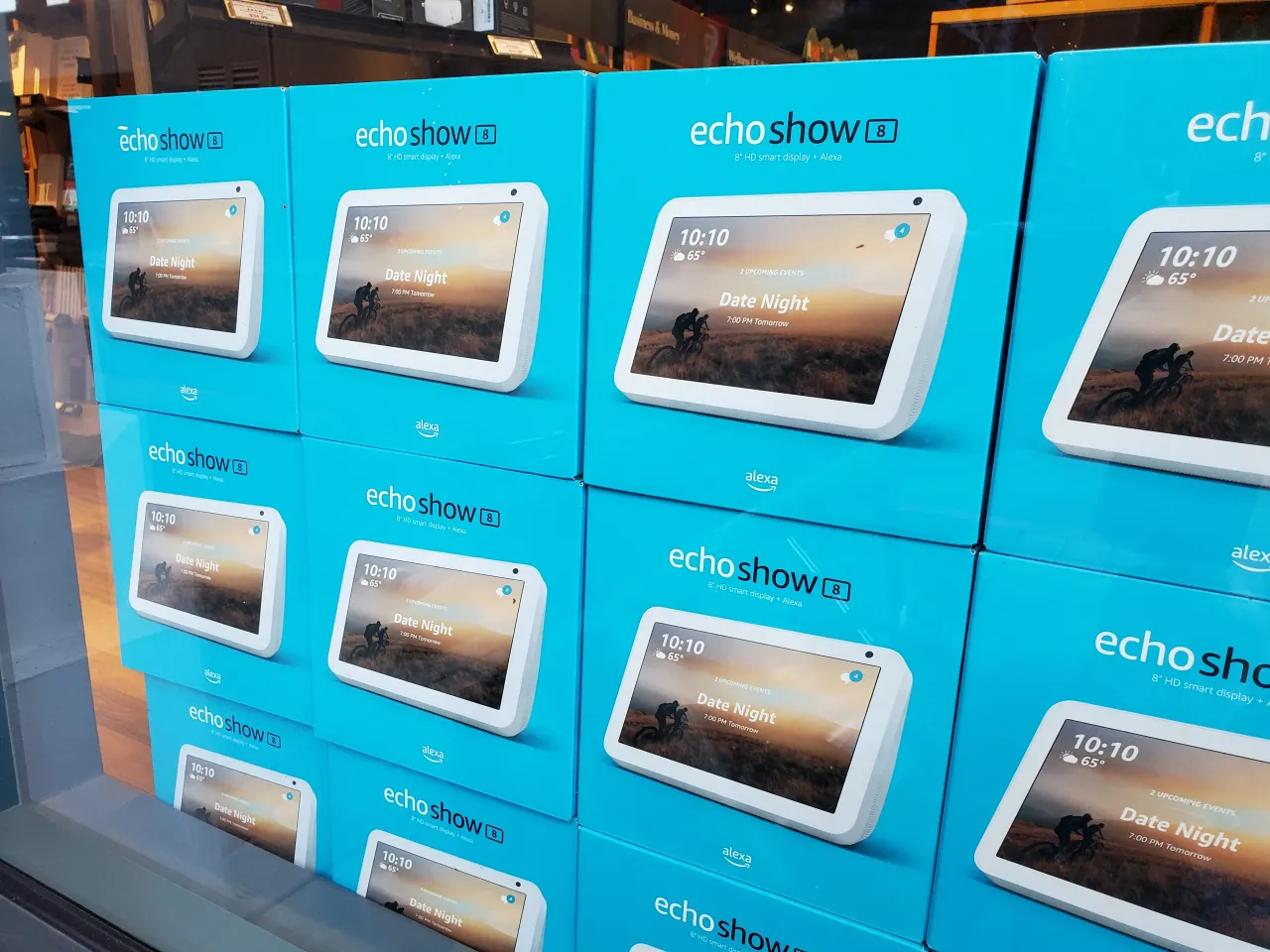
To be sure, Amazon debuted two custom processors with Echo Dot Max, Echo Studio, Echo Show 8, and Echo Show 11, the refreshed line of Alexa-speakers it released in October last year.
Advertisement|Remove ads.
The Z3 and AZ3 Pro chips support better conversation detection, state-of-the-art language models and vision transformers, Amazon said at the time.
Amazon began developing custom data center chips through its cloud division, AWS, several years ago as part of an effort to reduce its reliance on Nvidia and lower AI infrastructure costs.
It introduced its first AI training chip, Trainium, in 2020, followed by Trainium2 in late 2024, with AWS rapidly expanding deployments across its data centers.
Advertisement|Remove ads.
The custom silicon strategy is believed to have given Amazon tighter control over hardware design, improved performance per dollar for AI workloads, and reduced long-term procurement costs.
On Stocktwits, the retail sentiment for AMZN remained ‘bullish’ on Thursday. Year to date, shares are up 4.7% compared to the 9.3% gain in the benchmark S&P 500 index.
Advertisement|Remove ads.
For updates and corrections, email newsroom[at]stocktwits[dot]com.
Read Next: IREN Stock Dips Premarket: Neocloud Firm Announces $687M Stock Grants To Co-CEOs
Advertisement|Remove ads.
Editor’s note: The July 2 story was updated to add context on Amazon’s Z3 and AZ3 Pro custom-built chips, which debuted in new Echo speakers released in October 2025, in the third section titled “Amazon’s Custom Chips.”
Comments posted here will also appear on symbol pages.

Latest News
/filters:format(webp)https://news.stocktwits-cdn.com/large_Getty_Images_2202994015_jpg_0ec5a9b559.webp)
/filters:format(webp)https://news.stocktwits-cdn.com/IMG_8805_JPG_6768aaedc3.webp) Deepti Sri·17m ago
Deepti Sri·17m ago/filters:format(webp)https://news.stocktwits-cdn.com/large_Getty_Images_2261740885_jpg_654b52eb84.webp)
/filters:format(webp)https://news.stocktwits-cdn.com/shivani_photo_jpg_dd6e01afa4.webp) Shivani Kumaresan·17m ago
Shivani Kumaresan·17m ago/filters:format(webp)https://news.stocktwits-cdn.com/large_Getty_Images_2294367938_81e2686905.jpg)
/filters:format(webp)https://news.stocktwits-cdn.com/IMG_9209_1_d9c1acde92.jpeg) Yuvraj Malik·39m ago
Yuvraj Malik·39m ago/filters:format(webp)https://news.stocktwits-cdn.com/large_unh_stock_resized_jpg_e69fd915e3.webp) Deepti Sri·45m ago
Deepti Sri·45m ago/filters:format(webp)https://news.stocktwits-cdn.com/large_Getty_Images_2272104605_jpg_736f4d886d.webp) Shivani Kumaresan·1h ago
Shivani Kumaresan·1h ago/filters:format(webp)https://news.stocktwits-cdn.com/large_Getty_Images_2293207406_66bb0756f6.jpg) Yuvraj Malik·2h ago
Yuvraj Malik·2h ago