


Advertisement|Remove ads.
Another Fed Rate Hike Might Be Due By Year End, Fed Minutes Show
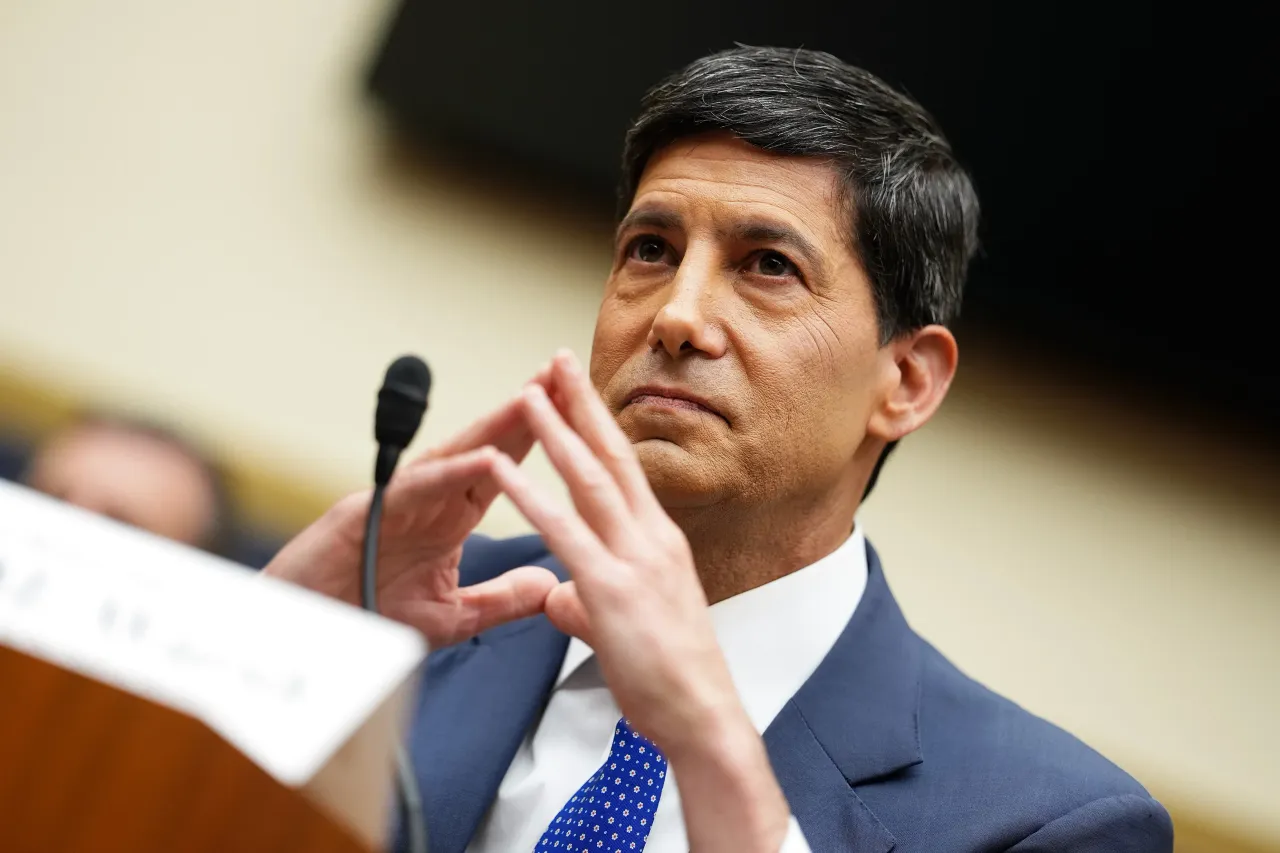

- All Federal Reserve officials backed the September rate increase—the first hike since July 2023—bringing the federal funds rate to a range of 3.75% to 4%.
- A majority of participants indicated that an additional rate increase would likely be warranted before year-end, driven by persistent inflation.
- Traders have scaled back expectations for an immediate October rate hike following recent dovish remarks from key Fed officials, lowering futures-implied odds to around 20%.
Advertisement|Remove ads.
Most Federal Reserve officials expect another hike may be necessary before the year ends, according to meeting minutes released Wednesday, after unanimously voting to raise interest rates at their September meeting.
The record of the Sept. 15–16 Federal Open Market Committee (FOMC) meeting revealed broad agreement among all 19 policymakers to lift the central bank’s benchmark interest rate by a quarter-percentage point to a range of 3.75% to 4%. The policy adjustment marked the Fed's first rate increase since July 2023.
“Most participants assessed that another increase in the target range for the federal funds rate would likely be appropriate by year end,” the minutes said.
Advertisement|Remove ads.
Inflation Risks
Minutes from the meeting showed policymakers were motivated by signs that underlying economic activity was gaining momentum and that broader financial conditions remained supportive of growth.
Despite a recent rise in long-term Treasury yields, officials noted that strong equity markets and narrow corporate bond spreads continued to accommodate economic expansion.
Some officials pointed out that prior to the September move, the central bank’s policy stance was "not restrictive or only mildly restrictive," reinforcing the rationale to remove monetary accommodation.
Advertisement|Remove ads.
Following the decision, Chairman Kevin Warsh described the hike as an effort to counter stubbornly elevated inflation, comments that initially pushed financial markets to price in an aggressive tightening schedule.
Shifts In Rate Expectations
Despite the hawkish tone of the September meeting, recent public statements from prominent Fed leaders have led investors to temper expectations for an immediate follow-up hike at the upcoming Oct. 27–28 meeting.
Fed Vice Chair Philip Jefferson and New York Fed President John Williams indicated in separate addresses last week that the central bank can afford to evaluate incoming data before taking further action. After those comments, market-derived probabilities from the CME FedWatch tool for an October rate increase fell from about 70% to roughly 20%.
Advertisement|Remove ads.
Among ETFs tracking benchmark indexes, the SPDR S&P 500 ETF (SPY), the SPDR Dow Jones Industrial Average ETF Trust (DIA) and the Invesco QQQ Trust (QQQ) declined at the time of writing.
For updates and corrections, email newsroom[at]stocktwits[dot]com.
Comments posted here will also appear on symbol pages.

Latest News
/filters:format(webp)https://news.stocktwits-cdn.com/large_Getty_Images_1237672772_jpg_79f7e24384.webp)
/filters:format(webp)https://news.stocktwits-cdn.com/unnamed_jpg_9dff551b50.webp) Anan Ashraf·28m ago
Anan Ashraf·28m ago/filters:format(webp)https://news.stocktwits-cdn.com/large_Getty_Images_2286063371_jpg_22507c7fe3.webp)
/filters:format(webp)https://news.stocktwits-cdn.com/1707726834303_jpg_11f20a9aa9.webp) Shashank Nayar·49m ago
Shashank Nayar·49m ago/filters:format(webp)https://news.stocktwits-cdn.com/gettyimages_2185244588_594x594_582d41aabc.jpg) Shashank Nayar·2h ago
Shashank Nayar·2h ago/filters:format(webp)https://news.stocktwits-cdn.com/large_Getty_Images_1637442261_jpg_cb1eb7825a.webp) Anan Ashraf·2h ago
Anan Ashraf·2h ago/filters:format(webp)https://news.stocktwits-cdn.com/Getty_Images_2243387433_jpg_9712a99e81.webp) Shashank Nayar·3h ago
Shashank Nayar·3h ago/filters:format(webp)https://news.stocktwits-cdn.com/large_Getty_Images_2286894546_791097c9bb.jpg)
/filters:format(webp)https://news.stocktwits-cdn.com/vivekkrishnanphotography_58_jpg_0e45f66a62.webp) Arnab Paul·3h ago
Arnab Paul·3h ago