


Advertisement|Remove ads.
Anthropic Co-Founder Jack Clark Sees AI Driving US GDP Toward $44 Trillion, Delivering A Nearly 50% Surge By 2030 — ‘The Singularity Is Here’
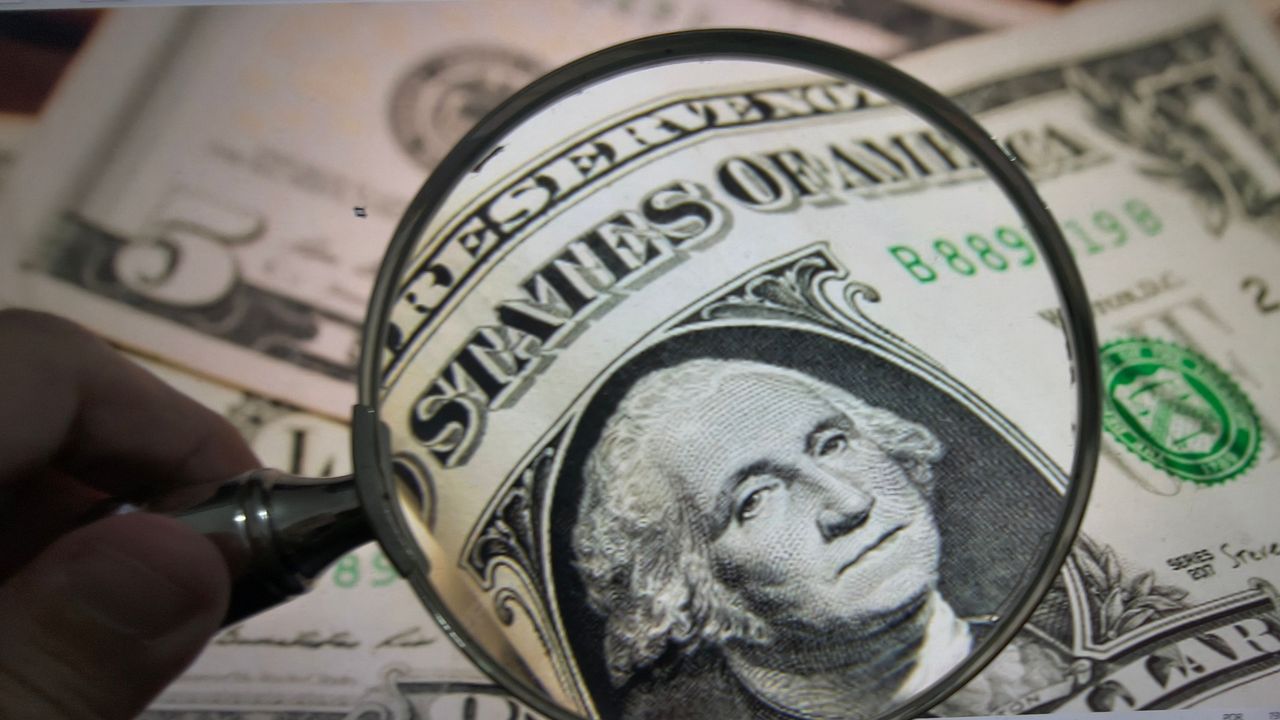


- Clark's central argument is that AI is no longer simply becoming better at performing tasks humans already do.
- Instead, he said that increasingly capable models could begin accelerating the process of scientific and technological discovery itself.
- Clark added that instead of waiting years or decades to train additional researchers, companies and governments could potentially deploy AI systems capable of assisting scientists across thousands of research problems at once.
Advertisement|Remove ads.
Anthropic co-founder Jack Clark said AI could drive an unprecedented acceleration in economic growth and scientific progress, arguing that the technology has already reached a point where its impact could extend far beyond automating existing jobs.
Speaking at the 2026 Per Jacobsson Foundation Lecture during the IMF and World Bank annual meetings in Bangkok, Clark pointed to an extreme economic scenario modeled by Anthropic economists in which U.S. GDP could reach roughly $44 trillion by 2030, which is a nearly 50% increase from the current $30.77 trillion in just four years.
‘The Singularity Is Here’
Clark's central argument is that AI is no longer simply becoming better at performing tasks humans already do. Instead, increasingly capable models could begin accelerating the process of scientific and technological discovery itself.
Advertisement|Remove ads.
“I believe that this year we've gained convincing evidence that it has now begun,” Clark said of the technological singularity. “The singularity is here.”
He pointed to rapid improvements in AI's ability to solve difficult problems across mathematics, physics, biology and other scientific fields. In his view, the significance of these advances is not simply that AI can answer increasingly difficult questions, but that the systems are becoming capable of contributing to the research process that produces new knowledge.
Clark said that this could create a feedback loop, wherein better AI helps researchers make discoveries, those discoveries improve technology and infrastructure, and improved infrastructure allows even more capable AI systems to be built.
Advertisement|Remove ads.
“I expect that in the coming years, the whole pace of progress of not just AI, but science as a whole, will speed up,” he said.
AI Could Create A New Economic Growth Engine
Clark highlighted that the economic implications of that acceleration could be enormous. He discussed an Anthropic economic model examining an extreme, “singularity-esque” scenario in which AI drives a dramatic increase in productivity and scientific output.
A major part of Clark's thesis is that AI could effectively expand the world's pool of highly skilled intellectual labor. “What would it mean to be able to run hundreds or thousands of copies of me simultaneously?” he asked.
Advertisement|Remove ads.
Clark added that instead of waiting years or decades to train additional researchers, companies and governments could potentially deploy AI systems capable of assisting scientists across thousands of research problems at once.
“Every human scientist on this planet will become more important and powerful as they gain the ability to supervise hundreds or thousands of like-minded experts on any problem,” he said.
Clark Warns Window To Act Is A ‘Small Number Of Years’
Clark also warned that the same acceleration that could produce extraordinary economic gains could create serious risks.
Advertisement|Remove ads.
AI systems capable of rapidly advancing science could potentially be used for biological or cyber weapons, while increasingly autonomous systems could make decisions and conduct research at speeds that humans struggle to supervise.
Clark argued that governments need to prepare for the next phase of AI rather than waiting until the technology creates an obvious crisis.
He said the world needs infrastructure capable of supporting much larger amounts of computing, electricity and scientific experimentation, while also establishing stronger safety testing, transparency and oversight.
Advertisement|Remove ads.
“The window for us to act is a small number of years. The policy conversation has a deadline now,” Clark added.
During the after-hours session on Friday, the SPDR S&P 500 ETF (SPY), which tracks the S&P 500 index, declined 0.26; the Invesco QQQ Trust ETF (QQQ) edged lower by 0.27%; and the SPDR Dow Jones Industrial Average ETF Trust (DIA) fell 0.21%. Retail sentiment on Stocktwits toward the S&P 500 ETF was in the ‘bearish’ territory at the time of writing.
The Global X Artificial Intelligence & Technology ETF (AIQ) fell about 3.2% on Friday, while the iShares U.S. Technology ETF (IYW) fell nearly 3%.
Advertisement|Remove ads.
Also See: TSLA, CSIQ Stocks In Focus As China Tightens Solar Manufacturing Technology Exports
For updates and corrections, email newsroom[at]stocktwits[dot]com.
Comments posted here will also appear on symbol pages.

Latest News
/filters:format(webp)https://news.stocktwits-cdn.com/large_mohamed_el_erian_jpg_4608eef11b.webp)
/filters:format(webp)https://st-everywhere-cms-prod.s3.us-east-1.amazonaws.com/i_OS_App_Icon_1_8054f2a2fe.png) Stocktwits News Desk·11m ago
Stocktwits News Desk·11m ago/filters:format(webp)https://news.stocktwits-cdn.com/large_Getty_Images_2290627662_00dc8e527a.jpg) Stocktwits News Desk·52m ago
Stocktwits News Desk·52m ago/filters:format(webp)https://news.stocktwits-cdn.com/large_tesla_energy_37d6336ef5.jpg) Stocktwits News Desk·1h ago
Stocktwits News Desk·1h ago/filters:format(webp)https://news.stocktwits-cdn.com/large_michael_saylor_OG_2_jpg_9905e10e5a.webp)
/filters:format(webp)https://news.stocktwits-cdn.com/Anushka_Basu_make_me_smile_in_the_picture_b92832aa_af59_4141_aacc_4180d2241ba8_1_2_png_1086e0ed8c.webp) Anushka Basu·1h ago
Anushka Basu·1h ago/filters:format(webp)https://news.stocktwits-cdn.com/large_mark_rubio_original_jpg_1e75e0c7f2.webp) Stocktwits News Desk·3h ago
Stocktwits News Desk·3h ago/filters:format(webp)https://news.stocktwits-cdn.com/large_Getty_Images_2188532140_jpg_1eb152a875.webp) Anushka Basu·18h ago
Anushka Basu·18h ago