


Advertisement|Remove ads.
ASTS And RKLB Chase The SpaceX Playbook, But Analyst Flags ‘Very Inflated Valuations’ And Mounting Delays
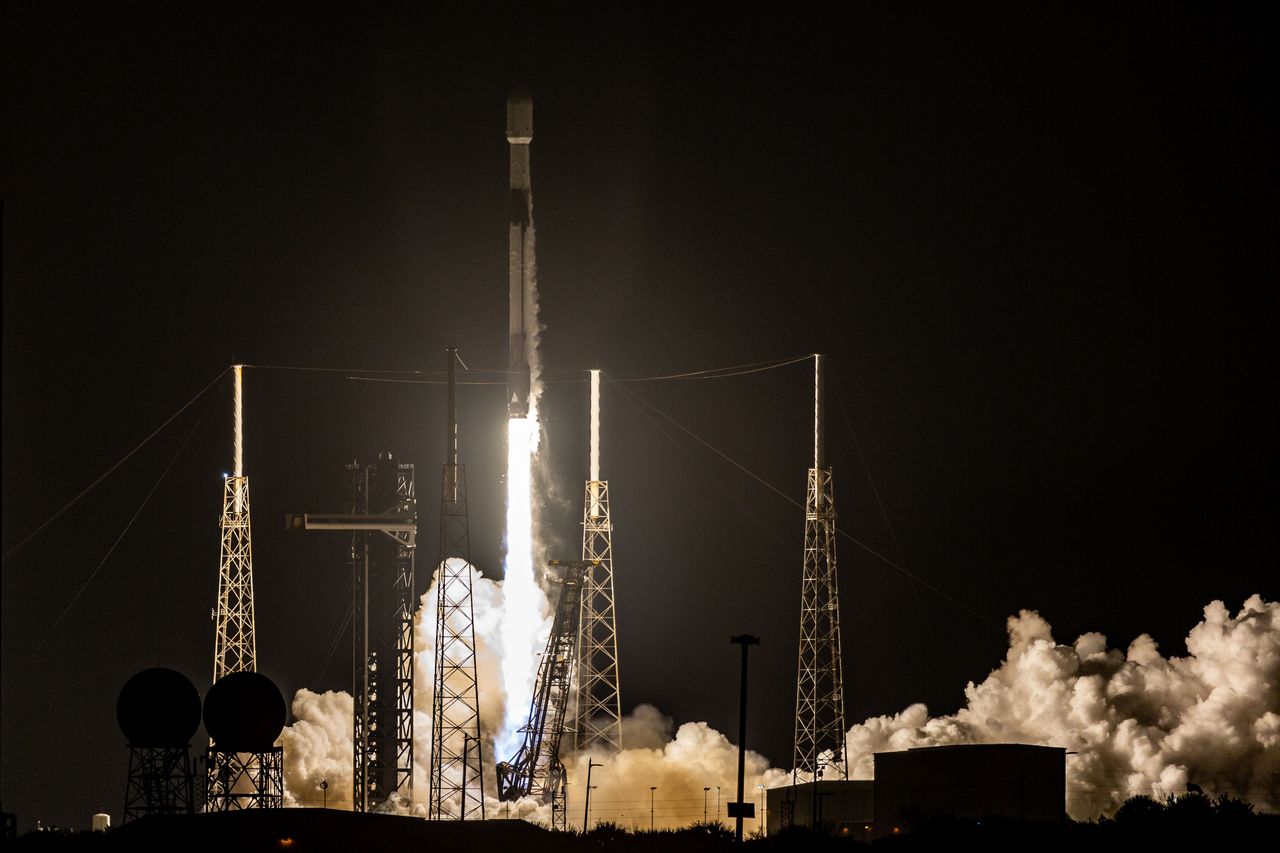


- Farrar said AST and Rocket Lab are emulating SpaceX through vertical integration.
- Rocket Lab is adding satellite services through its proposed acquisition of Iridium.
- AST has secured 10 launches as it targets 45 BlueBird satellites in orbit by early 2027.
Advertisement|Remove ads.
AST SpaceMobile (ASTS) and Rocket Lab (RKLB) are following SpaceX’s vertically integrated playbook, but analyst Tim Farrar warned that lofty valuations, launch constraints and execution delays could bring the two space stocks back to Earth.
ASTS stock rose 4% on Tuesday, while RKLB gained more than 1% and SPCX jumped 10%.
ASTS And RKLB Emulate SpaceX
“Both Rocket Lab and AST are trying to emulate SpaceX,” the TMF Associates president said on the Prof G Markets podcast. “They’re trying to vertically integrate,” Farrar said. Rocket Lab has expanded from rockets into satellite systems and is now adding services through its planned Iridium acquisition. AST, which began by building a direct-to-device satellite constellation, is exploring investments and acquisitions to reduce its dependence on third-party launch providers.
Advertisement|Remove ads.
“I think both Rocket Lab and AST have got very inflated valuations based on their current business,” Farrar said, adding that SpaceX also commands “a really high valuation” relative to its existing operations.
Neutron Delay Tests Rocket Lab
Rocket Lab’s Iridium deal would add a 66-satellite network with more than 2.5 million subscribers and over $870 million in annual revenue. CEO Peter Beck said the acquisition would turn Rocket Lab into a “self-launching tier 1 space power.” Farrar called Iridium a “fairly solid business” that generates cash flow, but said Rocket Lab’s broader strategy depends heavily on Neutron.
“That’s really, really delayed,” he said. “Last year, they were saying it was going to launch in 2025. Now they’re saying, we hope 2026. A lot of analysts are thinking probably 2027.”
Advertisement|Remove ads.
Rocket Lab still targets delivering Neutron to the pad in the fourth quarter, although Beck acknowledged that “the window for an end-of-year launch is narrowing.” The company has completed more than 400 Archimedes engine hot fires and begun producing Neutron’s first engine set.
ASTS Faces Launch Crunch
AST raised $1.15 billion in July and had more than $3.7 billion in pro forma cash, cash equivalents and restricted cash at the end of June. Some of this capital could support further vertical integration and secure additional access to orbit. “They’re struggling to get launches from third parties,” Farrar said. “Now they’re scrambling for launches.”
AST has booked 10 launches with two providers and aims to have about 45 BlueBird satellites in orbit by early 2027. BlueBird 14 through 16 are nearly ready to ship, while satellites through BlueBird 46 are in production.
Advertisement|Remove ads.
RKLB May Be Better Shielded From SpaceX Than ASTS
Farrar said Rocket Lab may be better positioned because Iridium operates in areas such as navigation, aviation and maritime safety. “Rocket Lab, I think, has a slightly better position,” he said. “It’s trying to avoid the head-to-head competition with SpaceX.”
AST, by contrast, is directly challenging Starlink in satellite-based mobile connectivity. “SpaceX is so dominant in this business now,” Farrar said. “It’s competing really heavily, particularly against AST.”
Meanwhile, AST argues that partnerships with more than 60 mobile operators covering over 3 billion subscribers differentiate its network. CEO Abel Avellan said the company is building alongside carriers “in partnership with, not in competition with, mobile network operators.”
Advertisement|Remove ads.
How Do Retail Traders Feel About RKLB, ASTS And SPCX?
On Stocktwits, retail sentiment was ‘bullish’ for ASTS and ‘extremely bullish’ for RKLB and SPCX, with all three tickers seeing ‘high’ message volume.
Over the past year, ASTS and RKLB shares have gained 49% and 87%, respectively, while SPCX stock has fallen 9% over the past three months.
For updates and corrections, email newsroom[at]stocktwits[dot]com.
Advertisement|Remove ads.
Read Next: SLS Stock Logs Best Day In Over A Week: JPMorgan Buys In And Stifel Boosts Bet Ahead Of Key AML Data
Comments posted here will also appear on symbol pages.

Latest News
/filters:format(webp)https://news.stocktwits-cdn.com/Getty_Images_2250240969_jpg_dd9be8c5ea.webp)
/filters:format(webp)https://news.stocktwits-cdn.com/Aashika_Suresh_Profile_Picture_jpg_2acd6f446c.webp) Aashika Suresh·4m ago
Aashika Suresh·4m ago/filters:format(webp)https://news.stocktwits-cdn.com/large_Getty_Images_2271717943_072be49271.jpg)
/filters:format(webp)https://news.stocktwits-cdn.com/shivani_photo_jpg_dd6e01afa4.webp) Shivani Kumaresan·44m ago
Shivani Kumaresan·44m ago/filters:format(webp)https://news.stocktwits-cdn.com/large_Getty_Images_2261647056_jpg_19488f4a48.webp)
/filters:format(webp)https://news.stocktwits-cdn.com/IMG_9209_1_d9c1acde92.jpeg) Yuvraj Malik·1h ago
Yuvraj Malik·1h ago/filters:format(webp)https://news.stocktwits-cdn.com/Getty_Images_2237643016_jpg_17a9a7eb9d.webp)
/filters:format(webp)https://news.stocktwits-cdn.com/IMG_8805_JPG_6768aaedc3.webp) Deepti Sri·1h ago
Deepti Sri·1h ago/filters:format(webp)https://news.stocktwits-cdn.com/large_Donald_Trump_6f8998b443.jpg) Aashika Suresh·2h ago
Aashika Suresh·2h ago/filters:format(webp)https://news.stocktwits-cdn.com/large_Michael_Burry_jpg_fa0de6ac92.webp) Deepti Sri·2h ago
Deepti Sri·2h ago