


Advertisement|Remove ads.
Byron Deeter Calls Fears About Chinese AI ‘Misplaced’ — Says Corporate America Is 'Not Going To Chase Fractions Of Pennies Per Token'
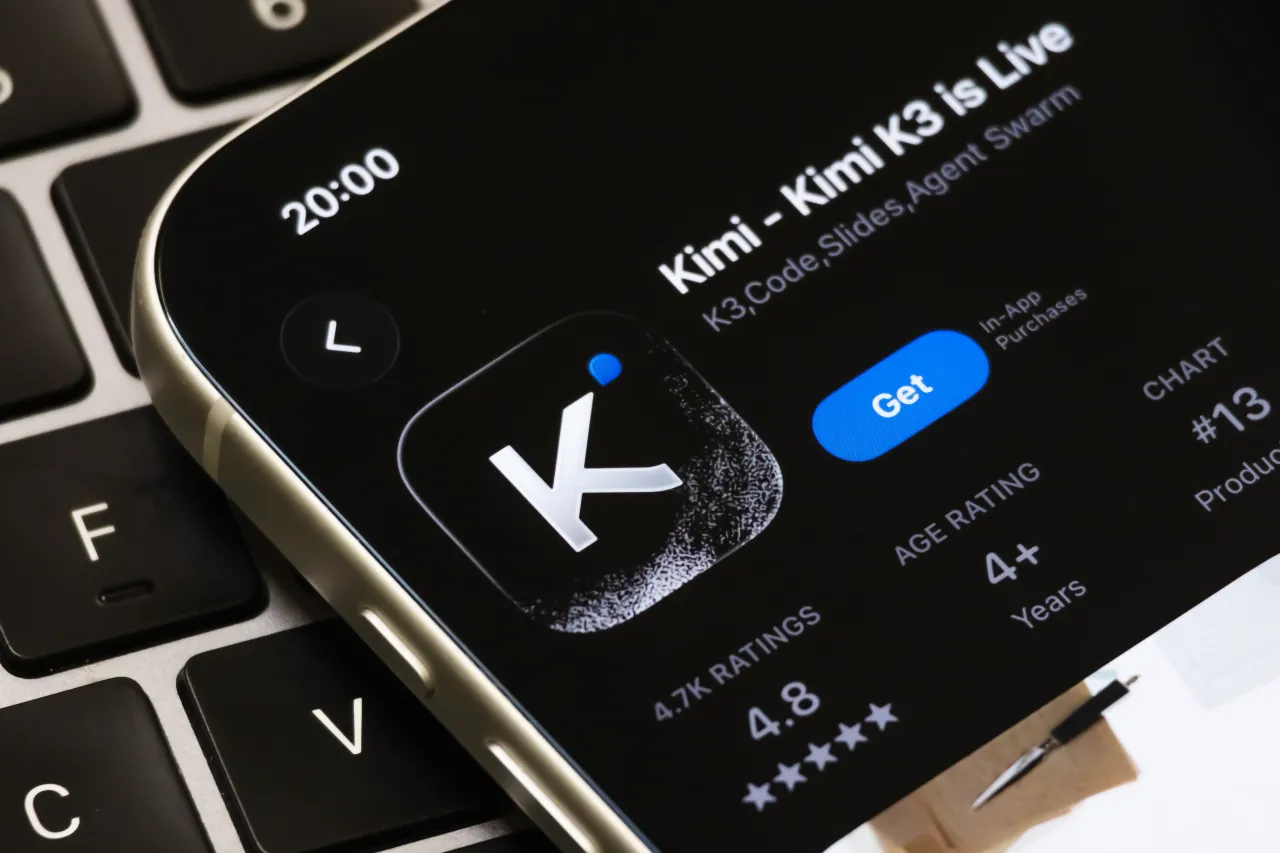


- Deeter said dozens of open-weight models from China, including DeepSeek and Kimi K3, will find a place in the market, but argued U.S. companies won't adopt them simply because they offer lower token costs.
- He believes that frontier AI models are going to continue to lead as they have done so over the past several years.
- Deeter also said that the costs of frontier AI models will ease over time as the demand pressure reduces and additional data center capacity comes online.
Advertisement|Remove ads.
Byron Deeter, a partner at Bessemer Venture Partners, dismissed fears about Chinese artificial intelligence (AI) technology as “misplaced” on Monday, following the launch of Moonshot AI’s Kimi K3 model last week.
During an interview with CNBC, Deeter said that the notion that corporate America will swarm to cheap Chinese models is overdone, while adding that the recent sell-off in chip stocks is a case of investors booking some profits after an “epic runup.”
“The open source story is not going to be different this time than it was in the cloud, which is, they’ll take some demand pressure off, they’ll put some pricing pressure on various parts of the market,” he said.
Advertisement|Remove ads.
Frontier AI Models Will Continue To Lead, Says Deeter
Deeter said dozens of open-weight models from China, including DeepSeek and Kimi K3, will find a place in the market, but argued U.S. companies won't adopt them simply because they offer lower token costs.
“Corporate America is not going to chase fractions of pennies per token and embrace Chinese technology for their most critical data assets, market needs, and product needs,” he said.
Deeter believes that frontier AI models are going to continue to lead as they have done so over the past several years.
Advertisement|Remove ads.
Deeter Says Price-Performance, Distillation Concerns Weigh On Chinese AI
Deeter added that among the top two concerns that he believes would prevent American companies from using Chinese AI is that while their price curve is lower than frontier AI models, the overall price-to-performance ratio is not as good. He also pointed to the possibility that these models have been developed by distilling U.S. frontier models.
“Corporate America is predicated on trust, data security, and collaboration with their vendors. The same reason that you have these tight relationships with the leading software and hardware companies today, that’s going to continue,” he said.
Deeter believes that Fortune 1000 companies won’t move their data assets, business, intelligence, and employee records onto these Chinese AI models.
Advertisement|Remove ads.
“Think of the blowup we had over TikTok, and the sensitivity of dance videos and consumer data. You roll that forward to corporate assets, and it’s just not going to play,” he added.
Frontier Model Costs Will Ease Over Time, Says Deeter
Deeter also said that the costs of frontier AI models will ease over time as the demand pressure reduces and additional data center capacity comes online.
He also believes that sovereign AI models and other open-weight models are emerging from U.S. allies like Europe, India, and Canada.
Advertisement|Remove ads.
Earlier on Monday, OpenAI Chairman Bret Taylor downplayed the cost advantage that open-weight models offer users, saying that token efficiency matters more.
“At the end of the day, it's going to be how efficient your inference is. And I think the frontier labs are still far ahead here, and that's really where the value is going to accrue,” he said.
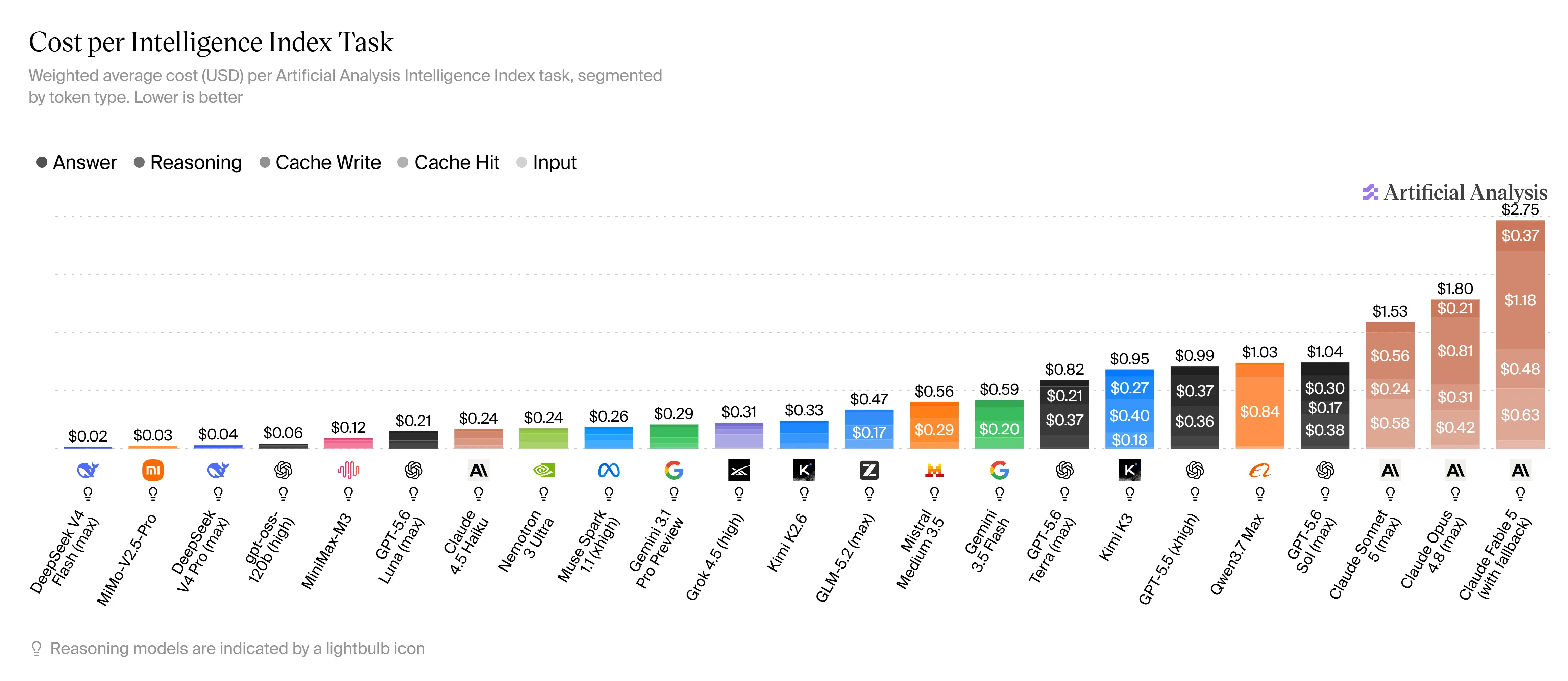
Data from Artificial Analysis shows that Kimi K3 costs $0.95 per Intelligence Index Task, while OpenAI’s GPT 5.6 Sol (max) costs $1.04, and Anthropic’s Claude Fable 5 (with fallback) costs $2.75.
Advertisement|Remove ads.
The Invesco QQQ Trust (QQQ) is up 25% over the past 12 months, while the iShares Semiconductor ETF (SOXX) is up 116%.
The iShares U.S. Technology ETF (IYW) is up 35% year-to-date, while the Global X Artificial Intelligence & Technology ETF (AIQ) is up 34%.
Advertisement|Remove ads.
For updates and corrections, email newsroom[at]stocktwits[dot]com.
Comments posted here will also appear on symbol pages.

Latest News
/filters:format(webp)https://news.stocktwits-cdn.com/large_spacex_jpg_7d337cbe8a.webp)
/filters:format(webp)https://news.stocktwits-cdn.com/vivekkrishnanphotography_58_jpg_0e45f66a62.webp) Arnab Paul·17m ago
Arnab Paul·17m ago/filters:format(webp)https://st-everywhere-cms-prod.s3.us-east-1.amazonaws.com/large_terawulf_logo_resized_da18924b5c.jpg)
/filters:format(webp)https://news.stocktwits-cdn.com/Anushka_Basu_make_me_smile_in_the_picture_b92832aa_af59_4141_aacc_4180d2241ba8_1_2_png_1086e0ed8c.webp) Anushka Basu·23m ago
Anushka Basu·23m ago/filters:format(webp)https://news.stocktwits-cdn.com/gettyimages_1244662899_612x612_17e42663fd.jpg)
/filters:format(webp)https://news.stocktwits-cdn.com/Heera_1_1c30cb0170.PNG) Heera Hari·32m ago
Heera Hari·32m ago/filters:format(webp)https://news.stocktwits-cdn.com/large_bitcoin_ethereum_OG_jpg_57ba235889.webp)
/filters:format(webp)https://news.stocktwits-cdn.com/Prabhjote_DP_67623a9828.jpg) Prabhjote Gill·1h ago
Prabhjote Gill·1h ago/filters:format(webp)https://news.stocktwits-cdn.com/gettyimages_1161631184_594x594_0063399eed.jpg) Prabhjote Gill·1h ago
Prabhjote Gill·1h ago/filters:format(webp)https://st-everywhere-cms-prod.s3.us-east-1.amazonaws.com/large_constellation_energy_three_mile_island_resized_3185b1517a.jpg) Arnab Paul·2h ago
Arnab Paul·2h ago