


Advertisement|Remove ads.
China To Reportedly Restrict Nvidia H200 Chip Use
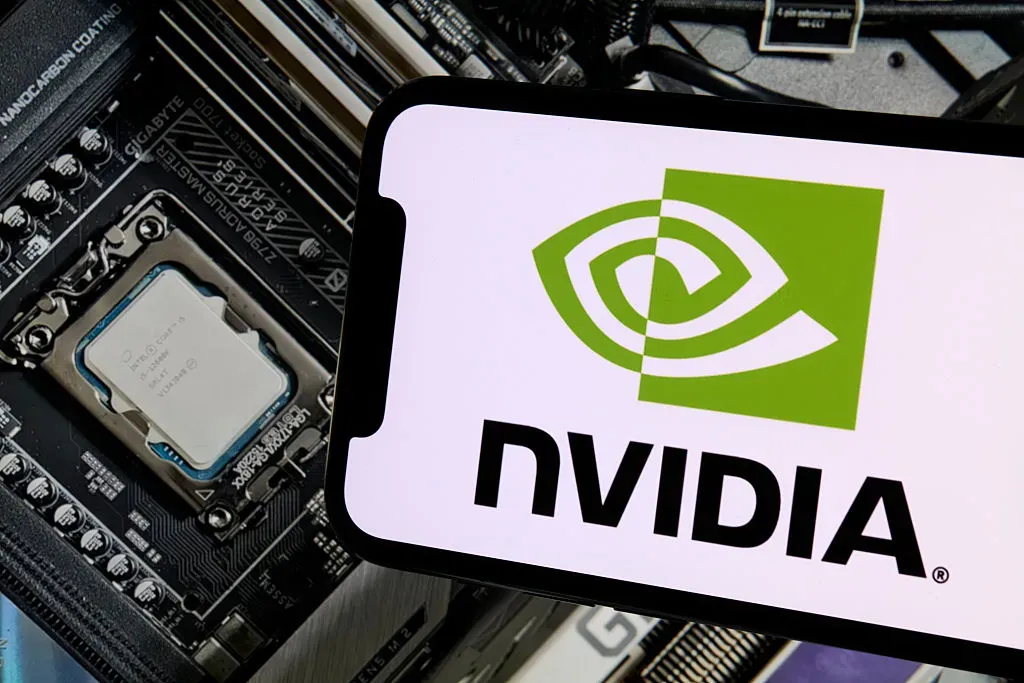


- The move highlights Beijing’s cautious stance toward unrestricted access to cutting-edge AI infrastructure.
- On Monday, President Donald Trump said that the U.S. will allow Nvidia to ship its H200 chips to China.
- The Institute for Progress (IFP) said the H200 chip would be nearly six times more powerful than the H20.
Advertisement|Remove ads.
Beijing is reportedly preparing to curb domestic access to advanced H200 chips from NVIDIA Inc. (NVDA), even though the U.S. government cleared their export to China.
The move highlights Beijing’s cautious stance toward unrestricted access to cutting-edge AI infrastructure and its ambition to become self-sufficient in chip production.
China’s Plan
According to the Financial Times report, the Chinese government plans to limit usage of Nvidia’s powerful H200 chips, designed for heavy-duty AI processing, on its soil.
Advertisement|Remove ads.
On Monday, President Donald Trump said that the U.S. will allow Nvidia to ship its H200 chips to “approved customers” in China and other countries. Trump said the chips could be exported only if “strong national security” is maintained, and he suggested that the U.S. government would receive about 25% of the revenue from those chip sales as part of the arrangement.
Nvidia’s stock inched 0.2% higher in Tuesday’s premarket. On Stocktwits, retail sentiment around the stock remained in ‘bearish’ territory amid ‘low’ message volume levels.
Nvidia’s Challenge In China
The AI bellwether has encountered growing challenges in China in recent years, particularly after the U.S. government imposed export limits on high-end chips.
Advertisement|Remove ads.
To adapt, the company developed a tailored version of its chip for the Chinese market, named the H20, intended to comply with the rules. More recently, the White House has slightly relaxed those restrictions.
A report published by the non-partisan think tank, the Institute for Progress (IFP), said the H200 chip would be nearly six times more powerful than the H20. The IFP said that the Blackwell chip, currently used by U.S. AI companies, is about 1.5 times faster than the H200 for training AI systems and five times faster for running AI models.
In September, China’s Cyberspace Administration (CAC) told big companies, such as Alibaba Group (BABA) and ByteDance, to stop testing and buying Nvidia’s RTX Pro 6000D, a chip made on Nvidia’s Blackwell architecture.
Advertisement|Remove ads.
NVDA stock has gained over 38% year-to-date.
Also See: Google’s EU Woes: Tech Giant Faces Fresh Antitrust Probe Over AI Content Use
For updates and corrections, email newsroom[at]stocktwits[dot]com.
Advertisement|Remove ads.
Comments posted here will also appear on symbol pages.

Latest News
/filters:format(webp)https://news.stocktwits-cdn.com/large_Getty_Images_2276204850_jpg_d3bee2e775.webp)
/filters:format(webp)https://news.stocktwits-cdn.com/unnamed_jpg_9dff551b50.webp) Anan Ashraf·56m ago
Anan Ashraf·56m ago/filters:format(webp)https://news.stocktwits-cdn.com/large_Getty_Images_1406494095_158e6a57ac.jpg) Anan Ashraf·1h ago
Anan Ashraf·1h ago/filters:format(webp)https://news.stocktwits-cdn.com/Getty_Images_2128605808_jpg_59de698b48.webp)
/filters:format(webp)https://news.stocktwits-cdn.com/1707726834303_jpg_11f20a9aa9.webp) Shashank Nayar·1h ago
Shashank Nayar·1h ago/filters:format(webp)https://news.stocktwits-cdn.com/large_kroger_resized_jpg_df58ccdaf5.webp) Shashank Nayar·2h ago
Shashank Nayar·2h ago/filters:format(webp)https://news.stocktwits-cdn.com/large_Getty_Images_2295226888_dcdb8e346d.jpg) Shashank Nayar·2h ago
Shashank Nayar·2h ago/filters:format(webp)https://news.stocktwits-cdn.com/large_Getty_Images_1445160636_jpg_9759816169.webp) Anan Ashraf·3h ago
Anan Ashraf·3h ago