


Advertisement|Remove ads.
‘Dean Of Valuation’ Aswath Damodaran Says AI Has Reached Its ‘Bar Mitzvah Moment’ — And Investors Must Start Asking Hard Questions

- AI has moved from hype to business-building, with investors now demanding revenues, profits and competitive moats.
- Damodaran said the AI market could be huge, but warned that a big market does not automatically translate into big, profitable businesses.
- Damodaran sees Anthropic and OpenAI valuations of up to $2 trillion as rich, arguing that such prices require enormous future revenues to be justified.
Advertisement|Remove ads.
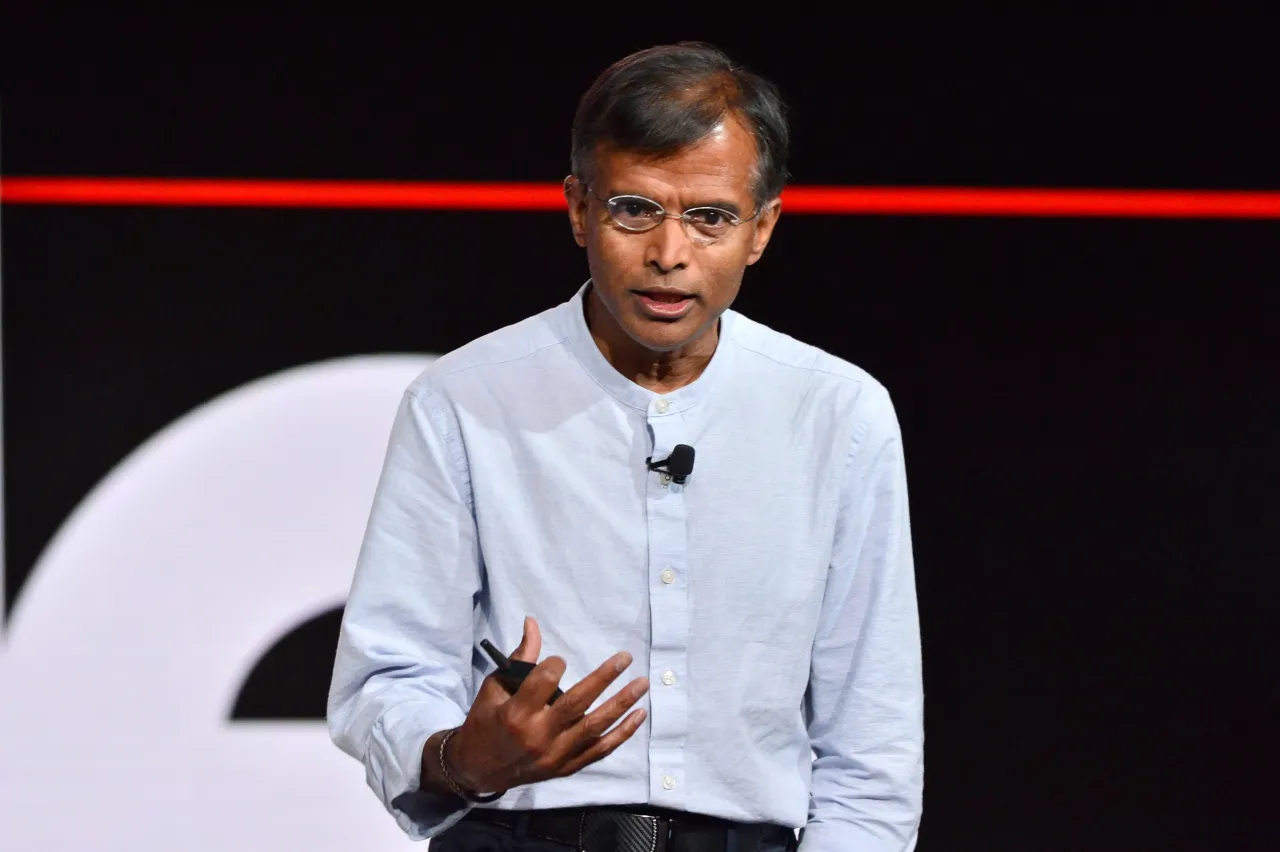
Artificial intelligence (AI) has reached its “bar mitzvah moment,” valuation expert and New York University professor Aswath Damodaran said on Thursday, where he argued that the AI industry has moved from a hype and massive spending phase into a period where investors will have to judge companies on a much less glamorous metric: whether they can actually build profitable businesses.
In a lengthy blog post, Damodaran – widely known as the “dean of valuation” – said the debate between AI bulls and skeptics has narrowed to usage statistics on one side and massive capital spending on the other.

Instead, he said investors should now turn to the standard questions: How large is the market? How profitable can it become? What will it cost to serve customers? And what competitive advantages will prevent rivals from taking those profits away?
Advertisement|Remove ads.
Damodaran’s View On AI Firms
The shift matters especially after the enormous investment poured into AI infrastructure. Damodaran estimated that just six major companies — Alphabet, Amazon, Meta, Microsoft, Oracle and CoreWeave — have collectively invested about $1.7 trillion in recent years, with more spending planned.
He likened the resulting infrastructure to the “most expensive factory in history.”
Yet the revenue generated by the products coming out of that factory remains relatively small compared with the capital invested. Damodaran estimated that even generous calculations put the current AI products and services market at roughly $250 billion, with infrastructure providers such as Nvidia, electrical-equipment companies and power utilities capturing much of the economic value so far.
Advertisement|Remove ads.
Anthropic, OpenAI Face High Benchmarks
Anthropic and OpenAI are rapidly growing revenue while experimenting with pricing and business models, he wrote, cautioning that their reported annualized revenue figures do not justify enormous valuations.
Anthropic valuation of around $2 trillion could require roughly $1.2 trillion in annual revenue within 10 years, assuming a 30% operating margin and a 10% cost of capital. If the maturation period stretches to 15 years, the required revenue rises to nearly $2 trillion.
What Is AI’s Future?
His broader warning is that investors should not confuse a potentially enormous total addressable market with an equally enormous business. AI’s eventual market will depend on whether it primarily becomes a productivity tool or replaces human workers, how widely it is adopted across industries, how expensive AI products remain and how far their use spreads geographically.
Advertisement|Remove ads.
Damodaran said the economics of AI would differ from traditional software. AI requires substantial capital and ongoing computing costs, meaning higher usage does not automatically translate into higher margins.
He expects mass-market AI to gravitate toward cheaper, subscription-oriented products, while premium AI could command higher prices but face tougher unit economics.
For updates and corrections, email newsroom[at]stocktwits[dot]com.
Advertisement|Remove ads.
Comments posted here will also appear on symbol pages.

Latest News
/filters:format(webp)https://news.stocktwits-cdn.com/large_Oil_Iran_tensions_jpg_f34e3cef73.webp)
/filters:format(webp)https://st-everywhere-cms-prod.s3.us-east-1.amazonaws.com/i_OS_App_Icon_1_8054f2a2fe.png) Stocktwits News Desk·16m ago
Stocktwits News Desk·16m ago/filters:format(webp)https://news.stocktwits-cdn.com/large_Getty_Images_2200882557_jpg_53f3e467bc.webp) Stocktwits News Desk·1h ago
Stocktwits News Desk·1h ago/filters:format(webp)https://news.stocktwits-cdn.com/gettyimages_2267701500_594x594_1cfbb8b517.jpg)
/filters:format(webp)https://news.stocktwits-cdn.com/1707726834303_jpg_11f20a9aa9.webp) Shashank Nayar·6h ago
Shashank Nayar·6h ago/filters:format(webp)https://news.stocktwits-cdn.com/large_Getty_Images_1503993596_8deb3f6bd9.jpg)
/filters:format(webp)https://news.stocktwits-cdn.com/unnamed_jpg_9dff551b50.webp) Anan Ashraf·6h ago
Anan Ashraf·6h ago/filters:format(webp)https://news.stocktwits-cdn.com/large_Getty_Images_2247481493_2752b5d809.jpg)
/filters:format(webp)https://news.stocktwits-cdn.com/Prabhjote_DP_67623a9828.jpg) Prabhjote Gill·7h ago
Prabhjote Gill·7h ago/filters:format(webp)https://news.stocktwits-cdn.com/large_Getty_Images_1411089032_84de9393bb.jpg) Shashank Nayar·7h ago
Shashank Nayar·7h ago