


Advertisement|Remove ads.
El-Erian Warns Economic Damage Due To Iran War Is Deepening — Says AI, Slow Death Of Washington Consensus Among Factors To Blame
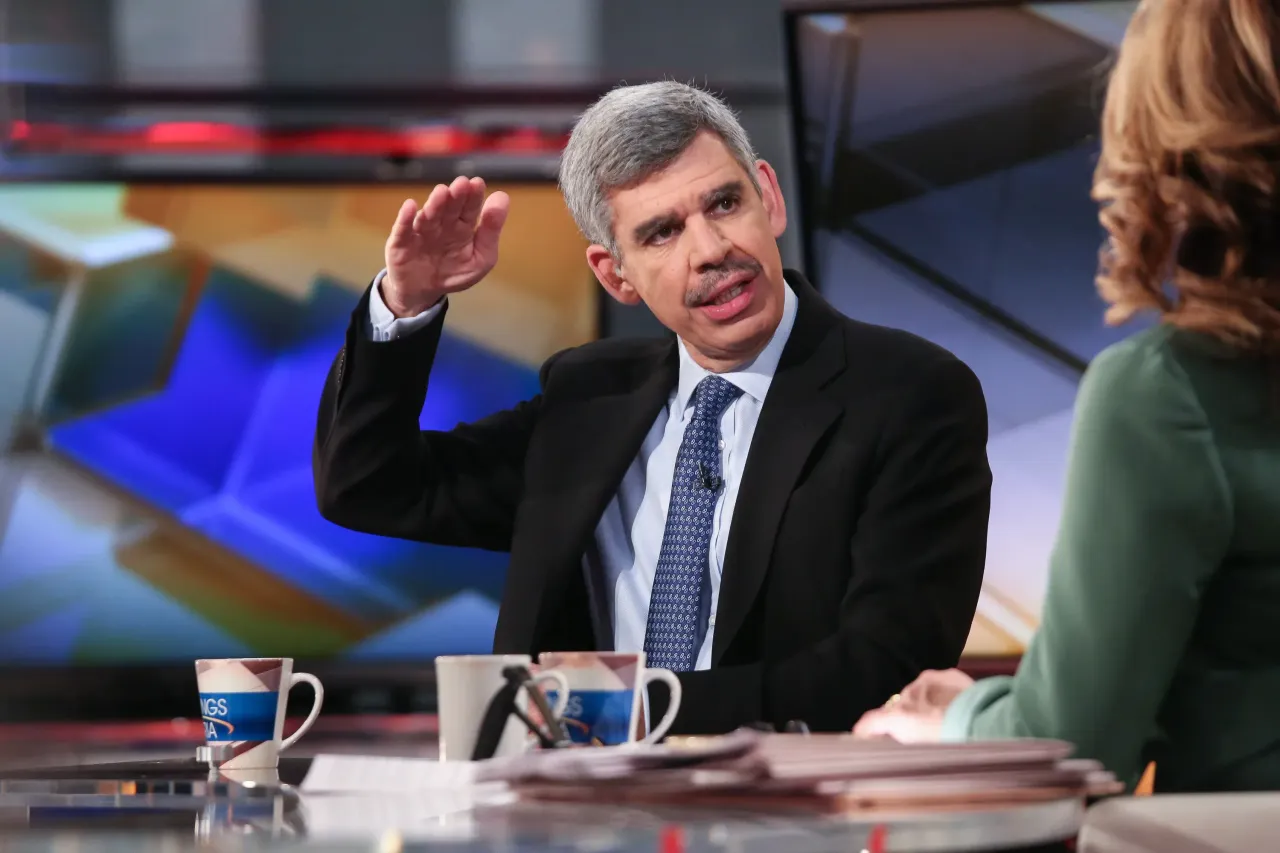


- El-Erian highlighted three factors responsible for the current situation: AI technology, the slow death of the Washington Consensus, and the backlash against globalization.
- He also called out President Donald Trump’s weaponization of tariffs, as well as more targeted economic disruptions, such as investment sanctions.
- However, the economist thinks the situation can still be salvaged, beginning with governments adopting a pragmatic approach to “friendshoring” and derisking their supply chains rather than indulging in trade wars.
Advertisement|Remove ads.
Mohamed El-Erian, Chief Economic Advisor at Allianz, on Thursday warned that the economic damage due to the Iran war is evolving and deepening.
The economist stated in an opinion piece for Project Syndicate that the global economy is now facing unsettling volatility and increasing fragmentation.
“The old world is gone, and virtually everyone risks losing out in the new one. The question is by how much and what to do about it,” he warned.
Advertisement|Remove ads.
Iran War Exemplifies This New Reality, Says El-Erian
El-Erian stated that the Iran war’s expansion across the Middle East reflects a broader shift. He added that even as local, regional, and global damage worsens, efforts to introduce a lasting circuit breaker have fallen short.
“The economic damage is evolving and deepening, with early effects on energy prices and interest rates fueling broader inflation and raising the risk of lower growth and financial instability,” he said.
The economist stated that this pattern is not new, adding that a similar lack of containment was observed in the Ukraine war. El-Erian also called out President Donald Trump’s weaponization of tariffs, as well as more targeted economic disruptions, such as investment sanctions. He warned that treating these events as isolated is misguided.
Advertisement|Remove ads.
The Factors Responsible For The Current Situation
El-Erian highlighted three factors responsible for the current situation: AI technology, the slow death of the Washington Consensus, and the backlash against globalization.
The economist stated that while AI holds vast productivity potential, new frameworks are urgently needed to manage its rollout, before disruption outpaces society’s ability to adapt.
The second anchor is the Washington Consensus, he said, adding that the long-held belief that liberalization, deregulation, fiscal discipline, and central bank independence drive prosperity has steadily eroded.
Advertisement|Remove ads.
“Ironically, the United States has led the way in upending this approach domestically, despite having spent three decades championing it for the rest of the world,” El-Erian added.
The economist stated that interdependence, once seen as a brake on conflict, has given way to weaponized trade, financial leverage, and chokepoint tactics. He said that failure to address the uneven impacts of globalization has led to the erosion of global norms, multilateral institutions, and the rule of law.
“The loss of these three anchors has given rise to a culture of distrust, zero-sum thinking, and short-sighted decision-making, which destroys the old without ready replacements on hand,” El-Erian cautioned.
Advertisement|Remove ads.
What Is The Way Forward?
El-Erian believes the situation can still be salvaged, beginning with governments adopting a pragmatic approach to “friendshoring” and derisking their supply chains, instead of indulging in trade wars.
The second solution is for countries to focus on productivity gains, infrastructure improvements, and secular transitions in energy, according to El-Erian. The economist also called for extending effective safety nets to the most vulnerable households.
He also called for regulating AI through policies, including those that favor labor augmentation over displacement through tax incentives, and investments in sectors like healthcare, as well as education, instead of merely aiming for cost savings through substituting the workforce.
Advertisement|Remove ads.
Meanwhile, U.S. equities gained in Thursday’s midday trade. At the time of writing, the SPDR S&P 500 ETF (SPY), which tracks the S&P 500 index, was up 0.1%; the Invesco QQQ Trust ETF (QQQ) rose 0.42%; and the SPDR Dow Jones Industrial Average ETF Trust (DIA) gained 0.04%. Retail sentiment on Stocktwits regarding the S&P 500 ETF was in the ‘bullish’ territory.
For updates and corrections, email newsroom[at]stocktwits[dot]com.
Advertisement|Remove ads.
Comments posted here will also appear on symbol pages.

Latest News
/filters:format(webp)https://news.stocktwits-cdn.com/large_Getty_Images_2290038559_c6f6528203.jpg)
/filters:format(webp)https://news.stocktwits-cdn.com/Whats_App_Image_2026_05_11_at_09_45_43_1_jpeg_a08c0cf251.webp) Aveek Bhowmik·27m ago
Aveek Bhowmik·27m ago/filters:format(webp)https://news.stocktwits-cdn.com/large_Getty_Images_2301241048_efc5b32b0a.jpg)
/filters:format(webp)https://news.stocktwits-cdn.com/shivani_photo_jpg_dd6e01afa4.webp) Shivani Kumaresan·1h ago
Shivani Kumaresan·1h ago/filters:format(webp)https://st-everywhere-cms-prod.s3.us-east-1.amazonaws.com/large_Crown_Castle_resized_jpg_1ddf452bb6.webp) Shivani Kumaresan·2h ago
Shivani Kumaresan·2h ago/filters:format(webp)https://news.stocktwits-cdn.com/large_space_stocks_2_6f2aa9bc90.jpg)
/filters:format(webp)https://news.stocktwits-cdn.com/IMG_8805_JPG_6768aaedc3.webp) Deepti Sri·3h ago
Deepti Sri·3h ago/filters:format(webp)https://news.stocktwits-cdn.com/large_michael_burry_cropped_b787ce89b4.jpg) Deepti Sri·3h ago
Deepti Sri·3h ago/filters:format(webp)https://news.stocktwits-cdn.com/large_Getty_Images_2286863020_e80075951f.jpg) Shivani Kumaresan·4h ago
Shivani Kumaresan·4h ago