


Advertisement|Remove ads.
El-Erian Explains Why Crude Prices Aren’t Soaring To High $80s Or $90s Despite Iran Conflict Heating Up – Markets Have ‘So Much Else’ To Focus
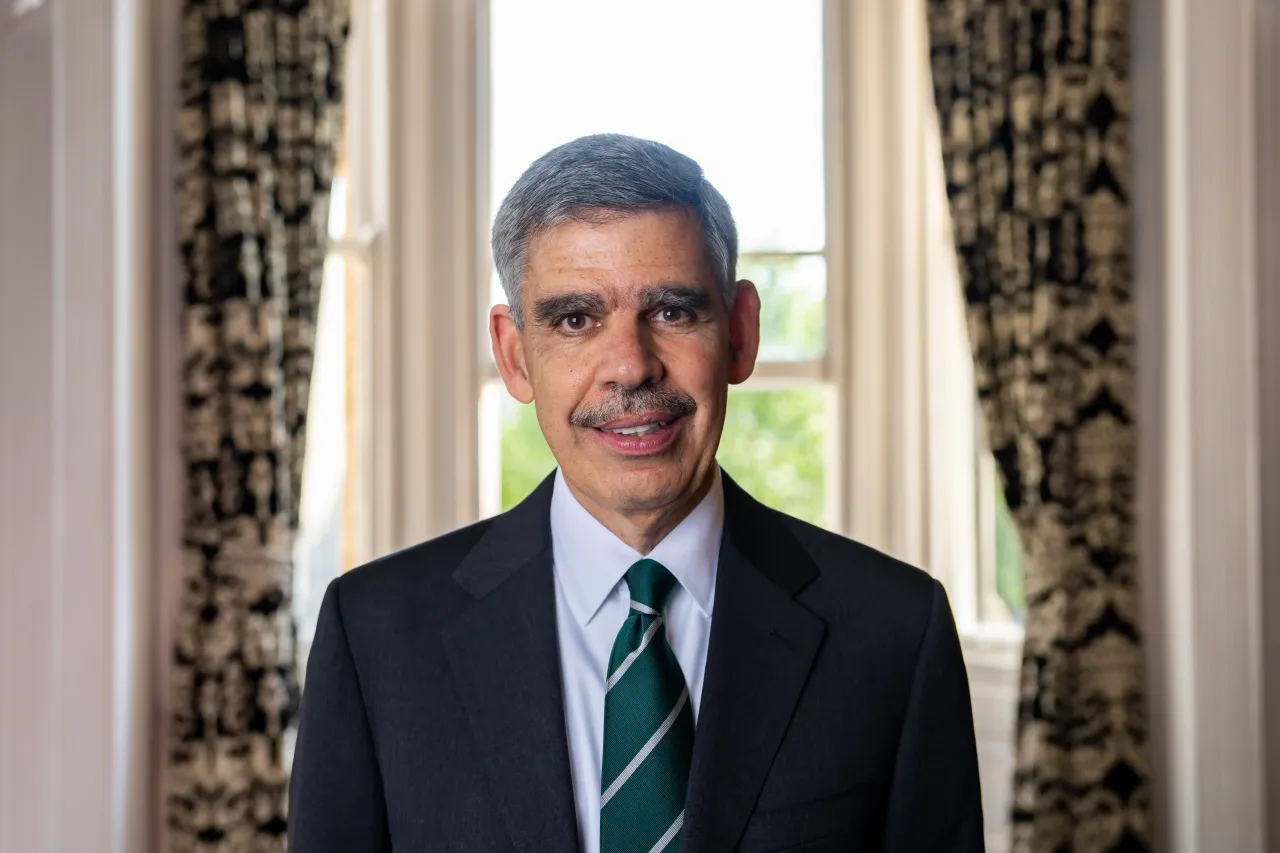


- El-Erian said that markets are focusing on the June Consumer Price Index, which is set to be released on Tuesday, as well as Federal Reserve Chair Kevin Warsh’s congressional testimony.
- The economist added that he expects the June CPI numbers to mark the peak of the current inflation cycle and looks forward to a more modern, reform-oriented Fed.
- Crude oil prices continued to hover below $80 per barrel, even after the escalating tensions over the weekend.
Advertisement|Remove ads.
Mohamed El-Erian, Chief Economic Advisor at Allianz, explained on Monday that crude oil prices are not soaring into the high $80s or $90s per barrel because markets believe the ongoing skirmishes between the U.S. and Iran will be contained.
During an interview with CNBC, El-Erian said that while the ongoing strikes between the U.S. and Iran are having spillover effects on U.S. equity markets and crude oil prices, the effects are limited.

“The markets deeply believe that these skirmishes are just going to remain skirmishes. It’s not going to evolve into an outright conflict yet again, and that it does not evolve into a long-term closure of the Strait [of Hormuz],” he said.
Advertisement|Remove ads.
Markets Have ‘So Much Else’ To Focus On, Says El-Erian
El-Erian added that the markets have “so much else” to focus on apart from the Iran conflict, which he said is reflecting in crude oil prices not soaring past $80 a barrel.
He also believes that the war in Iran will be contained. “I think neither side wants to go back to a full conflict, but both sides want to make their point for domestic reasons,” El-Eiran said.
The economist also added that the markets are focused on some important macroeconomic developments this week, including the Consumer Price Index (CPI) for June, which is set to be released on Tuesday, as well as Federal Reserve Chair Kevin Warsh’s congressional testimony.
Advertisement|Remove ads.
He added that he expects the June CPI numbers to be the peak of the current inflation cycle, while saying that he is also looking forward to a more modern, reform-oriented Fed.
Crude Oil Prices Remain Under $80 Per Barrel
Crude oil prices continued to hover below $80 per barrel in July, even after the escalating tensions over the weekend.
U.S. West Texas Intermediate (WTI) crude futures maturing in August gained 3.22% to hover around $73.71 per barrel. Brent crude futures expiring in September rose 3.2% to $78.44 per barrel.
Advertisement|Remove ads.
The United States Oil Fund ETF (USO) rose 3%, while the ProShares Ultra Bloomberg Crude Oil ETF (UCO) was up about 4% at the time of writing.
Trump Says US Will ‘Probably’ Run The Strait Of Hormuz
Meanwhile, President Donald Trump on Monday said that the U.S. will take over and “probably” run the Strait of Hormuz, following several strikes by the United States on Iranian targets.
“We’ll become the guardian of the strait. Maybe we’ll call it the guardian angel of the strait, and we should be reimbursed for that,” he said during an interview with Fox News.
Advertisement|Remove ads.
The U.S. has struck 17 Iranian targets since July 8, according to a report by Al Jazeera. The report added that Iran’s Islamic Revolutionary Guards Corps on Monday fired warning shots at two ships attempting to cross the Strait of Hormuz.
U.S. equities were mixed in Monday’s opening trade. At the time of writing, the SPDR S&P 500 ETF (SPY), which tracks the S&P 500 index, was down 0.32%; the Invesco QQQ Trust ETF (QQQ) fell 1.57%; and the SPDR Dow Jones Industrial Average ETF Trust (DIA) gained 0.11%. Retail sentiment on Stocktwits regarding the S&P 500 ETF was in the ‘bullish’ territory.
Advertisement|Remove ads.
For updates and corrections, email newsroom[at]stocktwits[dot]com.
Comments posted here will also appear on symbol pages.

Latest News
/filters:format(webp)https://news.stocktwits-cdn.com/large_Getty_Images_2287054273_1_864b6e24d6.jpg)
/filters:format(webp)https://news.stocktwits-cdn.com/vivekkrishnanphotography_58_jpg_0e45f66a62.webp) Arnab Paul·1h ago
Arnab Paul·1h ago/filters:format(webp)https://news.stocktwits-cdn.com/large_Getty_Images_2271607504_f4f2011a99.jpg)
/filters:format(webp)https://news.stocktwits-cdn.com/unnamed_jpg_9dff551b50.webp) Anan Ashraf·1h ago
Anan Ashraf·1h ago/filters:format(webp)https://news.stocktwits-cdn.com/large_musk_88257e3573.jpg)
/filters:format(webp)https://news.stocktwits-cdn.com/1707726834303_jpg_11f20a9aa9.webp) Shashank Nayar·2h ago
Shashank Nayar·2h ago/filters:format(webp)https://news.stocktwits-cdn.com/large_Lockheed_Martin_jpg_8c751d0020.webp)
/filters:format(webp)https://news.stocktwits-cdn.com/Heera_1_1c30cb0170.PNG) Heera Hari·2h ago
Heera Hari·2h ago/filters:format(webp)https://news.stocktwits-cdn.com/large_iova_stock_jpg_ac0924fcdd.webp) Arnab Paul·2h ago
Arnab Paul·2h ago/filters:format(webp)https://news.stocktwits-cdn.com/large_Getty_Images_2298278370_c1742670a6.jpg)
/filters:format(webp)https://news.stocktwits-cdn.com/Prabhjote_DP_67623a9828.jpg) Prabhjote Gill·2h ago
Prabhjote Gill·2h ago