


Advertisement|Remove ads.
Fed’s Barkin Reportedly Backs Gradual Rate Hikes, Flags AI Investment Boom As Inflation Risk


- Barkin said the Fed signaled a gradual approach at its September meeting, when it raised rates to a target range of 3.75%–4%.
- September PCE inflation rose to 3.6% annually, with core at 3.1%, while third-quarter GDP growth accelerated to 3.4%.
- Barkin distinguished demand-driven inflation from supply shocks, such as higher energy prices linked to the war in Iran.
Advertisement|Remove ads.
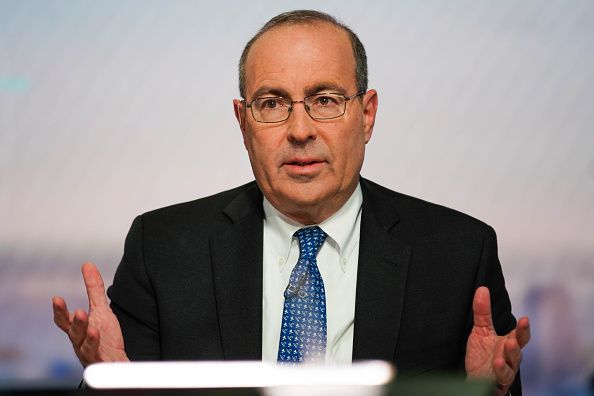
Federal Reserve Bank of Richmond President Tom Barkin said Friday that gradual interest rate increases by the Fed make sense given elevated inflation, low unemployment and solid economic demand.
According to a Bloomberg report, Barkin said during a Friday interview with SiriusXM radio that the Fed’s direction on interest rates was clear, but the pace of further increases remained uncertain.

“A gradual approach is a good way to go,” he added, emphasizing the importance of assessing incoming information before determining the pace of further tightening.
Advertisement|Remove ads.
Barkin Favors A Gradual Approach
Barkin said gradual rate increases were appropriate when policymakers were not far behind the inflation curve, as that allowed time to learn from both economic conditions and external developments.
The Richmond Fed chief also said the Fed had signaled a gradual approach at its September meeting, when policymakers raised the benchmark interest rate to a target range of 3.75% to 4%.
His comments came two days after the Fed held its benchmark rate at 3.75% to 4%, with the Federal Open Market Committee voting 10-2 to maintain rates. Governor Lisa Cook and Cleveland Fed President Beth Hammack favored another quarter-point increase.
Advertisement|Remove ads.
Recent economic data showed September headline PCE inflation rising to 3.6% annually, while core PCE, excluding food and energy, stood at 3.1%. Meanwhile, third-quarter GDP growth accelerated to 3.4%, supported by investment and consumer spending.
Barkin said consumer spending had not seen a significant pullback, as workers continued to hold jobs despite limited hiring and layoffs.
AI Investment Could Add To Inflation Pressure
Barkin also discussed the potential inflationary impact of investment in artificial intelligence (AI) infrastructure. According to him, consumers are proving creative when spending. Policymakers might need to respond if a surge in AI-driven investment continues to fuel demand, he said.
Advertisement|Remove ads.
Barkin said demand-driven inflation differs from supply-side disruptions, such as the rise in energy prices linked to the war involving Iran. “That kind of demand-side inflation, that’s not a supply-side shortage issue,” he said.
“We’ll see how long that pressure lasts. But if we do see a continued surge in demand, that would be the kind of thing you might want to lean against,” Barkin added.
Nasdaq-100 On Track To Lose $2 Trillion in October
Barkin's comments come as investors grow increasingly concerned about the returns on AI spending. According to Reuters, the tech-heavy Nasdaq 100 is on track to shed more than $2 trillion in market value in October. At the time of this writing, the index was down more than 3%.
Advertisement|Remove ads.
The sell-off follows higher AI spending forecasts from Meta, Alphabet and Amazon, with rising borrowing costs adding to concerns over investment returns.
On Stocktwits, retail investors’ sentiment around the Invesco QQQ Trust (QQQ), which tracks the Nasdaq 100, was ‘bearish’, while sentiment for the SPDR S&P 500 ETF Trust (SPY), which tracks the broader S&P 500 index, remained bullish.
Advertisement|Remove ads.
For updates and corrections, email newsroom[at]stocktwits[dot]com
Comments posted here will also appear on symbol pages.

Latest News

 Arnab Paul·13m ago

 Prabhjote Gill·56m ago

 Harshita Tyagi·1h ago

 Heera Hari·1h ago
 Prabhjote Gill·2h ago
 Arnab Paul·2h ago