


Advertisement|Remove ads.
Fed’s Kashkari Says US Economy Is ‘Robust’ Beyond AI — Sees Capital Shifting From Housing To Data Centers


- Kashkari put the two-year Treasury yield near 4.88%-4.90%, versus the 4% implied by Fed projections.
- AI investment cycle could continue for a long time if expected productivity gains materialize, Kashkari told Bloomberg.
- Kashkari said further rate increases would hit lower-return parts of the economy hardest.
Advertisement|Remove ads.
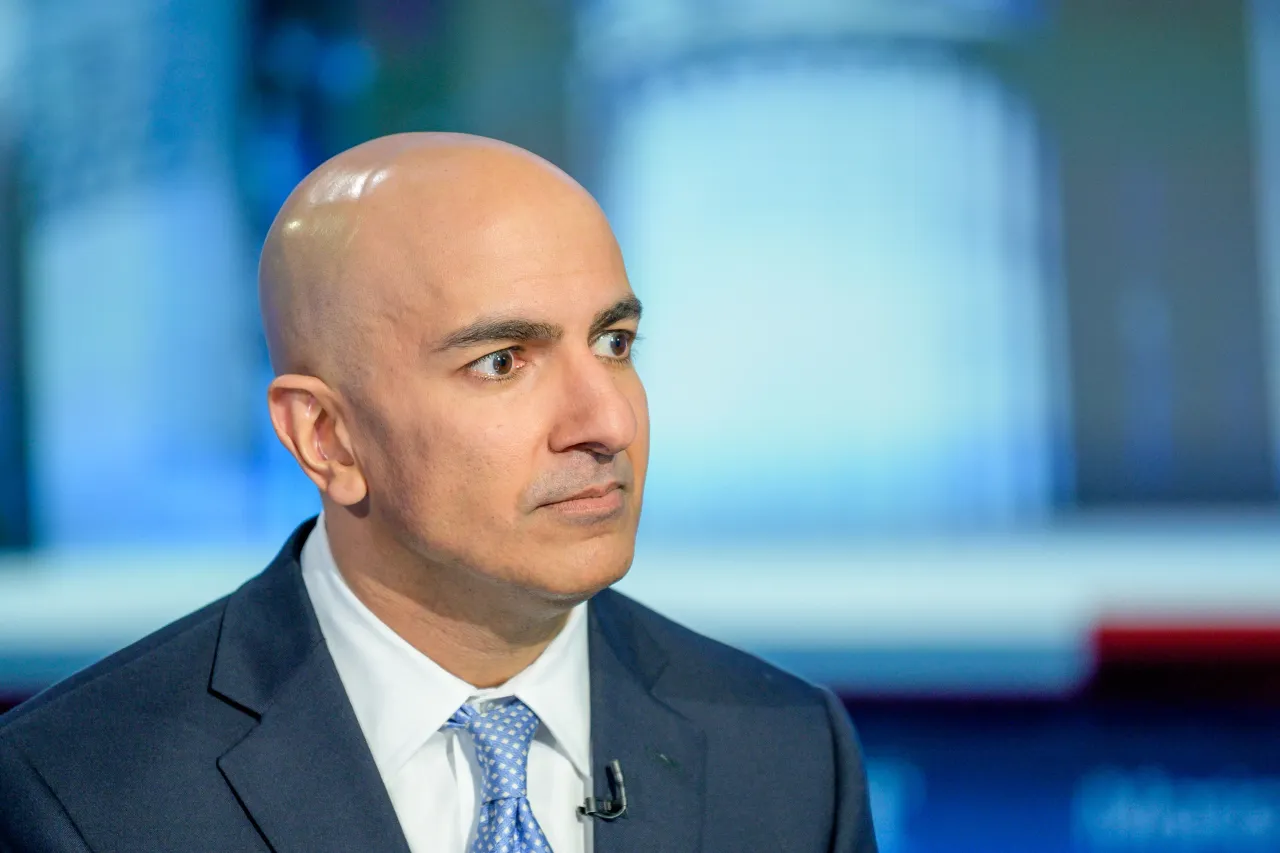
Minneapolis Fed President Neel Kashkari said the U.S. economy remains “robust” beyond the artificial intelligence boom, even as housing comes under pressure and capital increasingly flows into data-center investment.
In an interview with BloombergTV on Thursday, Kashkari said consumer spending remains strong, unemployment is 4.1%, and layoffs and unemployment claims are low. “It’s not just an AI economy,” he said, adding that the broader economy has remained resilient despite tariffs, geopolitical conflict and elevated yields.

He also said large-scale data-center investment requires capital to come from elsewhere. If roughly $1 trillion flows into data centers, Kashkari said, the market reallocates capital from areas such as housing, with higher mortgage rates serving as part of that mechanism.
Advertisement|Remove ads.
Kashkari Flags Wide Gap In 2-Year Yield
Kashkari highlighted the large gap between the actual two-year Treasury yield and a two-year yield implied by the median Federal Reserve projections. He put the actual yield around 4.88%-4.90%, compared with an implied rate a little above 4%, calling the difference “very, very large.”
The Fed president said markets are capable of sending signals that differ from Fed projections and cited the period after the financial crisis, when market pricing ultimately proved more accurate on the path of rates.
Part of the gap could reflect a term premium, including compensation investors demand for possible future inflation mistakes, Kashkari said. An inflation risk premium embedded in yields would be something policymakers need to pay attention to, he added.
Advertisement|Remove ads.
The Federal Open Market Committee raised its target range by 25 basis points to 3.75%-4% in September, while its latest projections showed a median federal funds rate of 4.1% at the end of both 2026 and 2027.
AI Investment Could Keep Rates Elevated
Strong demand for investment capital can affect the neutral interest rate because the funding ultimately has to come from savings, raising the clearing price of capital, Kashkari told Bloomberg.
How long that effect lasts depends partly on AI. If the technology produces the returns and productivity gains investors expect, the current investment cycle could continue “for a long time, he said, adding that if those gains disappoint, the cycle may not last as long.
Advertisement|Remove ads.
Kashkari said higher yields also feed into decisions about how many data centers are built, how projects are financed, and how much companies invest.
Housing Feels The Pressure
Housing remains one of the clearest areas of weakness, according to Kashkari, and housing-related businesses are also facing pressure. If rates continue to rise, Kashkari said different parts of the economy would face varying levels of pressure, with lower-return investment sectors feeling it most acutely.
See Also: Nvidia’s Hyperscaler Revenue Could Reach $401B In 2027, Says Analyst: SpaceX Could Push Barclays’ ‘Napkin Math’ Higher
For updates and corrections, email newsroom[at]stocktwits[dot]com.
Advertisement|Remove ads.
Comments posted here will also appear on symbol pages.

Latest News
/filters:format(webp)https://news.stocktwits-cdn.com/large_Getty_Images_2290038559_c6f6528203.jpg)
/filters:format(webp)https://news.stocktwits-cdn.com/Harshita_3cfe02022c.jpg) Harshita Tyagi·15m ago
Harshita Tyagi·15m ago/filters:format(webp)https://news.stocktwits-cdn.com/large_tesla_model_yl_jpg_9d6fcde81d.webp)
/filters:format(webp)https://news.stocktwits-cdn.com/vivekkrishnanphotography_58_jpg_0e45f66a62.webp) Arnab Paul·16m ago
Arnab Paul·16m ago/filters:format(webp)https://news.stocktwits-cdn.com/large_Getty_Images_2301328096_936a483051.jpg)
/filters:format(webp)https://news.stocktwits-cdn.com/Prabhjote_DP_67623a9828.jpg) Prabhjote Gill·35m ago
Prabhjote Gill·35m ago/filters:format(webp)https://news.stocktwits-cdn.com/large_Getty_Images_1258292964_d4895e93ad.jpg) Prabhjote Gill·1h ago
Prabhjote Gill·1h ago/filters:format(webp)https://news.stocktwits-cdn.com/large_IBM_jpg_db5b7d0908.webp) Harshita Tyagi·1h ago
Harshita Tyagi·1h ago/filters:format(webp)https://news.stocktwits-cdn.com/large_Getty_Images_2294108581_678b1cf125.jpg)
/filters:format(webp)https://news.stocktwits-cdn.com/shivani_photo_jpg_dd6e01afa4.webp) Shivani Kumaresan·2h ago
Shivani Kumaresan·2h ago