


Advertisement|Remove ads.
Here Are JPMorgan's Top Stock Picks That Could Benefit This Mid-Term Election Shake-Up


- Healthcare, defense, and select big tech firms stand to gain under a divided government, while hospitals, renewable utilities, and environmental services could surge under a Democratic sweeping win.
- Regardless of the political outcome, artificial intelligence capital expenditure is expected to remain robust through 2028 as companies accelerate infrastructure spending.
- Congressional gridlock historically delivers a 21% S&P 500 gain over a two-year post-election term, making it the most favorable scenario for investors by limiting downside policy risks, JPMorgan said.
Advertisement|Remove ads.
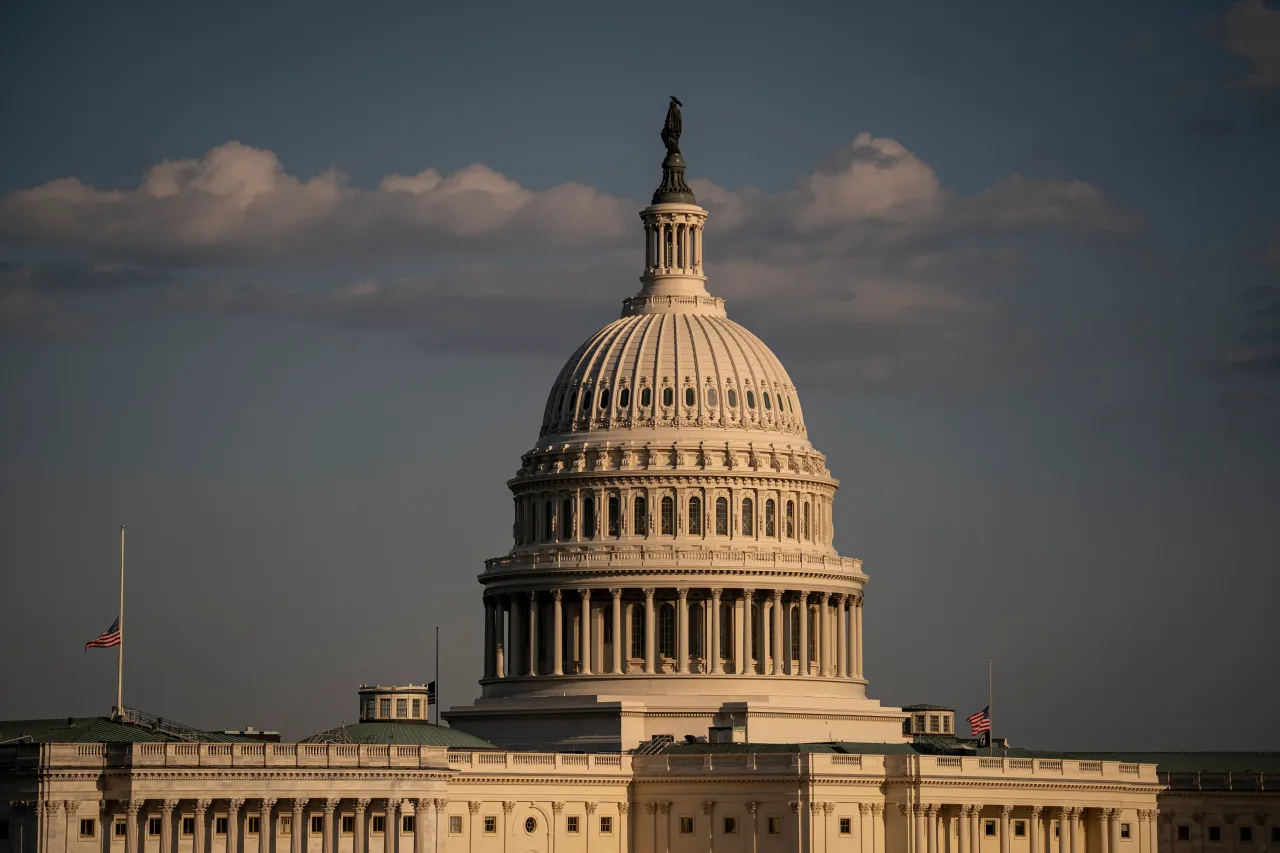
With the U.S. midterm elections roughly a month away, investors are preparing for potential market shifts as control of Congress hangs in the balance. According to a research note released Thursday by JPMorgan, the equity impact of the upcoming elections will likely favor individual stock selection over broad market moves.
Strategists at the bank characterized the vote as a pivotal political catalyst that could rearrange sectoral leaders depending on whether power is split or unified under a single party, according to a CNBC report.
What Happens In Case Of Gridlock
Historically, a divided government has proven to be the most lucrative scenario for equity investors. JPMorgan’s Dubravko Lakos-Bujas noted that congressional gridlock minimizes policy uncertainty and downside risk.
Advertisement|Remove ads.
"Congressional gridlock has been associated with positive S&P 500 returns since 1950," Lakos-Bujas wrote, pointing out that the benchmark index has averaged a 21% gain over the two-year congressional terms following gridlock outcomes. By comparison, single-party control of Congress has yielded an average return of 18% over similar post-election spans.
However, analysts cautioned that equity upside following this election cycle might be somewhat constrained, given that the S&P 500 has already surged approximately 60% since the beginning of the presidential cycle. While market volatility typically spikes and peaks about a month before midterm voting—measured by the VIX index—historical trends indicate positive market performance in the months that follow.
Under a split Congress, sectors such as healthcare, defense, civil infrastructure, and select technology firms are positioned to excel.
Advertisement|Remove ads.
Healthcare companies face reduced risks of government spending cuts, while defense contractors benefit from bipartisan military initiatives. Major technology players also stand to gain from a lower likelihood of strict artificial intelligence oversight under a divided legislature.
Stocks That Benefit From Gridlock
| Ticker | Name | Year-To-Date Performance (%) |
| SHW | Sherwin-Williams | -17 |
| ORN | Orion Group | 76 |
| MGM | MGM Resorts | 17 |
| GILD | Gilead Sciences | 19.6 |
| CRWV | CoreWeave | 237 |
| ORCL | Oracle | -24 |
| SPCX | SpaceX | -2.6 |
| META | Meta Platforms | 12.4 |
Source: JPMorgan.
Potential "Blue Wave" and "Red Wall" Scenarios
Should Democrats sweep both houses of Congress in a "Blue Wave" scenario, legislative priorities would shift toward budget adjustments, increased oversight, and environmental initiatives.
Advertisement|Remove ads.
Hospitals and Medicaid-focused managed care organizations are key beneficiaries if lawmakers delay or reverse healthcare funding cuts. Similarly, environmental service providers and renewable energy utilities would benefit from higher agency funding and clean energy support.
Stocks That Benefit From A Blue Wave
| Ticker | Name | Year-To-Date Performance (%) |
| BKR | Baker Hughes | 27 |
| VMI | Valmont Industries | 20 |
| FLUT | Flutter Entertainment | -64 |
| CNC | Centene Corporation | 55 |
| MOH | Molina Healthcare | 10.5 |
| WU | Western Union Company | 28.4 |
| CRM | Salesforce | 12.9 |
| NEE | NextEra Energy | 22 |
Source: JPMorgan.
Conversely, in the lower-probability event of a "Red Wall"—where Republicans retain full congressional control, JPMorgan anticipates the most supportive policy backdrop for artificial intelligence infrastructure.
Advertisement|Remove ads.
This outcome would favor data center developers, traditional and nuclear energy producers, financial institutions, defense contractors, and cybersecurity firms, including companies like Devon Energy (DVN), Lockheed Martin (LMT), L3Harris (LHX), Bloom Energy (BE), Veeva Systems (VEEV), and Bank of America (BAC).
Despite short-term political uncertainties, JPMorgan emphasizes that core technology investments face minimal disruption.
The SPDR S&P 500 ETF (SPY) rose 0.7%, the SPDR Dow Jones Industrial Average ETF (DIA) rose 0.3%, and the Nasdaq-100 tracking Invesco QQQ Trust (QQQ) added 0.9%.
Advertisement|Remove ads.
For updates and corrections, email newsroom[at]stocktwits[dot]com.
Comments posted here will also appear on symbol pages.

Latest News
/filters:format(webp)https://news.stocktwits-cdn.com/large_Getty_Images_2271511203_8eff84cf59.jpg)
/filters:format(webp)https://news.stocktwits-cdn.com/Anushka_Basu_make_me_smile_in_the_picture_b92832aa_af59_4141_aacc_4180d2241ba8_1_2_png_1086e0ed8c.webp) Anushka Basu·5m ago
Anushka Basu·5m ago/filters:format(webp)https://news.stocktwits-cdn.com/gettyimages_2283723097_594x594_6bd6cc0d66.jpg)
/filters:format(webp)https://news.stocktwits-cdn.com/1707726834303_jpg_11f20a9aa9.webp) Shashank Nayar·31m ago
Shashank Nayar·31m ago/filters:format(webp)https://news.stocktwits-cdn.com/gettyimages_2298925603_594x594_36977deadb.jpg)
/filters:format(webp)https://news.stocktwits-cdn.com/Harshita_3cfe02022c.jpg) Harshita Tyagi·47m ago
Harshita Tyagi·47m ago/filters:format(webp)https://news.stocktwits-cdn.com/large_Getty_Images_2301854791_367da93dae.jpg)
/filters:format(webp)https://news.stocktwits-cdn.com/unnamed_jpg_9dff551b50.webp) Anan Ashraf·50m ago
Anan Ashraf·50m ago/filters:format(webp)https://st-everywhere-cms-prod.s3.us-east-1.amazonaws.com/large_EQT_resized_b638009335.jpg)
/filters:format(webp)https://news.stocktwits-cdn.com/vivekkrishnanphotography_58_jpg_0e45f66a62.webp) Arnab Paul·60m ago
Arnab Paul·60m ago/filters:format(webp)https://news.stocktwits-cdn.com/large_Getty_Images_2248645094_7433f831cf.jpg) Anushka Basu·1h ago
Anushka Basu·1h ago