


Advertisement|Remove ads.
Nvidia CEO Huang’s 200 Rubin Pods A Week Claim Sparks Debate – Here's Why Analysts Aren't Buying The Math


- Wolfe analysts highlighted Groq as the largest part of Nvidia's incremental revenue opportunity.
- The firm noted that Nvidia’s new products, including CPU, storage, and Groq could represent 50% in incremental revenue when compared to traditional VR compute racks that the company offers.
- It added that the most significant part of this equation is Groq’s 3 LPX rack, noting that Nvidia’s comments suggest these racks could represent a 25% incremental revenue opportunity.
Advertisement|Remove ads.
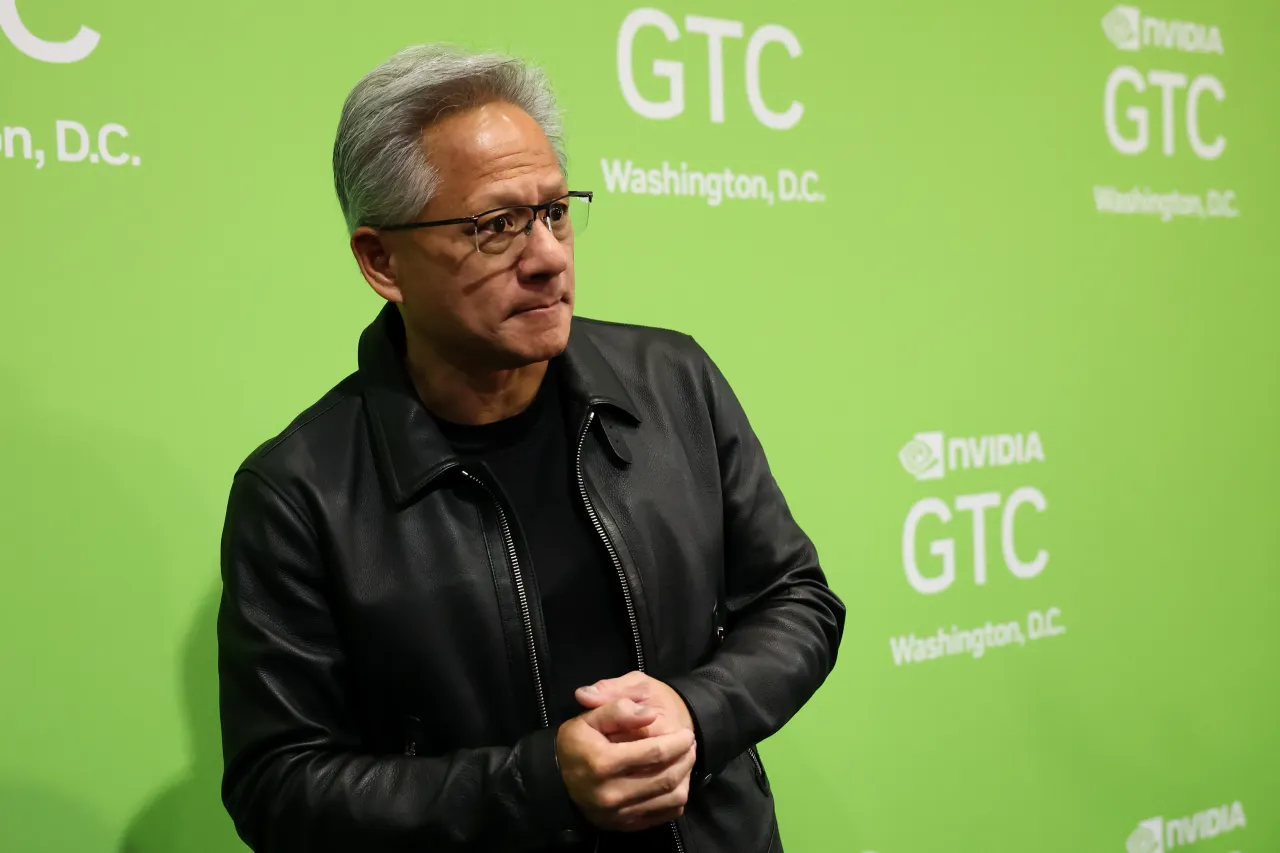
Nvidia Corp. (NVDA) CEO Jensen Huang said during an episode of the Lex Fridman Podcast earlier this week that the company may have to build 200 Rubin Pods every week, but analysts at Wolfe Research have flagged concerns with the AI bellwether chief’s numbers.
In a recent note, the firm estimated that at 200 pods per week or about 800 pods per month, the revenue from the sale of this product would amount to nearly $120 billion every month.
The firm highlighted that Nvidia’s 2027 revenue is estimated to be $482 billion. As such, pod sales alone could eclipse the company’s total revenue estimate in a span of just four months.
Advertisement|Remove ads.
“We have come to understand that Jensen's comments should be taken seriously, though not always literally,” Wolfe stated in its note. It estimates each Rubin Ultra Pod to cost about $150 million, which translates to about $120 billion going by Huang’s estimate of building 200 pods per week.
Nvidia shares were down 0.3% in Friday’s pre-market trade. Retail sentiment on Stocktwits around the company trended in the ‘bearish’ territory at the time of writing.
Groq Largest Part Of Incremental Revenue Opportunity, Says Wolfe
Wolfe analysts highlighted Groq as the largest part of Nvidia's incremental revenue opportunity.
Advertisement|Remove ads.
The firm noted that Nvidia’s new products, including CPU, storage, and Groq could represent 50% in incremental revenue when compared to traditional VR compute racks that the company offers. It added that the most significant part of this equation is Groq’s 3 LPX rack, noting that Nvidia’s comments suggest these racks could represent a 25% incremental revenue opportunity.
“The LPX racks provide low-latency inference, allowing NVDA customers to offer a higher service tier at premium pricing, which no other accelerator can currently provide. That means the LPX racks are both unique to NVDA and monetizable, which is why we believe they are impactful,” the firm added.
In a note last week, IO Fund analyst Beth Kindig stated that Nvidia’s Groq acquisition is aimed at driving up token usage, which would boost the company’s revenue and profits.
Advertisement|Remove ads.
“The 256-chip LPX rack introduces Groq’s unique SRAM‑based architecture that allows Nvidia to offload decode‑phase workloads and massively increase token throughput,” Kindig said.
What Is The Rubin Pod?
Nvidia introduced the Rubin Pod earlier this month, stating that it features a co-design of seven chips across compute, networking, and storage. The company added that the platform features 40 racks, 1.2 quadrillion transistors, nearly 20,000 Nvidia dies, 1,152 Rubin GPUs, 60 exaflops, and 10 petabytes per second total scale-up bandwidth.
The company is aiming the pod at customers who want purpose-built platforms for agentic AI workloads, offering high throughput, extreme low-latency inference, dense CPU sandboxing, and massive context memory storage.
Advertisement|Remove ads.
Nvidia stated that its architecture can deliver up to 35 times higher throughput per watt when Groq 3 LPX racks are paired with its next-generation Vera Rubin GPUs.
NVDA stock is down 8% year-to-date, but up 51% over the past 12 months. The SPDR S&P 500 ETF Trust (SPY) is up 13% over the past 12 months, while the Invesco QQQ Trust (QQQ) is up 18%.
Also See: HTZ Stock Soars After TSA Delays At Airports Reportedly Result In Spike In Car Rental Searches
Advertisement|Remove ads.
For updates and corrections, email newsroom[at]stocktwits[dot]com.
Comments posted here will also appear on symbol pages.

Latest News
/filters:format(webp)https://news.stocktwits-cdn.com/large_starlink_jpg_39bb7b2774.webp)
/filters:format(webp)https://st-everywhere-cms-prod.s3.us-east-1.amazonaws.com/i_OS_App_Icon_1_8054f2a2fe.png) Stocktwits News Desk·56m ago
Stocktwits News Desk·56m ago/filters:format(webp)https://news.stocktwits-cdn.com/large_cathiewood_OG_jpg_a3c8fddb3f.webp) Stocktwits News Desk·2h ago
Stocktwits News Desk·2h ago/filters:format(webp)https://news.stocktwits-cdn.com/Getty_Images_2237643016_jpg_17a9a7eb9d.webp) Stocktwits News Desk·4h ago
Stocktwits News Desk·4h ago/filters:format(webp)https://news.stocktwits-cdn.com/large_trump_putin_jpg_eb42a46830.webp) Stocktwits News Desk·4h ago
Stocktwits News Desk·4h ago/filters:format(webp)https://news.stocktwits-cdn.com/large_Getty_Images_2286326398_84fc8215c8.jpg)
/filters:format(webp)https://news.stocktwits-cdn.com/Prabhjote_DP_67623a9828.jpg) Prabhjote Gill·5h ago
Prabhjote Gill·5h ago/filters:format(webp)https://news.stocktwits-cdn.com/large_Getty_Images_2162497795_jpg_c07f3aa255.webp)
/filters:format(webp)https://news.stocktwits-cdn.com/vivekkrishnanphotography_58_jpg_0e45f66a62.webp) Arnab Paul·6h ago
Arnab Paul·6h ago