


Advertisement|Remove ads.
Iran Reportedly Mulls Transit Fees In Strait Of Hormuz, Targeting A Fifth Of Global Energy Flow As Crude Oil Surges
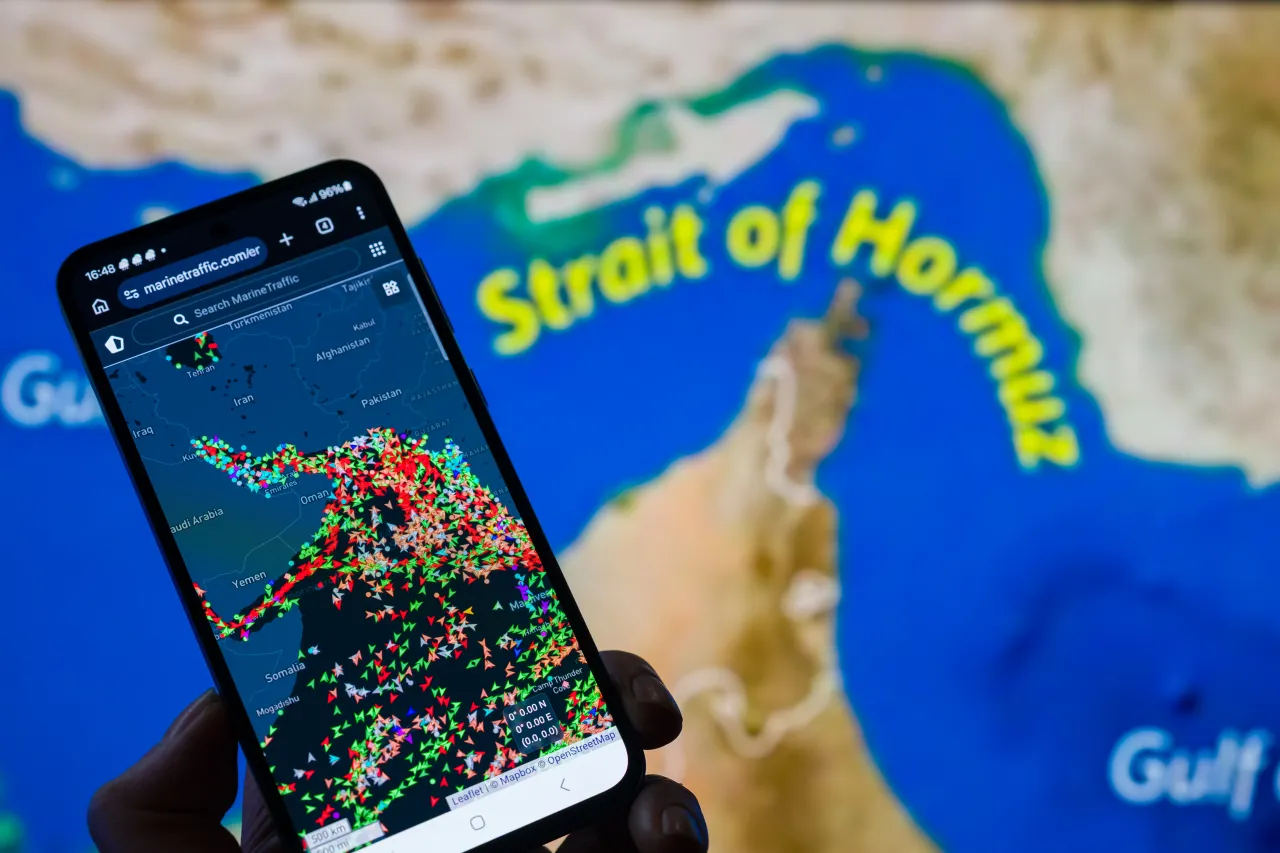


- An adviser to the new Supreme Leader of Iran stated that a new regime will be put in place following the end of the war, according to the report.
- The adviser stated that this will allow the Iranian regime to apply maritime restrictions on countries that sanctioned it.
- Analysts at ING Think stated in a note on Thursday that the risks to energy markets from the Iran war are no longer limited to the Strait of Hormuz.
Advertisement|Remove ads.
Iran is reportedly considering charging a toll for ships transiting through the Strait of Hormuz in a bid to monetize the crucial waterway.
According to a Reuters report, an Iranian lawmaker stated that the country’s parliament was considering charging tolls and taxes to countries using the Strait of Hormuz for shipping, energy transit and food supplies. Nearly a fifth of the global crude oil supply flows through the strait.
This comes amid a continued rise in crude oil prices. U.S. West Texas Intermediate (WTI) crude futures maturing in May were up more than 1%, hovering around $97 a barrel at the time of writing. Brent crude futures expiring in May surged about 5% to hover around $113 a barrel, after inching close to the 52-week high of $119.5 per barrel.
Advertisement|Remove ads.
The United States Oil Fund ETF (USO) and the ProShares Ultra Bloomberg Crude Oil ETF (UCO) were down by about 1% at the time of writing.
New Regime For Strait Of Hormuz After War, Says Adviser
According to the report, an adviser to the new Supreme Leader of Iran stated that a new regime will be put in place following the end of the war.
The adviser stated that this will allow the Iranian regime to apply maritime restrictions on countries that sanctioned it. This includes the U.S., which first placed sanctions on Iran in 1979 before lifting them subsequently.
Advertisement|Remove ads.
"So far, the domination-seeking powers would sanction and limit us. But, at the end of current imposed war, with drawing a new regime for the Strait of Hormuz, Iran will turn its position from a sanctioned country to an enhanced power in the region and the world,” said Mohammad Mokhber, member of the Iranian Expediency Council, according to a report by the Mehr News Agency.
President Donald Trump reimposed restrictions in 2018, which were subsequently ramped up over the years. The U.K., Australia, and the United Nations have also imposed sanctions on the Middle Eastern country.
Looking Beyond The Strait
Analysts at ING Think stated in a note on Thursday that the risks to the energy markets due to the Iran war are no longer limited to just the status of the Strait of Hormuz.
Advertisement|Remove ads.
“Damage to the LNG facilities means that the troubles for global gas markets aren't just about when flows through the Strait of Hormuz resume, but how long repair work at the sites might take,” the firm stated, following the Israeli attack on Iran’s South Pars gas field.
ING Think analysts added that even if the LNG facilities on the field are untouched, there would be a higher risk premium to consider going forward.
Meanwhile, U.S. equities declined in Thursday’s opening trade. At the time of writing, the SPDR S&P 500 ETF (SPY), which tracks the S&P 500 index, was down 0.71%; the Invesco QQQ Trust ETF (QQQ) fell 0.9%; and the SPDR Dow Jones Industrial Average ETF Trust (DIA) rose 0.47%. Retail sentiment on Stocktwits regarding the S&P 500 ETF was in the ‘extremely bearish’ territory.
Advertisement|Remove ads.
Also See: Tesla FSD Probe Expands To Millions Of Vehicles: Here’s What The NHTSA Is Investigating
For updates and corrections, email newsroom[at]stocktwits[dot]com.
Comments posted here will also appear on symbol pages.

Latest News
/filters:format(webp)https://news.stocktwits-cdn.com/large_Getty_Images_2289192410_ae300369d4.jpg)
/filters:format(webp)https://news.stocktwits-cdn.com/1707726834303_jpg_11f20a9aa9.webp) Shashank Nayar·29m ago
Shashank Nayar·29m ago/filters:format(webp)https://news.stocktwits-cdn.com/large_Getty_Images_2275136246_jpg_ed278ffb66.webp) Shashank Nayar·3h ago
Shashank Nayar·3h ago/filters:format(webp)https://news.stocktwits-cdn.com/large_Getty_Images_2219723511_103fa4d061.jpg)
/filters:format(webp)https://news.stocktwits-cdn.com/unnamed_jpg_9dff551b50.webp) Anan Ashraf·3h ago
Anan Ashraf·3h ago/filters:format(webp)https://news.stocktwits-cdn.com/Getty_Images_2237643016_jpg_17a9a7eb9d.webp) Anan Ashraf·4h ago
Anan Ashraf·4h ago/filters:format(webp)https://news.stocktwits-cdn.com/large_Netflix_jpg_ed6fa4554b.webp) Shashank Nayar·5h ago
Shashank Nayar·5h ago/filters:format(webp)https://st-everywhere-cms-prod.s3.us-east-1.amazonaws.com/large_telecommunications_networks_representative_image_resized_310fc1eb5b.jpg)
/filters:format(webp)https://news.stocktwits-cdn.com/vivekkrishnanphotography_58_jpg_0e45f66a62.webp) Arnab Paul·5h ago
Arnab Paul·5h ago