


Advertisement|Remove ads.
Kevin Warsh Says Fed Has 'No Tolerance' For Persistently High Inflation, Promises Inflation Surge Will Become A 'Thing Of The Past'
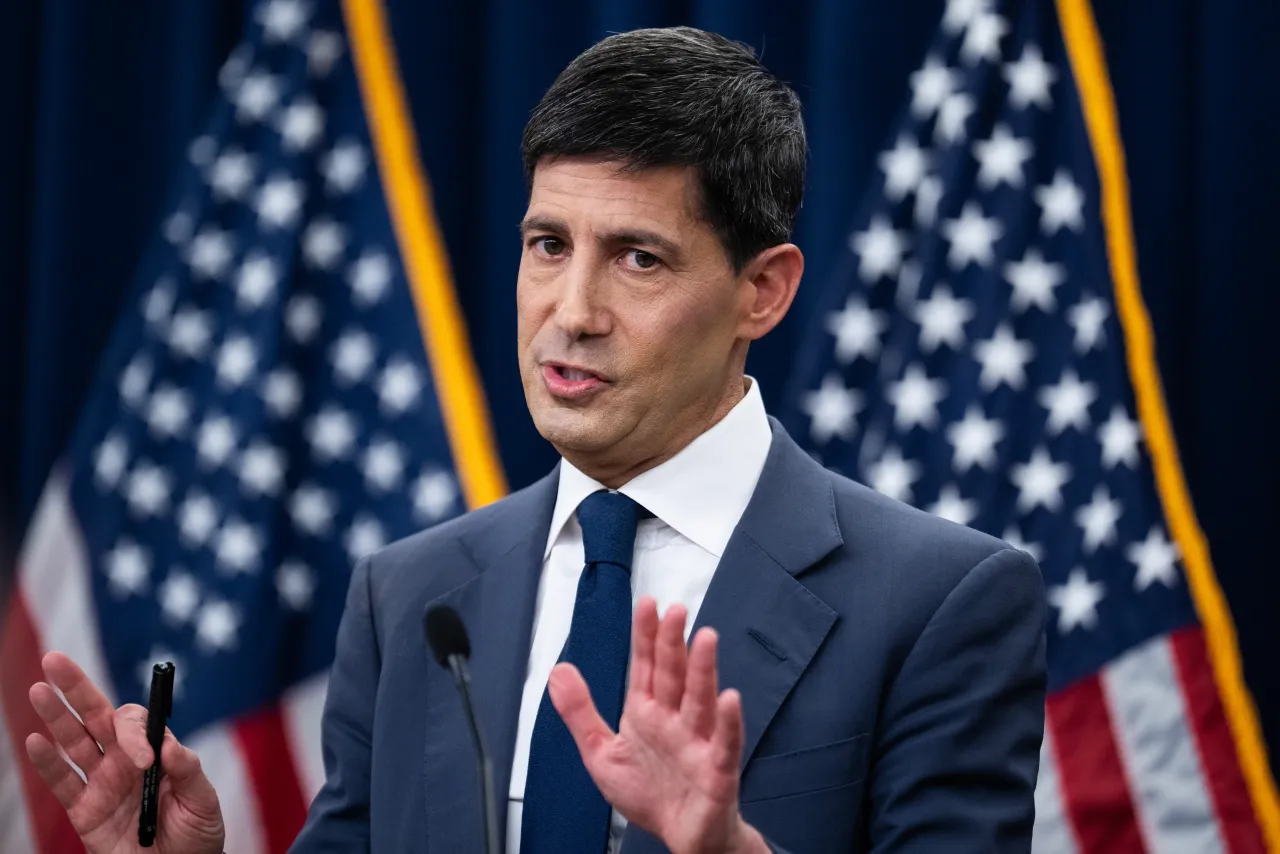


- Warsh said that while short-term price swings are inevitable, particularly during periods of global uncertainty, long-term inflation is largely determined by monetary policy.
- He said officials recognize that high inflation has weighed on households and businesses, while adding that they remain committed to bringing it back under control.
- Warsh said that while household spending has moderated and the housing sector remains weak, he highlighted accelerating business investment as one of the economy’s strongest drivers.
Advertisement|Remove ads.
Federal Reserve Chair Kevin Warsh on Tuesday said that the central bank has “no tolerance” for persistently high inflation. In prepared remarks ahead of his congressional testimony, Warsh promised that the inflation surge will be a “thing of the past.”
“The Fed's number one objective is to get monetary policy right—or as near to it as we possibly can. That is our clear and constant aim, the star we steer by. And if we get policy right—and we will—the inflation surge of the last five years will be a thing of the past,” he said.
Warsh added that while short-term price swings are inevitable, particularly during periods of global uncertainty, long-term inflation is largely determined by monetary policy.
Advertisement|Remove ads.
Warsh Sees Resilient Economy
Warsh said policymakers remain focused on restoring price stability, noting that the Federal Open Market Committee (FOMC) left the federal funds rate unchanged at 3.50%-3.75% at its June meeting.
He said officials recognize that high inflation has weighed on households and businesses, while adding that they remain committed to bringing it back under control.
“As you see in our Monetary Policy Report, economic activity is expanding at a solid pace, showing resilience in the face of recent developments,” he said.
Advertisement|Remove ads.
Warsh said that while household spending has moderated and the housing sector remains weak, he highlighted accelerating business investment, particularly in AI-related data centers, equipment and software, as one of the economy's strongest drivers.
AI Investment Is Reshaping US Economy, Says Warsh
Warsh said the rapid buildout of AI infrastructure is transforming business investment, arguing that what is currently labeled “AI investment” will eventually be viewed simply as “investment.”
He added that the Fed is closely monitoring how the technology affects productivity, inflation and the labor market.
Advertisement|Remove ads.
Warsh also announced five task forces to review key areas of monetary policy, including Fed communications, balance sheet policy, data collection, productivity and jobs, and the central bank's inflation framework.
Earlier this month, Warsh downplayed concerns of job losses due to AI, saying he is not an AI doomer or a pessimist. He added that the number of jobs created by AI will be greater and prosperity stronger.
“It’s called the lump of labor fallacy for a reason. Who knew when the internet was born that the internet was going to create a million and a half jobs as Uber drivers? We’re only in the first or second inning of this revolution,” Warsh said.
Advertisement|Remove ads.
Meanwhile, U.S. equities were mixed in Tuesday’s pre-market trade. At the time of writing, the SPDR S&P 500 ETF (SPY), which tracks the S&P 500 index, was up 0.25%; the Invesco QQQ Trust ETF (QQQ) rose 1.12%; and the SPDR Dow Jones Industrial Average ETF Trust (DIA) declined 0.14%. Retail sentiment on Stocktwits regarding the S&P 500 ETF was in the ‘bullish’ territory.
The iShares 7-10 Year Treasury Bond ETF (IEF) was up 0.34% at the time of writing.
Advertisement|Remove ads.
For updates and corrections, email newsroom[at]stocktwits[dot]com.
Comments posted here will also appear on symbol pages.

Latest News
/filters:format(webp)https://news.stocktwits-cdn.com/large_musk_50788d0369.jpg)
/filters:format(webp)https://news.stocktwits-cdn.com/IMG_8805_JPG_6768aaedc3.webp) Deepti Sri·18m ago
Deepti Sri·18m ago/filters:format(webp)https://news.stocktwits-cdn.com/large_Getty_Images_2207733220_jpg_a044cd511a.webp)
/filters:format(webp)https://news.stocktwits-cdn.com/Aashika_Suresh_Profile_Picture_jpg_2acd6f446c.webp) Aashika Suresh·38m ago
Aashika Suresh·38m ago/filters:format(webp)https://news.stocktwits-cdn.com/Getty_Images_2228900888_jpg_338103de79.webp)
/filters:format(webp)https://news.stocktwits-cdn.com/Anushka_Basu_make_me_smile_in_the_picture_b92832aa_af59_4141_aacc_4180d2241ba8_1_2_png_1086e0ed8c.webp) Anushka Basu·9h ago
Anushka Basu·9h ago/filters:format(webp)https://news.stocktwits-cdn.com/large_Getty_Images_1767602875_jpg_db2e050c08.webp) Anushka Basu·10h ago
Anushka Basu·10h ago/filters:format(webp)https://news.stocktwits-cdn.com/large_new_york_stock_exchange_jpg_e1f85c0d8c.webp)
/filters:format(webp)https://st-everywhere-cms-prod.s3.us-east-1.amazonaws.com/i_OS_App_Icon_1_8054f2a2fe.png) Stocktwits News Desk·10h ago
Stocktwits News Desk·10h ago/filters:format(webp)https://news.stocktwits-cdn.com/large_grayscale_OG_jpg_c35dc5b1a2.webp) Anushka Basu·11h ago
Anushka Basu·11h ago