


Advertisement|Remove ads.
Kevin Warsh's Fed Messaging ‘Was Not Defensible’, Says Jeremy Siegel After FOMC Meeting
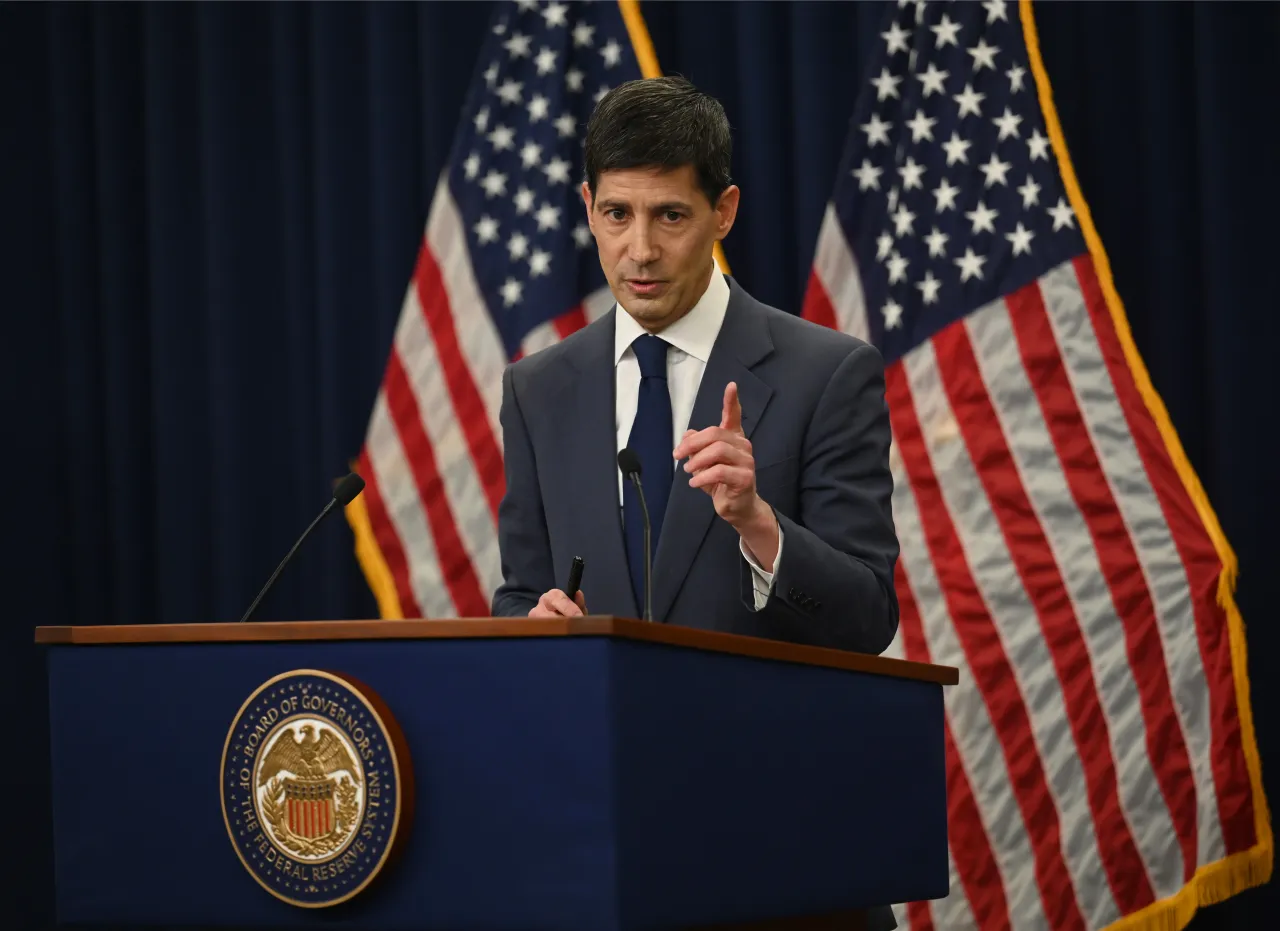


- Siegel said markets do not expect the Fed to pre-commit to future policy moves but do require “a coherent framework” explaining how policymakers are interpreting the economy.
- Instead, he said, Warsh largely deferred to markets and offered little insight into the Fed's thinking, leaving investors “filling in the blanks themselves.”
- Siegel added that Warsh appears to prefer allowing markets to determine expectations rather than having the Fed signal its next policy move in advance.
Advertisement|Remove ads.
Federal Reserve Chair Kevin Warsh's communication following last week's FOMC meeting “wasn’t defensible,” according to professor emeritus of finance at the University of Pennsylvania’s Wharton School of Business Jeremy Siegel.
Siegel argued that while the decision to leave interest rates unchanged was reasonable, Warsh failed to explain the economic framework behind it.
“The market spent much of this week trying to interpret what Fed Chair Kevin Warsh meant rather than what he actually said and that was entirely avoidable,” he said.
Advertisement|Remove ads.
The Federal Open Market Committee (FOMC) decided to keep interest rates unchanged during its latest meeting last week.
Warsh’s Communication Fell Short, Siegel Says
In his latest weekly market note, Siegel said markets do not expect the Fed to pre-commit to future policy moves but do require “a coherent framework” explaining how policymakers are interpreting the economy.
“Markets don’t require the Fed to promise its next move, but they do require a coherent framework,” he said.
Advertisement|Remove ads.
Instead, he said, Warsh largely deferred to markets and offered little insight into the Fed's thinking, leaving investors “filling in the blanks themselves.”
Siegel added that Warsh could have used the press conference to explain why the Fed viewed recent oil-price increases as a temporary supply shock, why productivity gains continue to restrain underlying inflation pressures, and why longer-term inflation expectations remain well anchored.
Warsh Appears To Allow Markets To Determine Expectations, Says Siegel
While acknowledging the debate around forward guidance, Siegel said Warsh appears to prefer allowing markets to determine expectations rather than having the Fed signal its next policy move in advance.
Advertisement|Remove ads.
However, he argued that even without providing explicit forward guidance, central bankers still have an obligation to explain the economic reasoning behind their decisions. Siegel added that on this front, Warsh’s press conference “fell well short.”
IBM’s Gary Cohn Has A Different Viewpoint
International Business Machines Corp. (IBM) Vice Chairman Gary Cohn has a different viewpoint on Warsh’s communication. During an interview on Monday, Cohn said markets have become overly reliant on the Fed signaling its next policy move.
He argued that Warsh is trying to steer the central bank back toward a more traditional approach in which policymakers provide less explicit guidance and allow investors to interpret incoming economic data.
Advertisement|Remove ads.
Cohn said the Fed became increasingly transparent after the 2008 financial crisis, often telegraphing policy decisions well in advance. He argued that this had conditioned investors to expect advance notice of every move of the central bank.
At the time of writing, the SPDR S&P 500 ETF (SPY), which tracks the S&P 500 index, was up 0.24%; the Invesco QQQ Trust ETF (QQQ) rose 0.9%; and the SPDR Dow Jones Industrial Average ETF Trust (DIA) gained 0.74%. Retail sentiment on Stocktwits regarding the S&P 500 ETF was in the ‘bearish’ territory.
The iShares 20+ Year Treasury Bond ETF (TLT) was down 0.09% at the time of writing, while the iShares 7-10 Year Treasury Bond ETF (IEF) was flat.
Advertisement|Remove ads.
For updates and corrections, email newsroom[at]stocktwits[dot]com.
Comments posted here will also appear on symbol pages.

Latest News
/filters:format(webp)https://news.stocktwits-cdn.com/Getty_Images_2233055049_jpg_0a316df698.webp)
/filters:format(webp)https://news.stocktwits-cdn.com/Anushka_Basu_make_me_smile_in_the_picture_b92832aa_af59_4141_aacc_4180d2241ba8_1_2_png_1086e0ed8c.webp) Anushka Basu·2m ago
Anushka Basu·2m ago/filters:format(webp)https://news.stocktwits-cdn.com/large_Navitas_logo_resized_jpg_f9dff848f7.webp)
/filters:format(webp)https://news.stocktwits-cdn.com/Harshita_3cfe02022c.jpg) Harshita Tyagi·17m ago
Harshita Tyagi·17m ago/filters:format(webp)https://news.stocktwits-cdn.com/gettyimages_2270839098_612x612_9eeccc69e7.jpg)
/filters:format(webp)https://news.stocktwits-cdn.com/Prabhjote_DP_67623a9828.jpg) Prabhjote Gill·19m ago
Prabhjote Gill·19m ago/filters:format(webp)https://st-everywhere-cms-prod.s3.us-east-1.amazonaws.com/large_qualcomm_logo_resized_c3dc9997dd.jpg) Harshita Tyagi·59m ago
Harshita Tyagi·59m ago/filters:format(webp)https://news.stocktwits-cdn.com/large_mcdonalds_store_jpg_130260f7da.webp)
/filters:format(webp)https://news.stocktwits-cdn.com/Heera_1_1c30cb0170.PNG) Heera Hari·1h ago
Heera Hari·1h ago/filters:format(webp)https://news.stocktwits-cdn.com/large_Getty_Images_2272981572_jpg_2b0afb3565.webp) Prabhjote Gill·1h ago
Prabhjote Gill·1h ago