


Advertisement|Remove ads.
Majority Of Fed Officials Are Flagging Rate Hike Possibilities, Fed Minutes Show
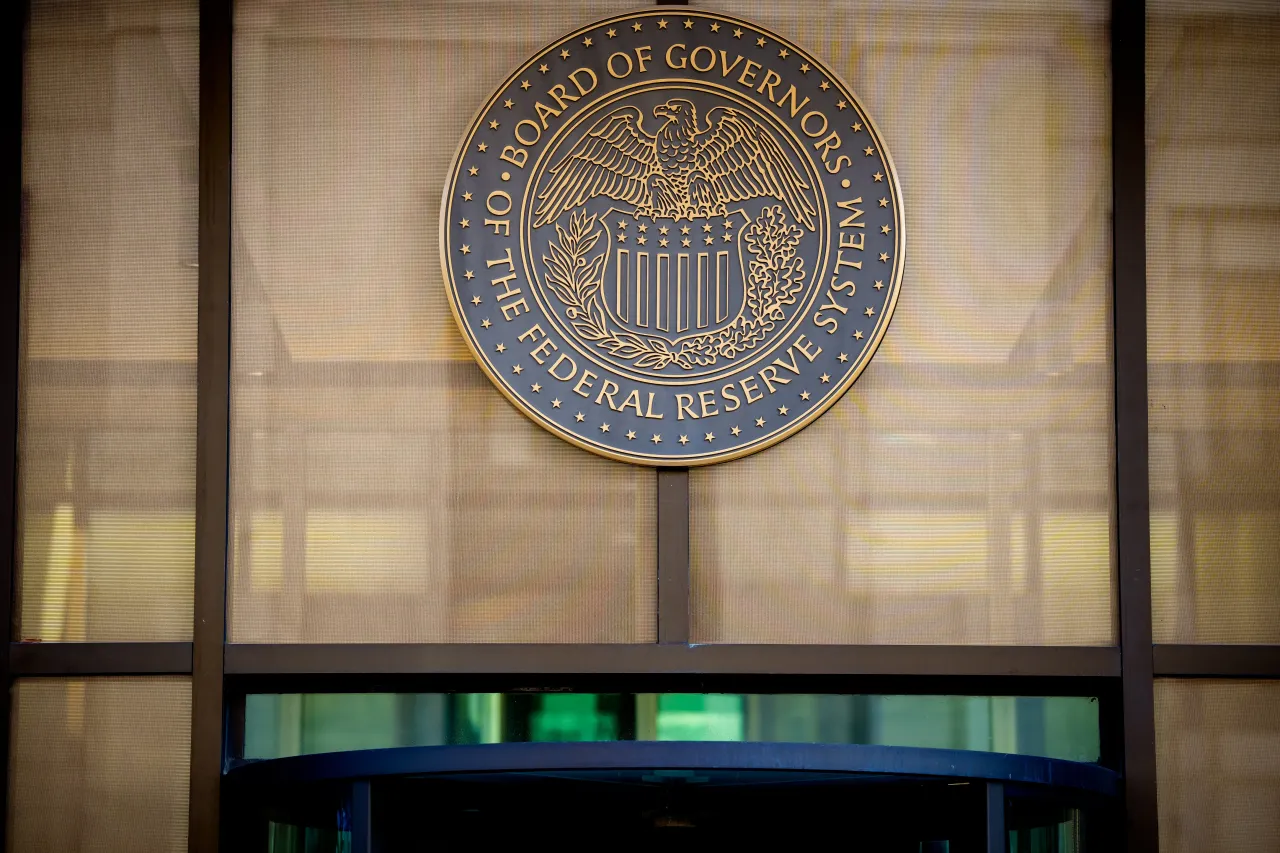


- Fed kept its benchmark interest rate steady in the 3.5% to 3.75% range in its April meeting.
- The latest CME FedWatch Tool shows a near 30% probability of a rate hike in the last quarter of 2026.
- Central bank officials are prepared to keep borrowing costs elevated for an extended duration, Fed minutes indicate.
Advertisement|Remove ads.
Federal Reserve officials expressed mounting anxiety over persistent inflationary pressures at their latest policy meeting, with a growing number of policymakers warning that the central bank may need to consider raising interest rates if inflationary pressures fail to cool.
According to the minutes from the Federal Open Market Committee’s (FOMC) April meeting released Wednesday, central bank officials indicated they are prepared to keep borrowing costs elevated for an extended duration. Crucially, the minutes revealed several policymakers signaling a willingness to tighten monetary policy if upside inflation risks materialize.
“The vast majority of participants noted an increased risk that inflation would take longer to return to the committee’s 2% objective than they had previously expected,” according to the minutes.
Advertisement|Remove ads.
While the Fed kept its benchmark interest rate steady in the 3.5% to 3.75% range, central bankers pointed to broadening inflationary pressures, exacerbated by rising global energy prices tied to ongoing geopolitical conflicts in the Middle East, as a primary driver behind the renewed caution.
Warsh Confirmed as Next Fed Chair
The hawkish tone of the minutes comes amid a leadership transition at the nation's central bank. The U.S. Senate voted 54-45 on May 13 to confirm former Fed Governor Kevin Warsh as the next Federal Reserve Chairman, succeeding Jerome Powell. The narrow vote largely followed party lines, representing the most partisan confirmation for a Fed chief in modern history.
Warsh, a financier and lawyer who served on the Fed board during the 2008 financial crisis, takes the helm at a volatile economic juncture. Known historically as an inflation hawk, Warsh has frequently criticized the central bank's post-pandemic policy response. During his confirmation hearings, he signaled an intention to implement structural reforms, including shrinking the Fed's balance sheet and reassessing its communication strategies, such as the use of quarterly interest-rate forecasts.
Advertisement|Remove ads.
Sticky Inflation And Shifting Market Bets
The Fed's restrictive stance is being reinforced by recent data showing that inflation remains stubbornly above the central bank’s 2% long-term target. Data released earlier this month showed the U.S. Consumer Price Index (CPI) accelerated to an annual rate of 3.8% for April, driven by soaring energy costs amid the ongoing war in Iran.
Simultaneously, the Labor Department reported that producer prices jumped 6% year-over-year in April, marking the fastest annual increase since late 2022.
According to the CME Group’s FedWatch Tool, market participants are increasingly pricing in the likelihood that the central bank will maintain its current target range through the remainder of the year, with the tool indicating a nearly 30% probability of an actual rate hike in the last quarter of 2026.
Advertisement|Remove ads.
Bond Yields Surge as Vigilantes Return
U.S. Treasury yields have recently hit multi-year highs. The benchmark 10-year U.S. Treasury yield climbed steadily to hover around 4.67%, while the long-term 30-year Treasury yield surged to 5.19%, its highest level since 2007.
Bond vigilantes are institutional investors who sell off long-term government bonds to protest inflationary fiscal policies or perceived shortcomings in monetary policy.
“Warsh is set to chair the June Federal Open Market Committee (FOMC) meeting, but who’s actually in the monetary-policy driver’s seat? We’d argue that it’s the Bond Vigilantes,” Yardeni, the head of Yardeni Research, wrote in a note on Monday, accessed by CNBC. When it comes to the sentiment of policymakers, “Warsh is going to be the odd man out. But he is the new Fed chair, and the bond market is reacting badly to his dovish stance.”
Advertisement|Remove ads.
Retail sentiment on SPY and QQQ
Retail sentiment on Stocktwits for both ETFs were ‘extremely bullish’ with ‘high’ message volumes.
Read More: OpenAI Is Laying Groundwork For A $1 Trillion September IPO: Reports
For updates and corrections, email newsroom[at]stocktwits[dot]com.
Advertisement|Remove ads.
Comments posted here will also appear on symbol pages.

Latest News
/filters:format(webp)https://news.stocktwits-cdn.com/large_Getty_Images_2246580703_jpg_9700e1e7e8.webp)
/filters:format(webp)https://news.stocktwits-cdn.com/shivani_photo_jpg_dd6e01afa4.webp) Shivani Kumaresan·46m ago
Shivani Kumaresan·46m ago/filters:format(webp)https://news.stocktwits-cdn.com/large_Getty_Images_2192591876_jpg_b8c2306674.webp)
/filters:format(webp)https://news.stocktwits-cdn.com/Aashika_Suresh_Profile_Picture_jpg_2acd6f446c.webp) Aashika Suresh·53m ago
Aashika Suresh·53m ago/filters:format(webp)https://news.stocktwits-cdn.com/large_Getty_Images_1402975148_a2f357863f.jpg) Shivani Kumaresan·2h ago
Shivani Kumaresan·2h ago/filters:format(webp)https://news.stocktwits-cdn.com/Getty_Images_2233055049_jpg_0a316df698.webp) Aashika Suresh·2h ago
Aashika Suresh·2h ago/filters:format(webp)https://news.stocktwits-cdn.com/large_Getty_Images_2245498698_eb56c3f1cc.jpg) Aashika Suresh·3h ago
Aashika Suresh·3h ago/filters:format(webp)https://news.stocktwits-cdn.com/large_Blackberry_resized_jpg_a0a7071fd3.webp) Shivani Kumaresan·4h ago
Shivani Kumaresan·4h ago