


Advertisement|Remove ads.
META Stock Holds Up Overnight: New Mexico Seeks Up To $40B Privacy Penalty In Cambridge Analytica Case
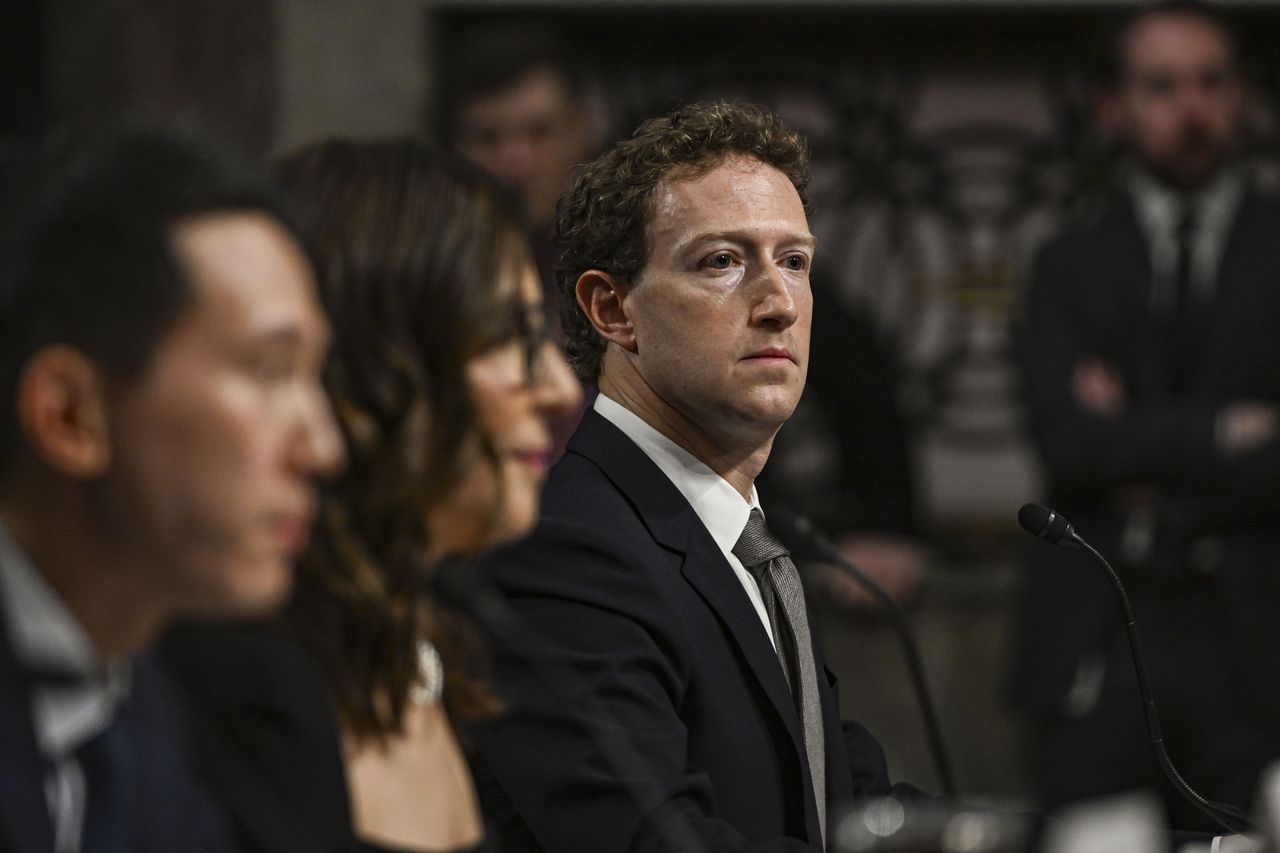


- New Mexico alleged Meta violated consumer-protection laws more than 43 million times by misleading users over data privacy.
- Meta has called the proposed penalty “astronomical” and is seeking a cap of $3.45 billion.
- META shares have rallied 27% in September as investors focus on the company’s AI strategy, including the newly launched Muse AI agent.
Advertisement|Remove ads.
New Mexico has a judge to order Meta Platforms, Inc. (META) to pay $35 billion to $40 billion in penalties, escalating the financial stakes of a long-running privacy case that emerged from the Cambridge Analytica scandal, Reuters reported on Thursday.
META stock rose 0.1% in Thursday’s session and gained 0.4% in overnight trading.
New Mexico Seeks Data Privacy Penalty
Attorneys for New Mexico made the request on Thursday before Judge Francis Mathew, who presided over the trial in Santa Fe. The jury found on Sept. 25 that Meta misled consumers about how it handled their Facebook data. Mathew is expected to decide the penalty later this month, according to Reuters.
Advertisement|Remove ads.
The case dates back to 2021, when New Mexico sued Meta after revelations that Cambridge Analytica, a British political consulting firm that also worked on Donald Trump’s 2016 presidential campaign, had obtained personal information from as many as 87 million Facebook users through a third-party app without their consent.
The New Mexico lawsuit is part of the legal fallout from the Cambridge Analytica scandal. The state’s case went to trial separately and focused more broadly on Meta’s representations about data privacy, misinformation and hate speech.
Jurors examined 29 statements made by Meta and its leadership and found 26 misleading, according to Reuters. The jury found more than 43 million violations of New Mexico’s consumer-protection laws.
Advertisement|Remove ads.
Meta’s Response, Stock Trend
Meta has pushed back. The company called the state’s proposed penalty “astronomical” and urged the judge to cap it at $3.45 billion, according to court filings cited by Reuters. Meta argued that the trial evidence did not establish that it sold users’ data or that any consumer was actually misled.
The legal fight comes as META shares have rallied on investor enthusiasm around the company’s AI strategy. Meta stock rose 27% last month, the most since July 2013.
Meta launched its Muse AI assistant in September and has since added integrations with various digital services and its newly launched Meta VR glasses, as investors look to its AI products to unlock new revenue opportunities.
Advertisement|Remove ads.
Retail View On META
On Stocktwits, the retail sentiment for META dipped in the ‘neutral’ zone. “How about 2 of the top 6 apps are Meta apps created in the last 2-3 years/months. Oh and Muse still #1,” Sean Emory, founder and chief investment officer at Avory & Co., posted on META’s stream.
At a White House meeting with President Donald Trump and other major AI executives earlier this week, Meta CEO Mark Zuckerberg said the companies had agreed to build “robust internal controls” for AI systems, alongside multiple layers of internal risk reviews, external audits and evaluations.
Against the backdrop of growing debate over AI safety and “AI doomsday” scenarios, Zuckerberg described the voluntary agreement as a starting point for industry-wide AI safety standards.
Advertisement|Remove ads.
For updates and corrections, email newsroom[at]stocktwits[dot]com.
Comments posted here will also appear on symbol pages.

Latest News
/filters:format(webp)https://news.stocktwits-cdn.com/gettyimages_2228663934_594x594_97e3b13d04.jpg)
/filters:format(webp)https://news.stocktwits-cdn.com/Heera_1_1c30cb0170.PNG) Heera Hari·24m ago
Heera Hari·24m ago/filters:format(webp)https://news.stocktwits-cdn.com/large_Getty_Images_2294072315_5f0a29cff4.jpg)
/filters:format(webp)https://news.stocktwits-cdn.com/Prabhjote_DP_67623a9828.jpg) Prabhjote Gill·30m ago
Prabhjote Gill·30m ago/filters:format(webp)https://news.stocktwits-cdn.com/large_Getty_Images_2241292402_jpg_9661b0c852.webp)
/filters:format(webp)https://news.stocktwits-cdn.com/vivekkrishnanphotography_58_jpg_0e45f66a62.webp) Arnab Paul·1h ago
Arnab Paul·1h ago/filters:format(webp)https://news.stocktwits-cdn.com/gettyimages_2292585020_594x594_cb12bc8682.jpg)
/filters:format(webp)https://news.stocktwits-cdn.com/Harshita_3cfe02022c.jpg) Harshita Tyagi·2h ago
Harshita Tyagi·2h ago/filters:format(webp)https://st-everywhere-cms-prod.s3.us-east-1.amazonaws.com/large_american_airlines_resized_546ba616ea.jpg) Heera Hari·2h ago
Heera Hari·2h ago/filters:format(webp)https://news.stocktwits-cdn.com/large_Getty_Images_2300447831_383f41fb7f.jpg) Prabhjote Gill·2h ago
Prabhjote Gill·2h ago