


Advertisement|Remove ads.
Michael Burry Adds To NBIS, MU, ORCL Shorts — Says Nebius Is ‘What The Top Of A Boom Looks Like’
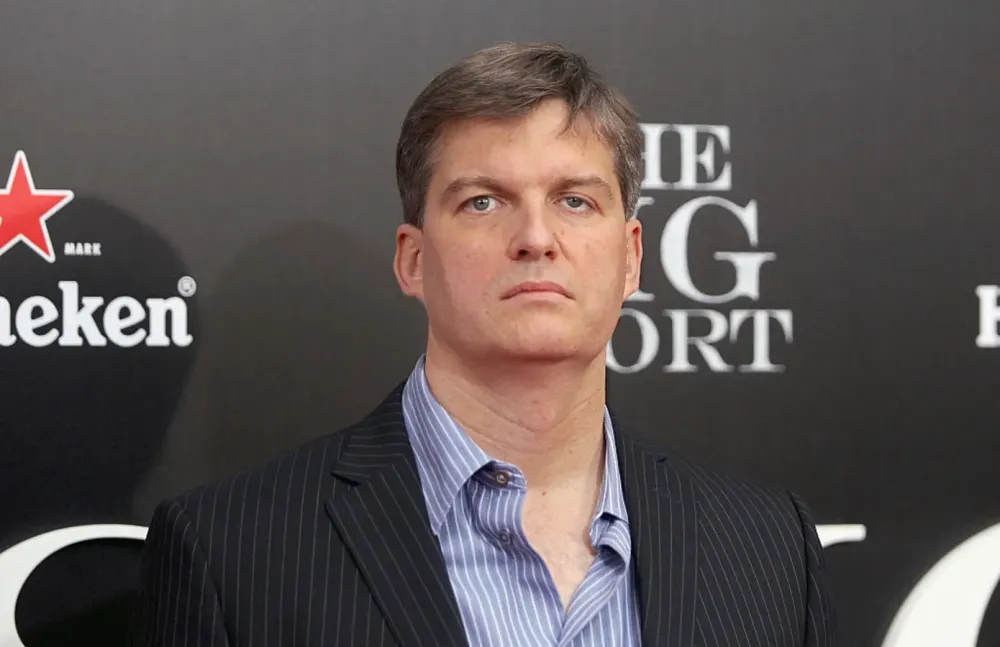

- Burry increased his short bets on Nebius, Micron, Oracle, and the semiconductor ETF.
- He remains bullish on Mercado Libre and Zoetis, adding to both long positions.
- Burry called Nebius a sign of “the top of a boom,” highlighting his concerns about the AI trade.
Advertisement|Remove ads.
Michael Burry disclosed his updated stock positions on Wednesday, adding to his short bets on Nebius (NBIS), Micron (MU), Oracle (ORCL) and the iShares Semiconductor ETF (SOXX), while increasing his long positions in Mercado Libre (MELI) and Zoetis (ZTS).
At the time of writing, in after-hours trading on Wednesday, NBIS was down 1.74% after ending the regular session 34% higher. MU edged up 0.3% after gaining around 5% during the regular session, while ORCL slipped 0.11% after ending the regular session more than 5% higher.
Burry Adds To NBIS, MU, ORCL Shorts
Burry, ‘The Big Short’ investor, said in a post on Substack that he added to his Nebius short at $247, Micron short at $924, and Oracle short at $152. He also added to his iShares Semiconductor ETF March 2027 puts struck in the low $400s.
Advertisement|Remove ads.
The moves add to Burry’s bearish positioning in AI and semiconductor-related stocks. He said the AI trade was strong on Wednesday.
Burry Adds To MELI, ZTS Long Positions
On the bullish side, Burry said he added to his Mercado Libre long position at $1,850 and his Zoetis long position at $73.60.
“Both need no further elucidation at this time,” Burry said, adding, “I am very bullish on both companies.”
Advertisement|Remove ads.
Burry Sounds The Alarm On Nebius
Explaining his bearish view on Nebius, Burry said, “Nebius is what the top of a boom looks like.”
Burry highlighted some comments from Nebius’ earnings call about the company’s AI compute contracts. Nebius said it could sell its entire 2027 capacity through one- to three-year contracts, but is choosing to retain some capacity for shorter-term customer needs.
The company added that it is negotiating “shorter-duration” deals at “$40 million to $50 million per megawatt,” and sometimes above, compared with $20 million to $25 million per megawatt for its midterm contracts.
Advertisement|Remove ads.
Burry Questions Nebius’ Compute Pricing
Burry questioned why customers would pay twice as much for shorter-term compute contracts. “Urgency and convenience, at 2x the rate? That is extreme urgency,” he said.
He said buyers of compute are putting “tremendous value” on near-term use and less value on longer-term use. Burry described the pricing structure as “backwardation,” saying it exists because the commodity is depreciating for some reason.
“Power does not depreciate,” Burry said. “So, either the GPU is depreciating, the customer is depreciating, or, as likely, both.”
Advertisement|Remove ads.
Burry also noted that Nebius extended its server depreciation schedule from four years to five years. He said the company is “counting on roughly 50% annual decay in its deals” while adding a year of depreciation to its books.
NBIS, MU, ORCL: Stocktwits Retail Sentiment
On Stocktwits, retail sentiment for NBIS was ‘extremely bullish,’ while message volume was ‘extremely high’ at the time of writing. For MU and ORCL, retail sentiment was ‘bearish,’ while message volume was ‘low.’
NBIS stock has surged nearly 207% year to date, while MU shares have gained 225%. ORCL stock, meanwhile, has declined around 21% during the same period.
Advertisement|Remove ads.
For updates and corrections, email newsroom[at]stocktwits[dot]com.
Comments posted here will also appear on symbol pages.

Latest News
/filters:format(webp)https://news.stocktwits-cdn.com/large_Getty_Images_2167186158_95abd348db.jpg)
/filters:format(webp)https://news.stocktwits-cdn.com/unnamed_jpg_9dff551b50.webp) Anan Ashraf·9m ago
Anan Ashraf·9m ago/filters:format(webp)https://news.stocktwits-cdn.com/large_bank_of_america_ATM_resized_jpg_74da346957.webp)
/filters:format(webp)https://news.stocktwits-cdn.com/1707726834303_jpg_11f20a9aa9.webp) Shashank Nayar·2h ago
Shashank Nayar·2h ago/filters:format(webp)https://news.stocktwits-cdn.com/large_Getty_Images_2208523880_jpg_5bfb5acfa2.webp) Anan Ashraf·2h ago
Anan Ashraf·2h ago/filters:format(webp)https://news.stocktwits-cdn.com/Getty_Images_2237643016_jpg_f9dc6dcb97.webp) Anan Ashraf·2h ago
Anan Ashraf·2h ago/filters:format(webp)https://news.stocktwits-cdn.com/large_Getty_Images_2202862389_jpg_c0559f1ff4.webp) Shashank Nayar·3h ago
Shashank Nayar·3h ago/filters:format(webp)https://news.stocktwits-cdn.com/large_Getty_Images_2278739838_878876729c.jpg) Anan Ashraf·4h ago
Anan Ashraf·4h ago